
You are comparing two flooring brands, and both are recommended by people you trust, and both carry a warranty, and the sales pages are nearly identical.
The answer is that most brand comparisons are done on the wrong things. Marketing language, price positioning, and review volume are all weak signals. The strong signals are documentation, specification, and the terms the brand will not put in writing.
How To Compare Flooring Brands Objectively
Comparing flooring brands is harder than comparing products, because a brand is not a single thing. A brand may make several product lines, each with its own specification, and the brand name tells you almost nothing about which line you are actually buying.
The name is not the product.
That is the first reason most brand comparisons fail. They compare the name rather than the specification, and the specification is what the warranty, the installation instructions, and the maintenance guidance all refer back to.
Claims are not promises.
The second reason is that the claims a brand makes are not the claims a brand will defend. A brand can say a product is durable, and the same brand can exclude the exact failure you later experience, and both statements can be true in the same document.
So an objective comparison has to be built on evidence that is published, checkable, and specific. Those three properties are what separate a real difference from a marketing difference, and they are what this comparison is built on.
What Makes A Brand Comparison Objective
An objective comparison answers the same questions about every brand, using the same evidence, so that the differences you find are real differences rather than differences in how the sales pages were written. If one brand publishes a data sheet and the other does not, that is a finding. If both publish one, you compare the two sheets.
It also means recording what you could not establish. A missing document is itself evidence, and a brand that will not publish its specification has told you something that a longer marketing description cannot hide.
Compare Specification Before Brand
The single highest-value comparison you can make is between technical data sheets rather than between brand names. A data sheet states the wear layer thickness, the moisture limit, the certification class, the installation method, and the subfloor requirements in one place, and those are the numbers the warranty refers to.
That is a real difference.
A mil is one thousandth of an inch, so a 20 mil wear layer is 0.020 inch, which is 0.508 mm of material, and a 28 mil layer is 0.711 mm. That difference is three and a half times the surface available before a wear-through clause becomes relevant, and it is a real difference between two products that can look identical on a sample board.
Class is a traffic rating.
Certification class is the other number that separates brands. Laminate runs AC1 through AC5 under NALFA certification standards, with AC5 the commercial class, and the class is a traffic rating rather than a quality judgement. A brand whose entire line tops out at AC3 is a different proposition from a brand that publishes an AC5 line, regardless of what either says about itself.
For tile, the relevant specification is the absorption class. ANSI A137.1 defines porcelain as the tile class under 0.5 percent water absorption, and that classification decides whether the product is rated for a wet area at all. Two brands can sell a grey stone-look tile, and only one of them may be classified for the room you are buying it for.
Is The Data Sheet Available Before Purchase?
Not always, and the willingness to publish one is a signal in itself. A brand that publishes a data sheet for every line is a brand that expects you to compare, and a brand that publishes one only on request has something to manage in that conversation.
Ask for the data sheet at the point of quotation rather than after the purchase. If it is not available, the product is not fully specified, and that gap is worth recording alongside the price.
Compare Warranty Terms, Not Warranty Length
Length is the least useful number.
Warranty length is the number most people compare and the least useful one to compare. A 25 year residential term and a 10 year commercial term can be worth almost the same, because the length is not what decides the claim.
What decides the claim is the exclusion list and the proration schedule. Two brands can both offer a 25 year warranty, and one can prorate the payout to almost nothing by year ten while the other pays the same proportion throughout, and the difference between them is invisible on a sales page.
Transferability is the other term that separates brands. Some warranties transfer to a new owner when the house is sold, some require the original purchaser to remain the claimant, and some are voided by a change of ownership outright. In a resale market that difference is worth more than the length.
The practical comparison is therefore a table of terms rather than a table of numbers. For each brand, record the length, whether the payout is prorated, whether it transfers, and what the exclusion list actually says about water, pets, and installation fault.
The manufacturer warranties guide covers the four layers of a warranty document and what each one means, which is the framework for reading those terms before you rely on them.
Which Terms Should You Compare Side By Side?
Record the length, the proration schedule, the transferability, and the exclusion list for water damage, pet urine, installation fault, and commercial use. Those five entries answer almost every question a warranty will later be asked, and they are the entries most likely to differ between two brands that look identical.
Compare Documentation Quality
The quality of a brand’s documentation is a genuine differentiator, and it is one that most comparisons never touch. A brand that publishes clear installation instructions, a current data sheet, and a warranty document that names its exclusions is a brand that has thought about what happens when something goes wrong.
A brand that publishes vague guidance, or that refers you to a phone line for its own specification, is a brand that will be harder to hold to its terms later. The document is the promise, and a brand that will not write its promise down has not made one.
This also shows up in the small details. A data sheet that names the test method for each figure is more credible than one that states figures without attribution, because the test method is what makes the number checkable.
Where a brand publishes installation requirements that name a published standard rather than its own preference, that is a stronger signal again. ANSI A108.02 sets tile subfloor flatness at 1/8 inch in 10 feet, and a brand that refers to that figure is telling you the specification it expects you to meet.
Compare Samples, Not Photographs
Photographs can be adjusted.
Photographs are the weakest evidence in flooring. Two brands can photograph the same room and produce images that look like different products, because lighting, camera angle, and post-processing change the appearance of a floor far more than the floor itself does.
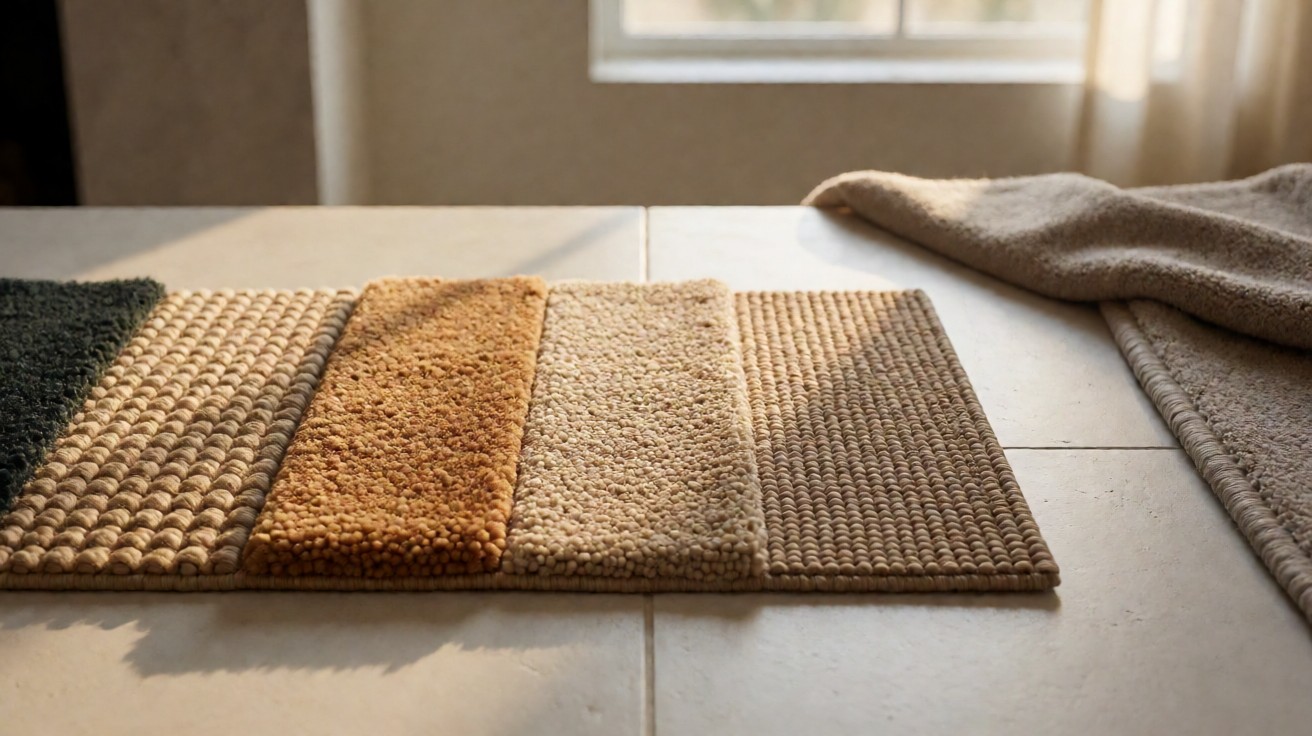
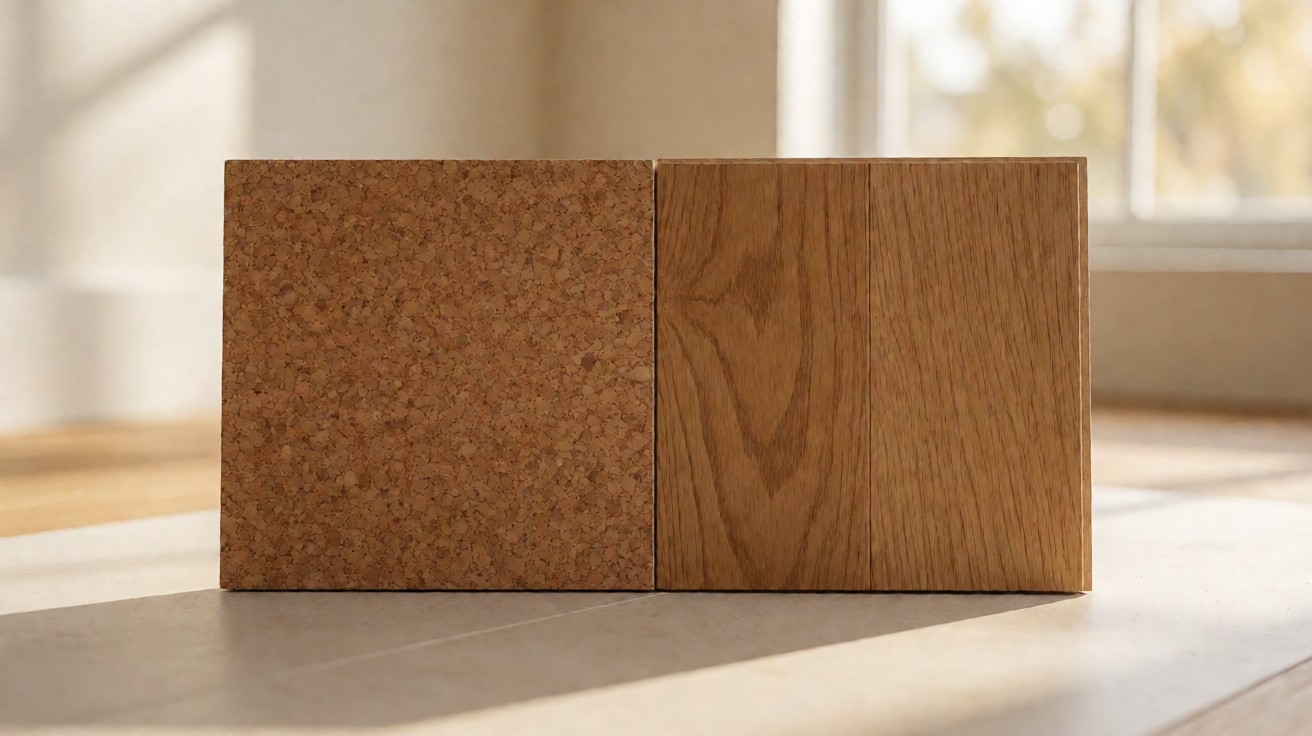
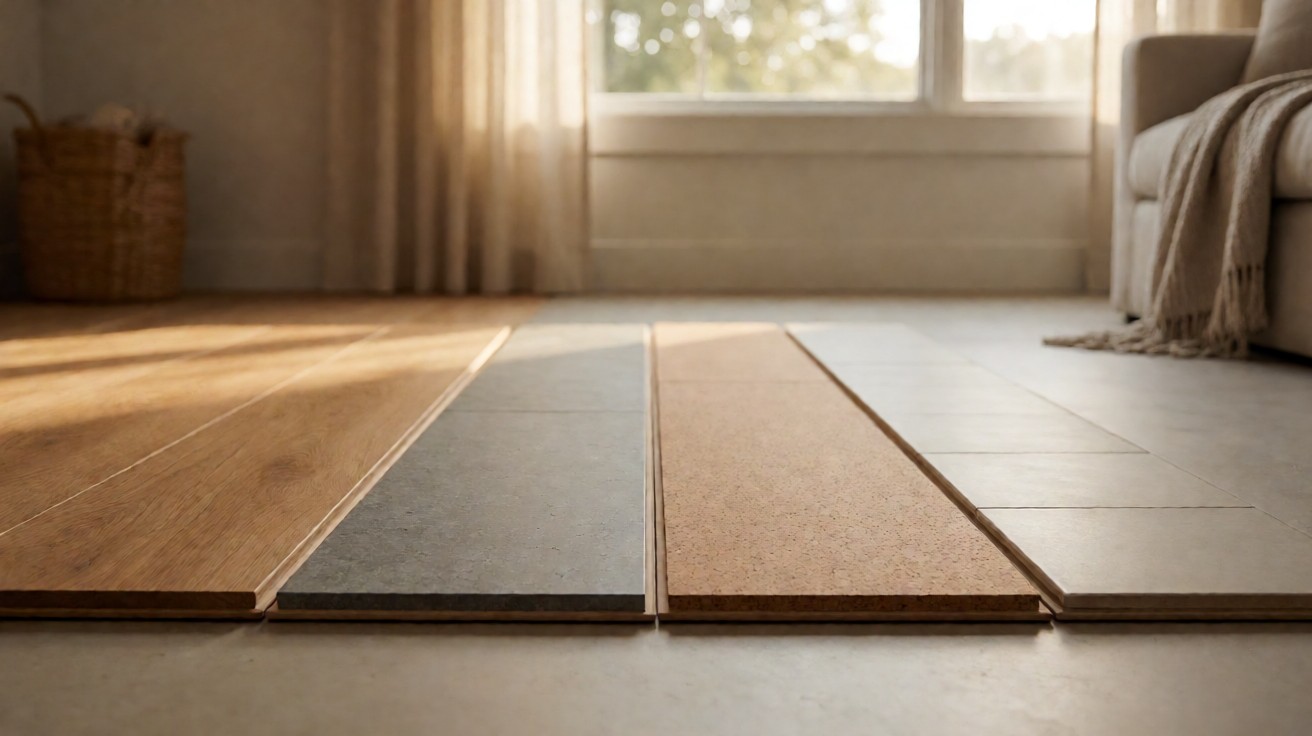
A physical sample is the only comparison that cannot be manipulated after the fact. Ordering samples from several brands and putting them side by side is the single most reliable way to separate a real difference from a photographed one, and it costs very little.
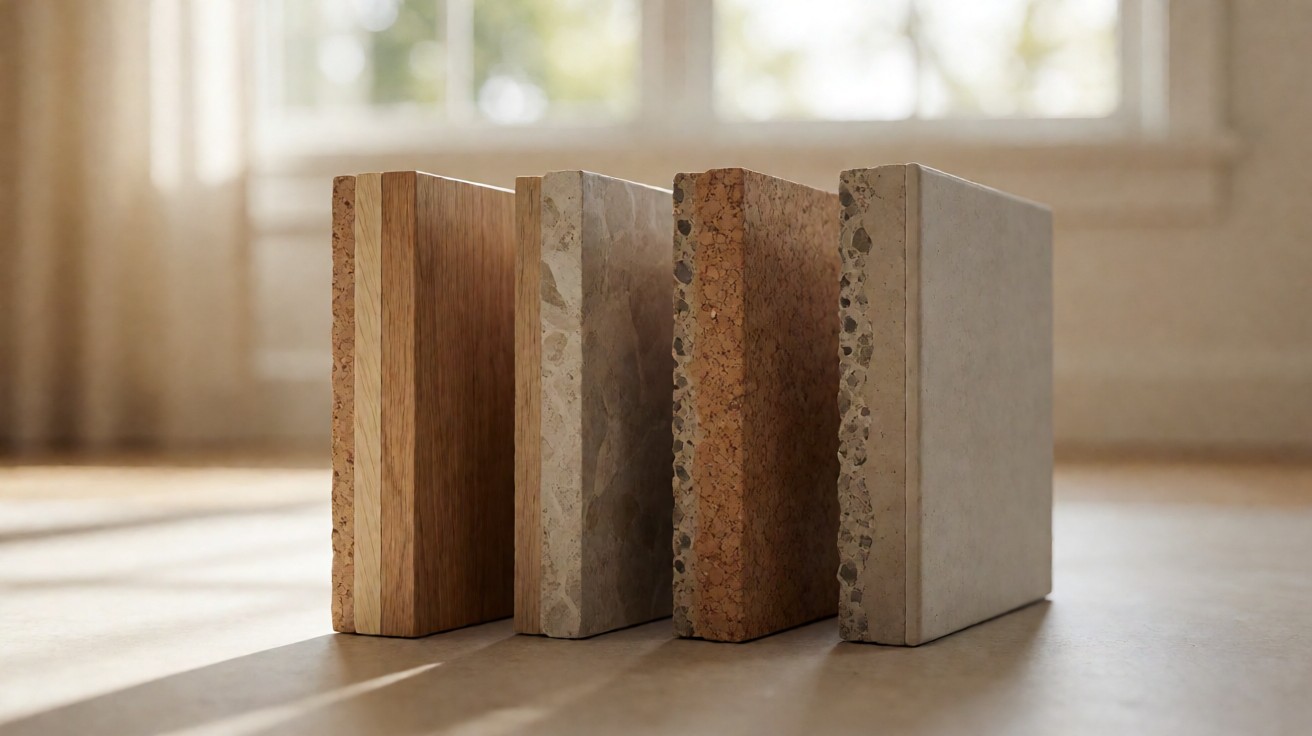
Compare the samples on the properties that matter. Look at the wear layer thickness in the cut edge, check whether the surface texture is consistent across the sample, and test how the sample responds to a damp cloth and to a dragged key, because those are the failures the warranty will be asked about.
Keep the samples after the purchase, because the sample is the reference the warranty uses when it talks about fading or colour change. A board that looks different from its sample under evening light is not faded, and the sample is what proves that.
The flooring samples guide covers how to order and compare samples across brands, including what to ask for and what to record when they arrive.
Compare Support And Replacement Policy
This is invisible until you need it.
What a brand does after the sale is a real difference, and it is one that is usually invisible until you need it. The questions are simple. Can you obtain a replacement of the same lot or batch if a board fails in year six? Does the brand hold stock of discontinued lines? What does the process for a warranty claim actually require?
A brand that keeps discontinued products in stock is protecting its own customers, because a floor that cannot be repaired is a floor that has to be replaced entirely. A brand that does not is transferring that risk to you, and the cost of a full replacement is not covered by most warranties.
Replacement stock matters most for products with a long life. A floor that lasts 25 years will need a repair at some point in those 25 years, and the repair depends on the manufacturer still having the product. Ask about it before the purchase rather than after the line is discontinued.
How Do You Test A Brand’s Claim?
Ask for the specific document that supports the claim rather than accepting the claim itself. If a brand says a product is commercial grade, ask for the certification class. If it says the floor is waterproof, ask which exclusion applies to water that arrives from below. If it says the warranty is transferable, ask what the transfer requires.
Each of those questions has a written answer, and a brand that cannot produce one has not made the claim it appears to have made. That is a finding worth recording.
What Not To Compare
| Comparison | Strong Evidence | Weak Evidence |
|---|---|---|
| Product specification | Technical data sheet with named test methods | Marketing adjectives and product photography |
| Warranty value | Proration schedule and transferability terms | Length of term in years |
| Product appearance | Physical sample viewed side by side | Photographs under studio lighting |
| After-sales support | Published replacement stock policy | Review volume and brand reputation |
Several things that look like differences are not. Review volume is not a measure of product quality, because a brand with more customers has more reviews by definition, and the reviews that survive are the extreme ones. Price positioning is not a measure of value, because two products at the same price can have very different specifications.
Marketing language is the weakest signal of all. Words like premium, luxury, and commercial grade are not specifications, and a brand that leans on them heavily is usually asking you to accept the adjective instead of the number.
Awards and endorsements are also weak, because they are usually awarded on criteria that are not published. Where an award names a standard and a test method, it is checkable. Where it does not, it is decoration.
Building The Comparison Table
The output of an objective brand comparison is a table with the same rows for every brand, so that the differences are visible rather than buried in prose. The rows should be the ones that are published, checkable, and specific.
| What To Compare | Where The Evidence Lives | Why It Matters |
|---|---|---|
| Wear layer thickness | Technical data sheet, in mils | Sets how much surface can be lost before a wear-through claim |
| Certification class | Data sheet, and the certifying body’s register | Decides whether the product suits the room and the warranty schedule |
| Warranty length | Warranty document | Least useful alone, but part of the term |
| Payout structure | Warranty document, proration schedule | Decides what a claim is actually worth in year ten |
| Transferability | Warranty document | Changes the value of the floor on resale |
| Exclusion list | Warranty document | Decides whether your failure is covered at all |
| Replacement stock | Manufacturer policy, asked directly | Decides whether a repair is possible in year fifteen |
| Installation standard reference | Installation instructions | Shows whether the brand expects a published specification |
That table is the comparison. Fill it for each brand from published documents, record what you could not establish, and the differences between the brands will be real ones rather than differences in how their sales pages were written.
What The Comparison Will Actually Show You
No clear winner is a useful result.
An honest brand comparison rarely produces a clear winner, and that is a useful result rather than a frustrating one. What it usually shows is that two brands are similar on specification and differ on terms, or that one is stronger on documentation and the other on price.
That outcome is more actionable than a ranking, because it tells you what to negotiate. If two products match on specification, the terms are where the value sits, and the terms are the part of the purchase that a retailer can sometimes move on.
It also tells you where the risk sits. A brand with a strong specification and a weak exclusion list is a different risk from a brand with the reverse, and the right choice depends on which failure you are more likely to experience rather than on which brand is better in general.
The product specification comparison covers how to compare products across manufacturers on equal terms, and the flooring buying guide covers the wider evaluation including where the warranty terms are published.
The Comparison Worth Making Before You Buy
Three comparisons decide almost everything, and all three are checkable before the purchase. Compare the technical data sheets, because the specification is what the warranty refers to and the specification is where two similar-looking products actually differ.
Compare the warranty terms rather than the warranty length, because the length is the least informative number on the page and the exclusion list and proration schedule are the ones that decide the claim. And compare physical samples rather than photographs, because a sample is the only evidence that cannot be adjusted after the fact.
Beyond those three, record what you could not establish. A brand that will not publish a data sheet, or that will not name its exclusion list, or that cannot tell you whether it holds replacement stock, has answered the comparison even if it has not answered the question.
That is the real output of an objective brand comparison. It is not a winner. It is a record of which brand published its promises, which brand will defend them, and which brand left the specification to the sales conversation.