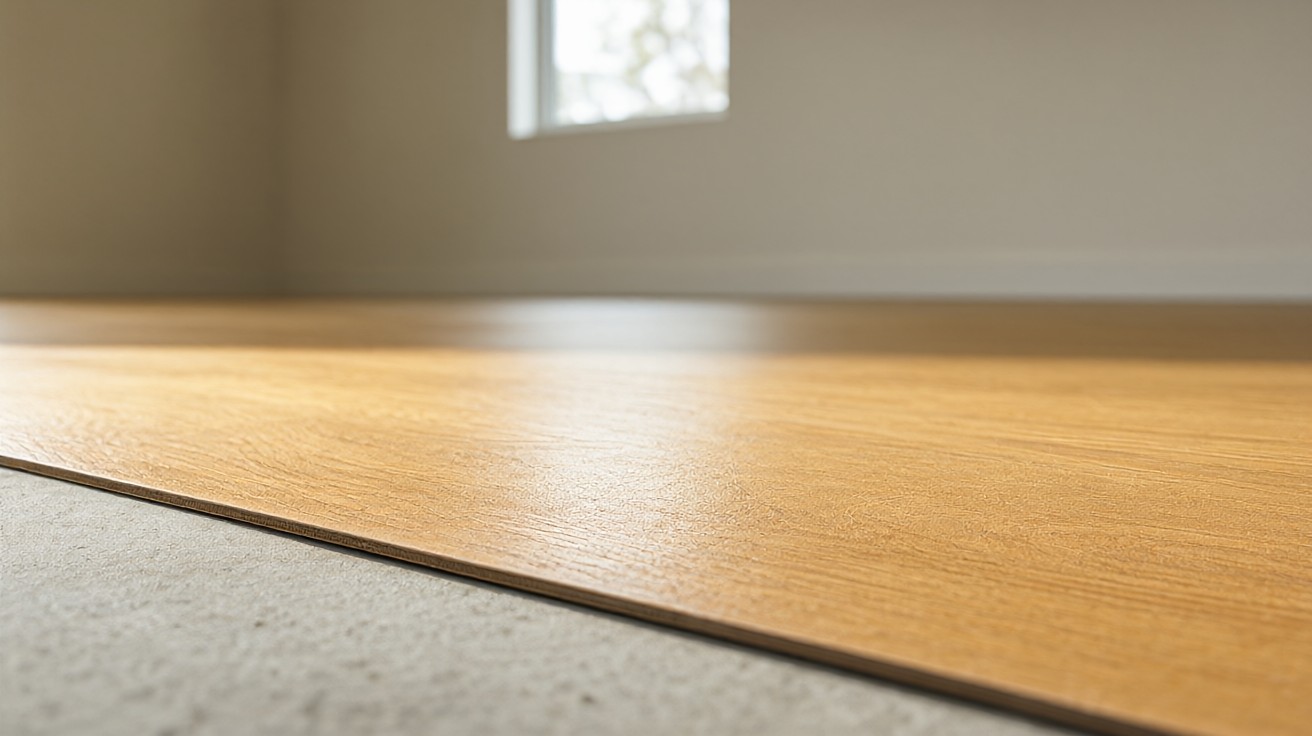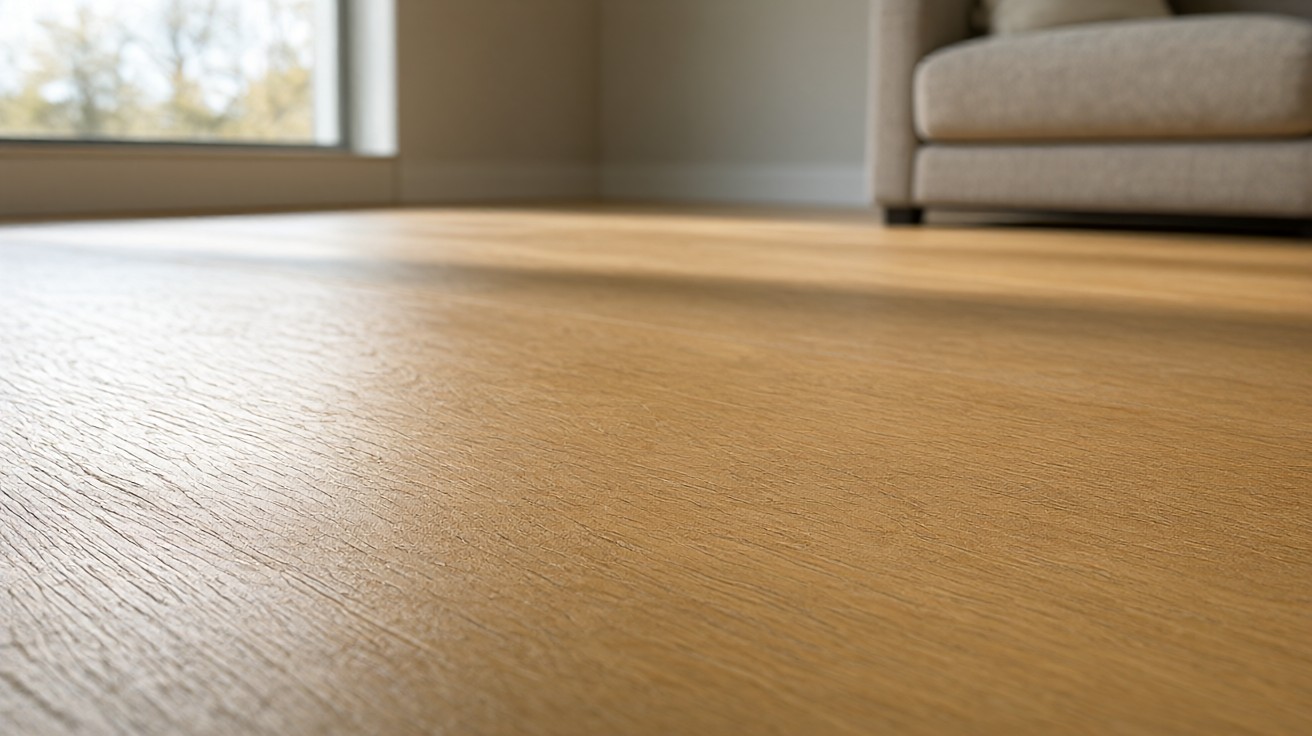

The wear layer is the clear protective film on vinyl flooring, measured in mils, and it decides how long the surface stays presentable under use.
Choose 12 mil for a typical household with pets and children, 6 mil for low-traffic bedrooms, and 20 mil for hallways, kitchens, and any commercial area. Total plank thickness does not protect the surface; only the wear layer does.
What A Wear Layer Actually Is
A wear layer is a transparent film of polyurethane, often reinforced with additives, that sits above the printed design layer of vinyl flooring. It is the part of the plank that your shoes, furniture legs, pet claws, and dropped objects touch. The pattern beneath it is only as durable as the film covering it. For a broader overview of formats, see luxury vinyl tile explained.
When the wear layer wears through, the printed design scuffs, fades, or peels, and the floor is finished regardless of how thick the plank is underneath. That is why two vinyl floors with identical total thickness can age very differently: the one with the thicker wear layer keeps its appearance longer.
Wear layers are not all the same composition. A plain polyurethane film resists scratches modestly, while a layer that carries aluminum oxide particles or a nylon additive resists abrasion far better. The mil rating tells you how much material is there; the chemistry tells you how hard that material is.
Where The Wear Layer Sits In The Stack
From top to bottom, a vinyl plank is wear layer, print layer, core, and backing. The wear layer is the thinnest of these but the most exposed. A 20 mil wear layer on a 5 mm plank means the protective film is only a fraction of the total height, yet it absorbs almost all the surface abuse.
How Wear-Layer Thickness Is Measured
Wear-layer thickness is measured in mils, where one mil equals one thousandth of an inch (0.001 inch, or 0.0254 mm). A 12 mil wear layer is 0.012 inches, or about 0.305 mm, thick. Manufacturers sometimes quote the layer in millimeters, so converting between the two units is essential when comparing spec sheets.
To convert mils to millimeters, multiply by 0.0254. A 6 mil layer is 0.152 mm, 12 mil is 0.305 mm, 20 mil is 0.508 mm, and 28 mil is 0.711 mm. The differences look small on paper, but each step up roughly doubles the amount of protective material available to absorb abrasion.
Why Mils And Not Millimeters
The flooring industry standardized on mils because the layer is too thin for convenient millimeter quoting and because mils match the gauge terminology used for other film products. When a spec sheet lists both, use mils for comparison, since rounding to 0.1 mm can hide a meaningful gap between 12 and 20 mil.
How To Read A Spec Sheet
Look for “wear layer thickness” or “wear layer gauge” in the technical data, not “total thickness” or “overall thickness.” Total thickness includes core and backing and is often quoted in millimeters. A plank listed at 6.5 mm total with a 20 mil wear layer is a durable residential product; a 6.5 mm plank with a 6 mil layer is not, despite the same headline number.
Residential Versus Commercial Ratings
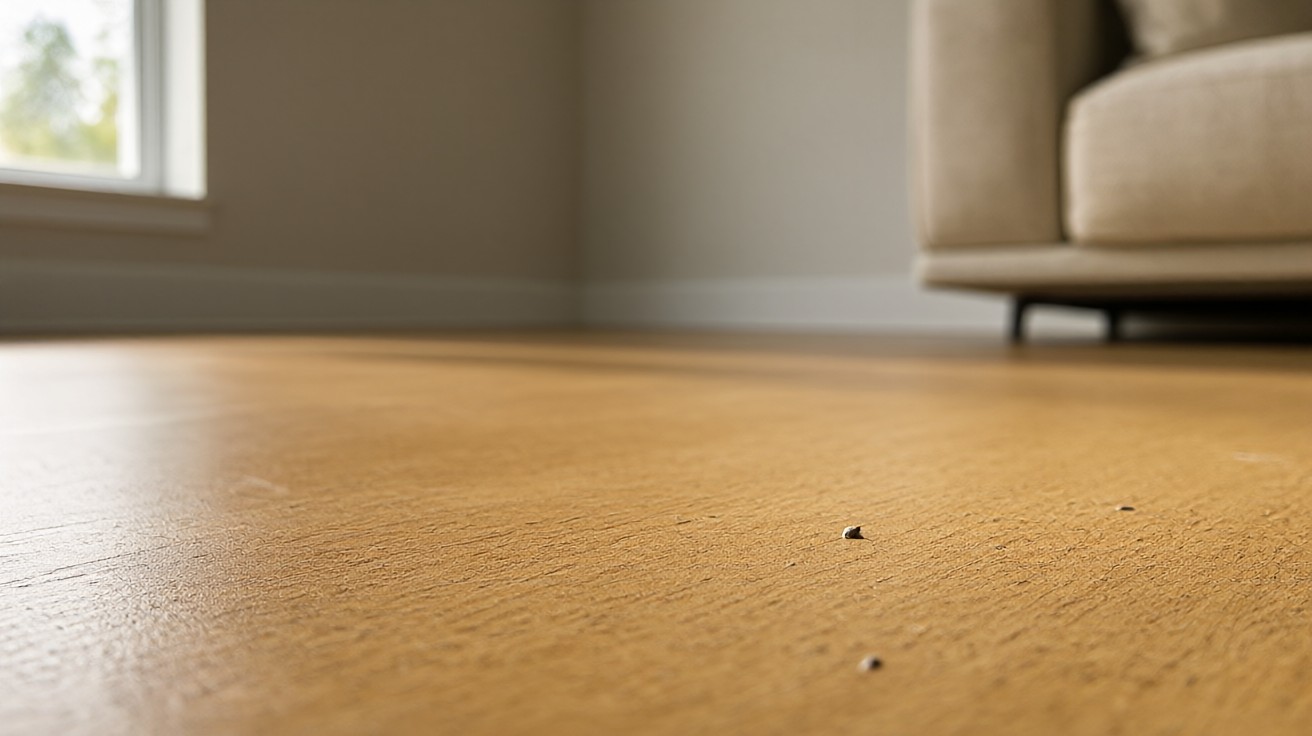
Residential vinyl typically carries a wear layer of 6 to 12 mil, while commercial products start at 20 mil and run to 28 mil or more. The split reflects traffic volume: a home sees intermittent foot traffic and occasional furniture movement, while a retail floor sees thousands of steps per day plus rolling loads.
Some manufacturers publish a traffic rating alongside the mil number, such as “light residential,” “heavy residential,” or “commercial.” Treat the rating as a guide and the mil number as the measurable fact. A “heavy residential” label on a 12 mil plank and an “extra heavy” label on another 12 mil plank mean the same thing on the surface.
Light Residential Use
6 mil suits bedrooms, home offices, and guest rooms where traffic is light and shoes are rarely worn. It is the most affordable tier and performs adequately when the household is gentle on floors. Expect a shorter surface life and more visible scratching over time.
Heavy Residential And Light Commercial
12 mil covers kitchens, living rooms, hallways, and households with pets and children. It is the default recommendation for most homes because it balances cost against durability. Many 12 mil products also carry a residential warranty of 15 to 25 years per NWFA guidelines.
Full Commercial Use
20 mil and above is specified for retail, offices, healthcare, and hospitality. These layers resist the rolling loads of carts and chairs and the abrasion of constant foot traffic. They cost more but are the only sensible choice where replacement would disrupt operations.
| Wear Layer (mils) | Millimeters | Suitable Traffic | Typical Rooms | Relative Cost |
|---|---|---|---|---|
| 6 | 0.152 | Light residential | Bedrooms, guest rooms | Lowest |
| 12 | 0.305 | Heavy residential | Kitchens, living rooms, halls | Moderate |
| 20 | 0.508 | Light commercial | Home offices, small retail | Higher |
| 28 | 0.711 | Full commercial | Retail, healthcare, hospitality | Highest |
Room By Room Recommendations
Different rooms impose different loads, so the right mil rating changes from space to space. A single home often mixes tiers: 6 mil in bedrooms, 12 mil in living areas, and 20 mil in the entry and kitchen. Buying one rating for the whole house either overspends or underserves.
Bedrooms And Guest Rooms
6 mil is adequate where traffic is light and furniture stays put. If the bedroom belongs to a child or contains a home gym, step up to 12 mil. Pet claws and dropped weights will show on a 6 mil surface within a few years.
Kitchens And Dining Areas
12 mil is the minimum, and 20 mil is better if chairs slide daily or the household is large. Kitchens combine foot traffic, spills, and chair movement, all of which abrade the surface. A thicker layer buys margin against the chair legs that drag across the floor every meal.
Living Rooms And Hallways
12 mil handles most living rooms. Hallways and entries see concentrated traffic and benefit from 20 mil, especially near exterior doors where grit acts like sandpaper. A doormat reduces the load, but the wear layer still takes the hit.
Bathrooms And Laundry Rooms
Moisture is not a wear-layer problem; abrasion is. Use 12 mil in bathrooms and laundry rooms, matching the rest of the home. The waterproof core handles the water; the wear layer handles the traffic. Underlayment choice is separate; see underlayment for vinyl flooring.
Commercial And Rental Spaces
20 mil is the floor for rentals, and 28 mil is appropriate for true commercial use. Rental turnover means unknown traffic and cleaning practices, so the thicker layer is insurance against tenants who treat the floor hard.
Wear Layer Versus Total Thickness
Total thickness and wear-layer thickness are independent specifications, and confusing them is the most common buying error. Total thickness, often 4 to 8 mm for rigid core vinyl, measures plank height. Wear layer thickness, 6 to 28 mil, measures only the protective film. A thick plank can carry a thin wear layer, and a thin plank can carry a thick one. See wear layers, cores, and backing explained and SPC rigid core vinyl explained for the full construction picture.
Thicker planks feel more solid underfoot and bridge minor subfloor imperfections, but they do not resist surface scratches any better. Scratch resistance lives entirely in the wear layer and its additives. When comparing two products, separate the two numbers and judge each on its own.
The Misleading Headline Number
Retail displays often lead with total thickness because it sounds impressive. A “7 mm luxury vinyl” label says nothing about the wear layer. Always open the spec sheet and find the mil rating before deciding. Two products at 7 mm can differ by a factor of three in wear-layer thickness.
When Total Thickness Still Matters
Total thickness affects comfort, sound, and subfloor tolerance. A thicker plank with attached underlayment absorbs more impact noise and feels warmer. Those are real benefits, but they are not durability benefits, and they should not be weighed against the wear layer when the question is how long the floor will look new.
Common Mistakes When Choosing A Wear Layer
Buyers repeatedly overpay for total thickness while underpaying for the wear layer, or they choose the thinnest layer to save money and replace the floor years early. Both errors are avoidable with a spec-sheet check before purchase.
Buying On Total Thickness Alone
A 7 mm plank with a 6 mil wear layer is not a durable floor, no matter how substantial it feels in the hand. The mil rating is the durability spec, and it should be the first number checked. Total thickness answers comfort questions, not longevity questions.
Over-Specifying For Light Rooms
Putting 20 mil in a guest bedroom wastes money. The extra material adds cost without adding benefit where traffic is low. Match the layer to the room, and reserve the thick layers for the rooms that earn them.
Ignoring Additives
A 12 mil layer with aluminum oxide can outperform a 20 mil plain polyurethane layer in scratch resistance. The mil number is a thickness, not a hardness. Ask whether the layer includes aluminum oxide, ceramic bead, or nylon reinforcement before judging by mils alone.
Trusting Warranty Years Over Mils
A 25-year residential warranty on a 6 mil product does not make it a 20 mil product. Warranties cover manufacturing defects and wear-through under defined conditions, not the everyday scratching that dulls a surface. The mil rating predicts visible aging better than the warranty term does.
How Wear Layer Affects Cost
Wear layer is one of the main cost drivers in vinyl flooring. Moving from 6 to 12 mil typically adds a modest premium per square foot, while 20 mil and above carries a larger step up. The extra cost is small relative to installation and subfloor preparation, which are the same regardless of the layer chosen.
A useful way to frame it: a thicker wear layer extends the interval before replacement. If a 6 mil floor needs replacing in 8 years and a 12 mil floor lasts 15, the annualized cost of the 12 mil floor is lower even though its upfront price is higher. The math favors the thicker layer in any room with real traffic.
The Cost Of Getting It Wrong
Replacing a vinyl floor means paying for removal, disposal, new material, and reinstallation. That total usually exceeds the original material cost several times over. Saving a small amount on the wear layer at purchase can multiply into a large expense at replacement.
Where To Spend And Where To Save
Spend on the wear layer in kitchens, entries, hallways, and any commercial space. Save in bedrooms and low-traffic guest rooms. This targeted approach keeps the overall project cost reasonable while protecting the surfaces that actually see abuse.
| Decision Factor | 6 Mil Layer | 12 Mil Layer | 20 Mil Layer |
|---|---|---|---|
| Upfront cost | Lowest | Moderate | Higher |
| Expected surface life | Shortest | Moderate | Longest |
| Scratch and scuff resistance | Basic | Good | Strong |
| Best application | Bedrooms | Most homes | Heavy traffic and commercial |
How To Verify The Layer Before You Buy
Do not rely on the sales label or the display card. Open the manufacturer’s technical data sheet and confirm the wear-layer thickness in mils, the composition, and any additive claims. Reputable manufacturers publish these figures; if a product lists only total thickness, treat that as a gap in the spec. For a full evaluation framework, see how to evaluate vinyl flooring construction and quality and the vinyl flooring guide.
If you are comparing two products, write both mil numbers side by side with the price per square foot. The comparison usually clarifies the better buy, because the thicker layer often costs only slightly more while delivering a substantially longer surface life.
Questions To Ask The Supplier
Ask for the wear-layer thickness in mils, whether it contains aluminum oxide or ceramic bead, and what the warranty covers regarding wear-through. A supplier who cannot answer these questions is selling on headline numbers, not specifications.
Putting It Together
TCNA and ASTM both publish vinyl flooring standards that manufacturers reference when rating wear layers. NWFA guidelines also cover underlayment and installation requirements that affect long-term performance.
Start with the room, match the traffic, then choose the mil rating: 6 for light rooms, 12 for most of the home, 20 or more for heavy traffic and commercial use. Check the composition for additives, separate the wear layer from total thickness, and confirm the numbers on the spec sheet rather than the display card.
A vinyl floor is only as durable as its wear layer, and the wear layer is the one specification you can read in mils and verify before purchase. Getting it right at the start is cheaper than replacing a floor that wore out too soon.
Frequently Asked Questions
Is A Higher Mil Rating Always Better?
Not always. A higher rating costs more and is unnecessary in low-traffic rooms. It is better only where the traffic justifies it. In a guest bedroom, 6 mil performs fine and 20 mil adds cost with no benefit.
Can A Thin Wear Layer Be Refinished?
No. Vinyl wear layers cannot be sanded or refinished like hardwood. Once the layer wears through, the plank must be replaced. This is why choosing enough mils at purchase matters more than with refinishable materials.
Does Wear Layer Thickness Affect Waterproofing?
No. Waterproofing comes from the core and the locking system, not the wear layer. The wear layer protects the surface appearance; the core protects against water. A thin wear layer on a waterproof core is still waterproof, just less scratch resistant.
How Many Mils Do I Need For Pets?
12 mil is the minimum for homes with pets, and 20 mil is safer for large dogs or multiple pets. Pet claws concentrate force on small contact points, which abrades thin layers quickly. Combine the thicker layer with felt pads under furniture.
What Is The Difference Between 12 And 20 Mil In Daily Use?
In daily use the two feel identical underfoot. The difference shows over years: 20 mil resists the gradual dulling and micro-scratching that 12 mil accumulates in high-traffic paths. The thicker layer simply has more material to give before the surface looks tired.