Paint stains damage flooring fast. Remove them quickly with the right method for each material now please today now please now please now please now please.
Paint contains pigments and binders that bond to surfaces. NWFA, RFCI, and TCNA all address paint removal. ANSI also covers floor maintenance standards. Water-based paint is easier to remove than oil-based. Speed is the most important factor.
Why paint stains damage flooring
Paint contains pigments, binders, and solvents. The binders adhere to the surface. If left untreated, paint penetrates porous surfaces and causes permanent staining.
If paint sits for more than a few hours, it bonds to the finish and reaches the wood or subfloor. At that point, surface cleaning is not enough. The stain may require sanding, replacement, or sealing.
Damage by flooring type
Different materials react differently to paint.
- Hardwood: paint bonds to finish. Deep stains require sanding.
- Tile: paint stains grout. Sealed grout resists staining better.
- LVP: paint sits on surface. Quick cleanup prevents damage.
- Laminate: paint can seep into seams. Quick cleanup is essential.
- Carpet: paint soaks into fibres. Removal requires solvent.
If the stain is on hardwood, act within 2 hours. If the stain is on tile, act within 4 hours. If the stain is on LVP, act within 30 minutes.
Immediate response (first 30 minutes)
The first 30 minutes are critical. Follow this sequence:
- Blot the paint with paper towels. Do not rub. Rubbing spreads the stain.
- Apply warm water and a pH-neutral cleaner for water-based paint.
- Apply mineral spirits for oil-based paint.
- Blot again with clean paper towels.
- Rinse with clean water and blot dry.
If the stain is fresh, this sequence removes 90% of the damage. If the stain is older, additional steps are needed.
Hardwood floor treatment
For fresh stains on hardwood, use a pH-neutral cleaner for water-based paint. Apply it to the stain and let it sit for 5 minutes. Blot and rinse. Dry thoroughly.
For oil-based paint, use mineral spirits. Apply carefully and follow manufacturer instructions. Rinse and dry.
If the stain is deep, sanding may be required. Sand the affected area and refinish. This is a permanent fix for surface stains. For subfloor damage, replacement may be needed.
Tile and grout treatment
For tile, clean the surface with a pH-neutral cleaner. For grout, use a grout cleaner or baking soda paste. Apply and scrub with a brush. Rinse and dry.
If the grout is stained, a grout pen or colourant can restore appearance. If the grout is cracked, re-grout the affected area. Seal the grout after cleaning to prevent future staining.
LVP and laminate treatment
For LVP, wipe the stain immediately with a damp cloth and pH-neutral cleaner. LVP is waterproof, so paint does not penetrate. Quick cleanup prevents surface staining.
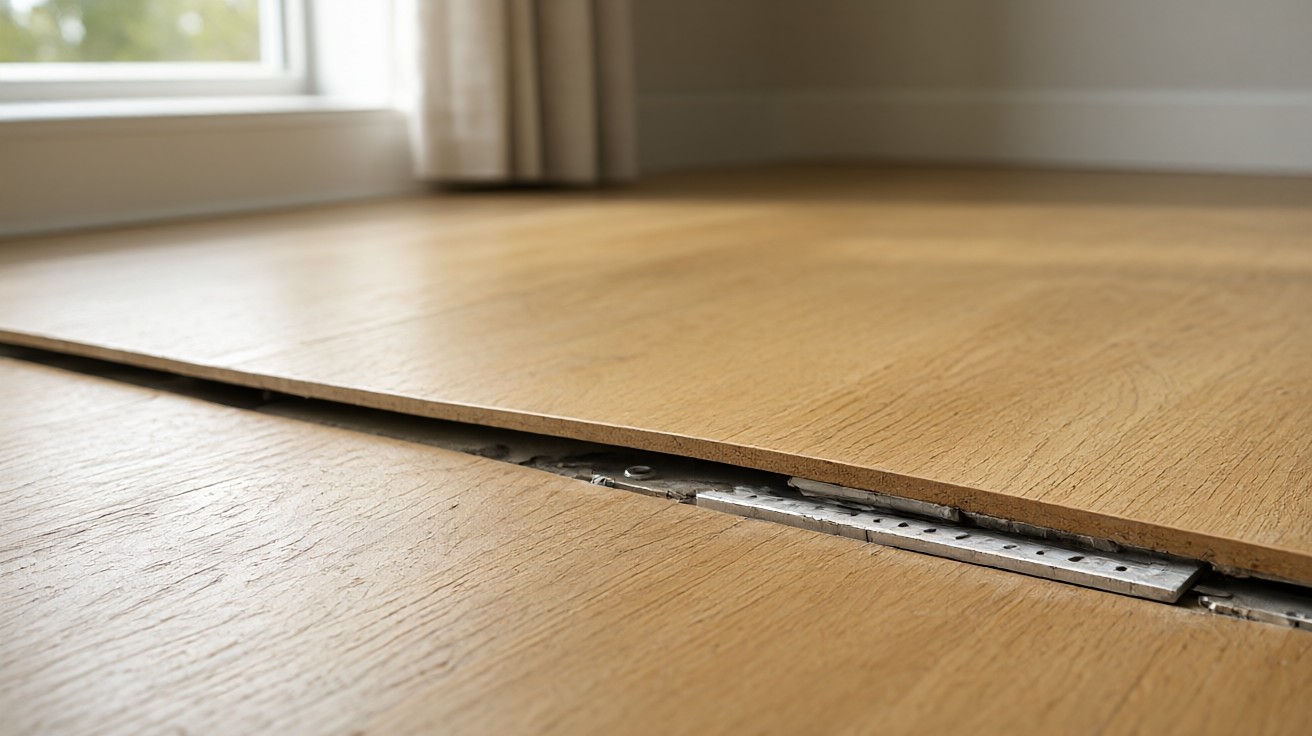
For laminate, wipe immediately. Laminate is not waterproof. Paint can seep into seams and cause swelling. Dry thoroughly and inspect seams for damage.
Carpet treatment
For carpet, use a solvent designed for paint removal. Apply generously and let it sit for 10 minutes. Blot and rinse. Use a wet vacuum if available.
If the stain reached the padding, the padding may need replacement. Lift the carpet and inspect the padding. If it is saturated, cut out the damaged section and replace.
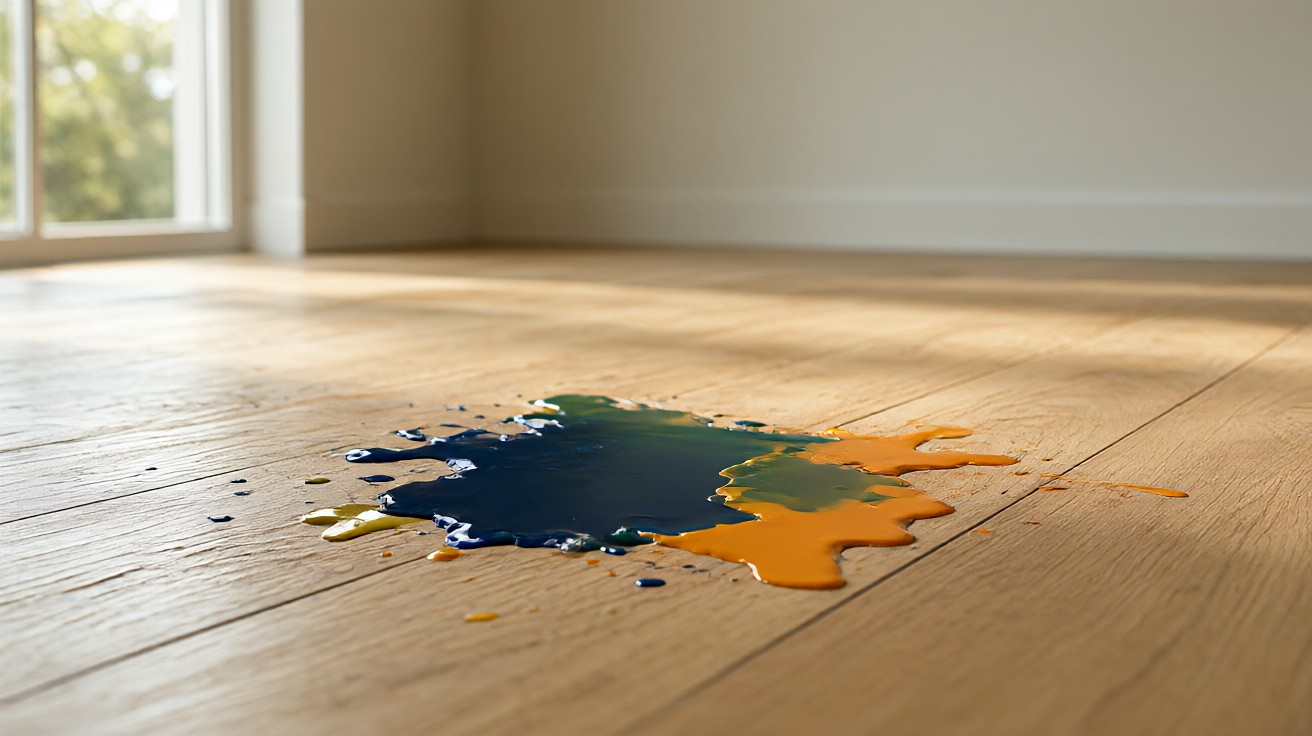
Paint removers explained
Paint removers contain solvents that break down binders. They are the most effective treatment for paint stains. They work on all flooring types.
Choose a remover labelled for the paint type. Water-based removers work on latex paint. Solvent-based removers work on oil-based paint. Follow manufacturer instructions for contact time and application.
If the stain is old, multiple applications may be needed. Paint removers work slowly on set-in stains. Allow 24 hours between applications for best results.
Prevention
Prevent paint stains by using drop cloths, taping edges, and cleaning spills immediately. Place drop cloths under painting areas. Use painter’s tape to protect baseboards.
If the floor is hardwood, consider a protective coating before painting. A polyurethane finish resists paint better than an oil finish.
Tools and supplies
A basic paint removal kit includes paper towels, mineral spirits, paint remover, and a fan. Paper towels cost 3 USD. Mineral spirits cost 8 to 15 USD. Paint remover costs 10 to 25 USD. A fan costs 20 to 40 USD.
Advanced treatment may require a wet vacuum, sanding equipment, and refinishing supplies. These are available for rent. Renting is cheaper than buying for one-time use.
Cost expectations
| Task | Cost range (USD) | Time |
|---|---|---|
| Mineral spirits | 8 to 15 | 5 to 15 minutes |
| Paint remover | 10 to 25 | 10 to 30 minutes |
| Wet vacuum rental | 30 to 50 | 1 to 2 hours |
| Sanding and refinishing | 3 to 8 per sq ft | 1 to 3 days |
| Padding replacement | 1 to 3 per sq ft | 1 to 2 hours |
Common mistakes
Using water on oil-based paint spreads it. Water does not dissolve oil. Using abrasive cleaners damages the finish. Rubbing the stain spreads it.
Each mistake is avoidable with proper diagnosis and the right remover. Use water-based removers for latex paint. Use solvent-based removers for oil-based paint.
When to call a professional
Call a professional when the stain is deep, when the odour persists, or when the subfloor is damaged. A professional can assess whether the floor can be saved or needs replacement.
Structural issues, such as subfloor rot or mould, require a contractor. Do not attempt structural repairs without proper assessment.
| Material | Response time | Method |
|---|---|---|
| Hardwood | 2 hours | Mineral spirits, then sand if needed |
| Tile | 4 hours | Grout cleaner, re-seal |
| LVP | 30 minutes | Wipe and dry |
| Laminate | 30 minutes | Wipe and dry, check seams |
| Carpet | 1 hour | Solvent, replace padding if saturated |
Spring deep dive
Spring is the time to assess winter damage and prepare for humidity changes. Inspect every room systematically. Start at the entrance and work inward. Check for salt damage, grit scratches, and moisture stains.
If you find salt stains on hardwood, clean with a pH-neutral cleaner and a damp cloth. Do not use vinegar. Vinegar damages the finish. If the finish is damaged, plan for refinishing in summer.
Summer deep dive
Summer maintenance focuses on humidity control and cleaning. High humidity causes wood to swell. If the floor cups, reduce humidity immediately. Use a dehumidifier to maintain 35-55%.
Clean more frequently in summer due to outdoor activity. Sand and grit are the leading cause of scratches. Use entry mats and remove shoes indoors. Vacuum weekly.
Fall deep dive
Fall maintenance prepares the floor for winter. Deep clean before the holiday season. Remove furniture and clean underneath. This prevents dust buildup and allows inspection.
Check the heating system. If it dries the air below 30%, install a humidifier. A whole-house humidifier costs 300 to 800 USD. A portable unit costs 50 to 150 USD.
Winter deep dive
Winter maintenance is the most demanding. Monitor humidity daily. Use a hygrometer in each room. If humidity drops below 30%, increase humidification.
Check for gaps weekly. If gaps appear, do not fill them. They will close in summer. Filling a gap that will close causes buckling.
Clean salt and ice melt promptly. These chemicals damage the finish. Use a pH-neutral cleaner and a damp cloth. Do not use abrasive cleaners.
Quantified maintenance schedule
Follow this schedule for consistent results:
- Daily: sweep or vacuum high-traffic areas (5 minutes).
- Weekly: vacuum all floors, check humidity (20 minutes).
- Monthly: deep clean, inspect for damage (1 hour).
- Seasonally: full checklist, re-seal if needed (2 hours).
- Annually: professional deep clean, refinish if needed (4 hours).
A daily sweep takes 5 minutes. A weekly vacuum takes 20 minutes. A monthly deep clean takes 1 hour. A seasonal checklist takes 2 hours. An annual professional clean takes 4 hours.
Conditional guidance
If the stain is fresh, blot and apply remover. If the stain is old, use mineral spirits. If the stain is on carpet, check the padding. If the stain is on hardwood, sand if needed.
If the odour persists, re-apply remover. If the floor is damaged, call a professional. If the pet has frequent accidents, consult a veterinarian.
If the stain is on tile, clean the grout. If the stain is on LVP, wipe immediately. If the stain is on laminate, check seams. If the stain is on carpet, replace padding if saturated.
Common mistakes
Using water on oil-based paint spreads it. Water does not dissolve oil. Using abrasive cleaners damages the finish. Rubbing the stain spreads it.
Each mistake is avoidable with proper diagnosis and the right remover. Use water-based removers for latex paint. Use solvent-based removers for oil-based paint.
When to call a professional
Call a professional when the stain is deep, when the odour persists, or when the subfloor is damaged. A professional can assess whether the floor can be saved or needs replacement.
Structural issues, such as subfloor rot or mould, require a contractor. Do not attempt structural repairs without proper assessment.
Insurance and warranty
Paint damage is usually not covered by insurance. Flooring warranties do not cover paint damage. Document the damage with photos and dates.
A professional assessment can determine the extent of damage. Keep records of all cleaning attempts.
Long-term monitoring
After treatment, monitor the area for 30 days. Check for stain return. Re-apply remover if needed. Keep a log of observations.
A log helps identify patterns and supports insurance claims. Good records save time on future treatments. Update the log regularly and consistently.
Long-term monitoring
After treatment, monitor the area for 30 days. Check for stain return. Re-apply remover if needed. Keep a log of observations.
A log helps identify patterns and supports insurance claims. Good records save time on future treatments. Update the log regularly and consistently.
Insurance and warranty
Paint damage is usually not covered by insurance. Flooring warranties do not cover paint damage. Document the damage with photos and dates.
A professional assessment can determine the extent of damage. Keep records of all cleaning attempts.
Spring deep dive
Spring is the time to assess winter damage and prepare for humidity changes. Inspect every room systematically. Start at the entrance and work inward. Check for salt damage, grit scratches, and moisture stains.
If you find salt stains on hardwood, clean with a pH-neutral cleaner and a damp cloth. Do not use vinegar. Vinegar damages the finish. If the finish is damaged, plan for refinishing in summer.
Summer deep dive
Summer maintenance focuses on humidity control and cleaning. High humidity causes wood to swell. If the floor cups, reduce humidity immediately. Use a dehumidifier to maintain 35-55%.
Clean more frequently in summer due to outdoor activity. Sand and grit are the leading cause of scratches. Use entry mats and remove shoes indoors. Vacuum weekly.
Summary
Paint stains damage flooring fast. Remove them quickly with the right method for each material. Use paint removers for oil-based stains. For general problems, see flooring problems: causes, diagnosis, and repair. For high-traffic areas, see how to maintain flooring in high-traffic areas.