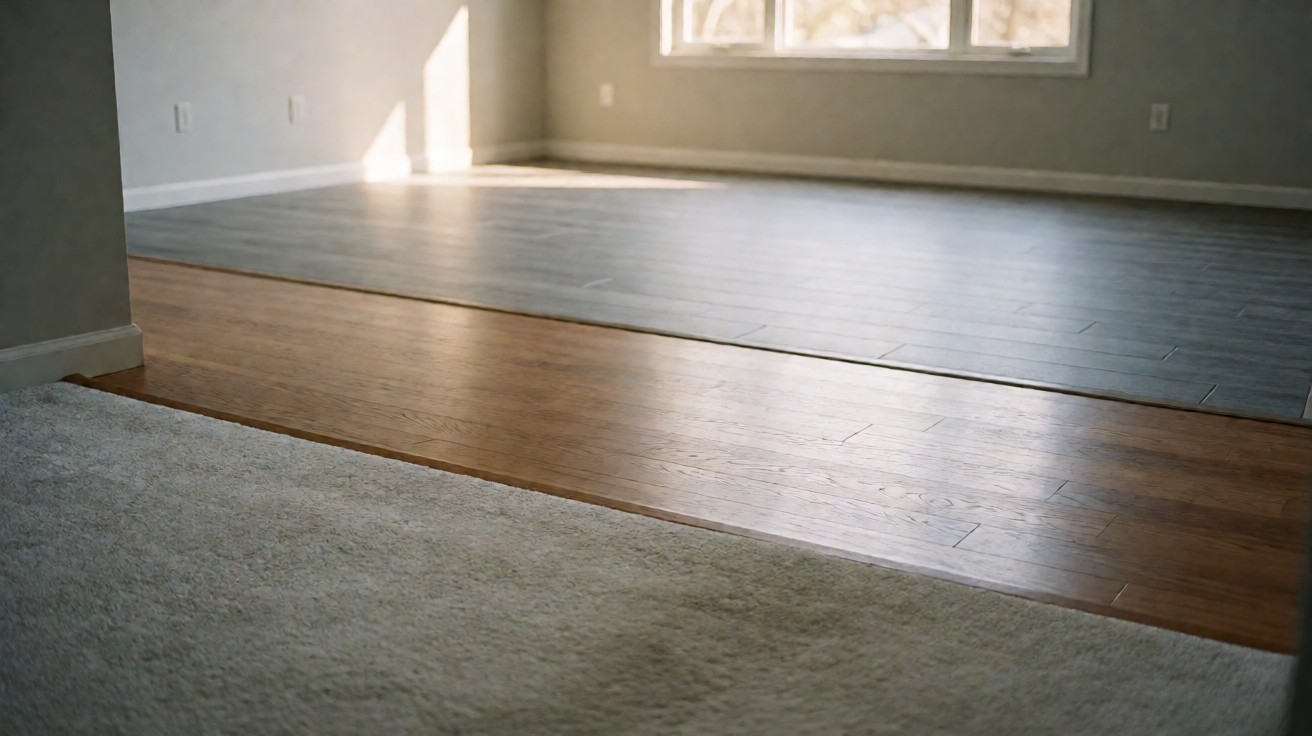

Two floors can cost the same per square foot and still be completely different purchases, because one is standing in twenty years and the other is not.
The rule is short: divide the installed cost by the years of service and compare. Solid hardwood at $12 per square foot over a 75 year life runs $0.16 per square foot per year, while carpet at $4.50 over ten years runs $0.45. The answer is rarely the one on the price list.
Why Cost Per Square Foot Is The Wrong Unit
Cost per square foot answers a question nobody is actually asking. It measures the purchase rather than the service, and the purchase is over the moment the installer leaves.
A landlord holding a floor for ten years is not buying a floor. They are buying ten years of a floor, and the second purchase is already priced into the first one whether they plan for it or not.
What does cost per year actually tell you?
It tells you the rate at which you consume the floor, which is the same idea as a depreciation rate in the accounting sense. At $0.16 per square foot per year, a 100 square foot room costs $16 a year to own.
It also makes two numbers comparable that were never comparable before. You can set a $12 wood floor against a $4.50 carpet floor directly, and you can set either against what an empty unit costs you each month in mortgage, tax, and insurance.
The installed price breakdown matters at this step, because a per-square-foot quote that omits underlayment, demolition, or floor preparation is not the number you divide. The material versus installed price split shows which of the two you are actually reading.
Most disagreements about flooring price are really disagreements about what sits inside the price. Once both quotes carry prep, underlayment, and trim, the per-year figures usually settle the argument faster than the per-square-foot ones ever did.
The Service Life Of Each Flooring Family
Service life figures are ranges under stated conditions, not warranties. They come from manufacturer guidance, installer observation, and the behaviour of floors already in service, and every one of them assumes a floor that was installed and maintained reasonably.
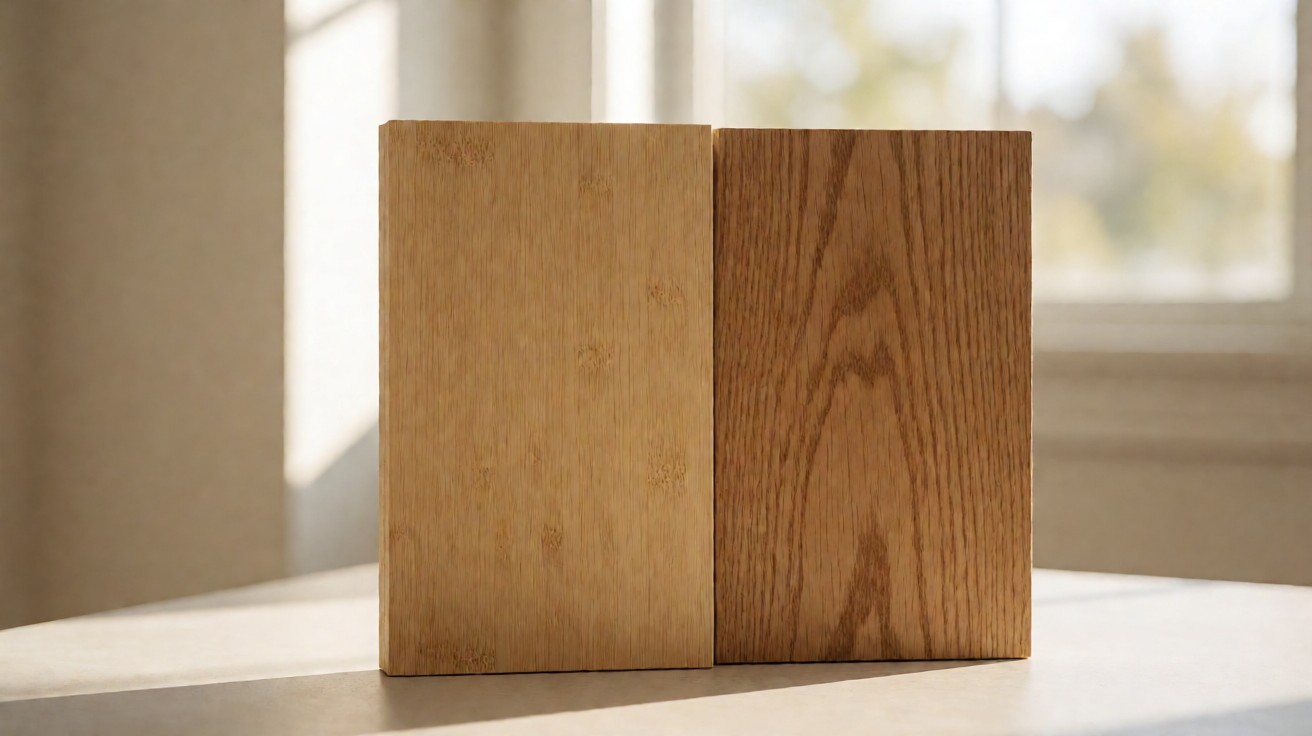
Solid hardwood sits in the 50 to 100 year range because a solid board can be sanded back to bare wood several times without touching the structure underneath. That is a different kind of durability: the material survives because its surface can be renewed.
Engineered hardwood sits at 20 to 30 years. Its wear layer is a few millimetres of real veneer over plywood, so it takes the appearance of an existing floor without taking an existing floor’s ability to be sanded twice.
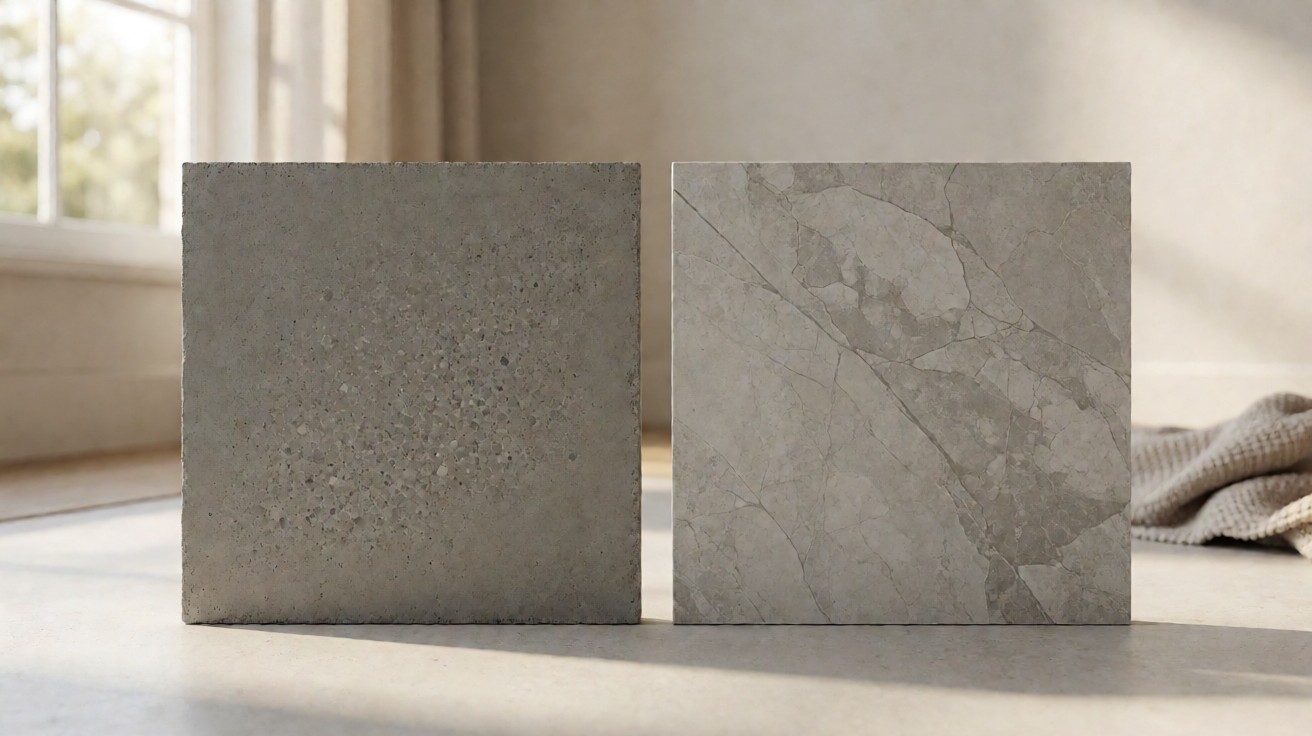
Porcelain and ceramic tile run 40 to 75 years, largely because the body of the tile does not change. Ceramic absorbs water, and porcelain, defined by ASTM C373 at under 0.5 percent absorption, does not, which is why it survives wet rooms and freeze-thaw cycles.
LVT and LVP run 15 to 25 years in residential use, and the number is set by the wear layer. A 6 mil layer and a 20 mil layer are not the same product with different prices on a shelf.
Laminate runs 10 to 25 years, with the wear class doing most of the work. AC3 residential sits near the low end and AC5 commercial grade pushes toward the high end, the difference being a dense melamine and fibre board.
Carpet runs 8 to 12 years, and it is the only family here where replacement is expected rather than exceptional. The fiber abrades, the backing delaminates with age and moisture, and the padding compresses under traffic.
| Flooring family | Published service life | What sets the number |
|---|---|---|
| Solid hardwood | 50 to 100 years | Board thickness, sanding and recoating |
| Engineered hardwood | 20 to 30 years | Veneer thickness over plywood |
| Porcelain or ceramic tile | 40 to 75 years | Water absorption and grout condition |
| LVT and LVP | 15 to 25 years | Wear layer thickness in mils |
| Laminate | 10 to 25 years | Wear class, AC3 through AC6 |
| Carpet | 8 to 12 years | Fiber, backing and pad compression |
A range is not a promise. A floor at the bottom of one was installed badly or lived hard.
Cost Per Square Foot Per Year, Material By Material
Now do the division. Installed cost in dollars per square foot, divided by years of service, gives dollars per square foot per year, and that number is the flooring lifecycle cost comparison in a single line. The table uses mid-range installed prices and mid-range service lives, so change either and your result changes with it.
| Material | Installed cost per sq ft | Service life in years | Cost per sq ft per year | Installs in 30 years |
|---|---|---|---|---|
| Solid hardwood | $12.00 | 75 | $0.16 | 1 |
| Porcelain or ceramic tile | $9.00 | 50 | $0.18 | 1 |
| LVT and LVP | $5.00 | 20 | $0.25 | 2 |
| Laminate | $4.50 | 15 | $0.30 | 2 |
| Engineered hardwood | $10.00 | 25 | $0.40 | 2 |
| Carpet | $4.50 | 10 | $0.45 | 3 |
Read that table as two separate questions. The per-year column answers what you pay for a year of floor, and the installs column answers how many times you will pay an installer in your lifetime in that house.
If your holding period is short, the installs column barely matters and the per-year column decides. If your holding period is long, and a landlord’s is longer than most people expect, the installs column overrides everything else on the sheet.
Note that the cheapest per square foot option and the cheapest per year option are never the same row. Carpet is $4.50 per square foot installed and $0.45 per square foot per year, which is the whole argument in two numbers.
How Many Times Each Floor Gets Replaced In Thirty Years
Thirty years is a fair horizon because it outlasts most tenancies, most initial mortgage terms, and a large share of the plan first-time buyers have when they sign.
Counting rule: installs equal the 30 year horizon divided by service life, rounded up, on the assumption that you replace a floor at the end of its life rather than live with it.
On that rule, solid hardwood and porcelain tile are installed once each. Engineered hardwood, LVT, and laminate go in twice, and carpet goes in three times.
Multiply each install by the installed cost and you get the figure most people have never computed. Carpet at $4.50 three times is $13.50 per square foot, and engineered hardwood at $10 twice is $20.00, which is the larger total.
The floor you replace is also the floor you paid to remove. Demolition and disposal are real costs, and on carpet the old pad usually goes with the old carpet, which is where the removal line in most quotes comes from.
Multiplication is where the ranking changes, and almost nobody does it on the quote.
A carpet installation cost quote that includes pad, tack strip, and seaming tells you more about the 30 year number than the fiber name on the label does.
| Material | Installs in 30 years | 30 year cost per sq ft | Per year over 30 years |
|---|---|---|---|
| Porcelain or ceramic tile | 1 | $9.00 | $0.30 |
| Laminate | 2 | $9.00 | $0.30 |
| LVT and LVP | 2 | $10.00 | $0.33 |
| Solid hardwood | 1 | $12.00 | $0.40 |
| Carpet | 3 | $13.50 | $0.45 |
| Engineered hardwood | 2 | $20.00 | $0.67 |
On a fixed 30 year horizon, engineered hardwood becomes the most expensive row on this list, which is the opposite of what its per-year figure suggested. That inversion is the reason a per-year number should never be read on its own.
What Actually Shortens Or Lengthens A Floor
Three variables move the number more than the material does: moisture, sunlight, and what lives in the house with you.
Moisture comes first. NWFA guidance puts wood flooring at a 6 to 9 percent moisture content for most species in a 30 to 50 percent relative humidity interior, and no board holds that content in a wet room or over a damp slab.
ASTM F2170 in-situ relative humidity above 75 percent, or an ASTM F1869 calcium chloride result above 3 lb per 1,000 sq ft, means the slab is too wet for most wood floors without a moisture membrane above it.
The consequence of ignoring that number is predictable and expensive. Boards cup, joints tighten, and a floor that should have run 50 years gets replaced in year three because of where the subfloor was, not what was laid on it.
Sunlight is the second variable. A south-facing glass wall puts more ultraviolet exposure on one room than an entire north-facing house receives, and it fades both finish and carpet colour unevenly along the window line.
If a room takes direct afternoon sun, choose the product with the higher wear layer or a UV-stable finish, and accept that no flooring product is UV-proof. A lifetime measured indoors is not a lifetime for that room.
Pets are the third variable, and they act on two materials in two different ways. Claw traffic cuts a wear layer through in a path rather than evenly, and a pet that spills water finds the seams of a click-lock floor before it finds a nail-down one.
If two large dogs live in the room, the wear layer figure on the product sheet is the number to shop on. Everything else on that sheet is decoration beside it.
Wear Layer, Finish And Emissions Class
Does the finish change the service life?
On wood, yes. A factory-finished floor carries an aluminium oxide coating, and when it wears through you can recoat the top 1 to 2 mils of it without sanding anything.
A site-finished solid floor can usually be sanded and recoated, which is the whole advantage of paying for a solid board. A factory-finished engineered floor cannot, because sanding to bare wood removes the veneer that is the product.
On LVT and laminate the finish is not the weak point and the wear layer is. A 20 mil wear layer is 0.5 mm and a 12 mil layer is 0.3 mm, and where pets and grit combine that gap shows up in years rather than in price.
Do matte and textured surfaces wear differently?
A textured surface hides wear and collects more soil in the texture peaks, which means it needs more aggressive cleaning. A smooth matte surface is easier to maintain and shows a traffic path sooner.
Where cleaning is done by a tenant rather than by you, smooth wins. Where appearance matters more than a maintenance schedule, texture buys a few more years of looking new.
What do composite flooring emissions classes mean?
Composite flooring sold in Europe and the UK carries a formaldehyde emissions class, where E1 is 0.124 mg per cubic metre, E0 is 0.050, and ENF is 0.025, the lowest class. A buyer who asks for the class is asking about the adhesive and the melamine, not about the oak.
In California, CARB Phase 2 sets its own limit at 0.05 ppm for composite wood products. Where a project is specified rather than chosen, that limit is a pass or fail condition on a submittal.
The LVP cost comparison sets out the wear layer and thickness numbers that drive all of this, and it is where the price gap between two quotes with identical wear layers usually disappears.
Cleaning Frequency And Maintenance Cost Per Year
Cleaning is the variable most owners underestimate, because the annual cost of carpet is mostly a cleaning cost and only occasionally a replacement cost.
IICRC S100 is the standard professional carpet cleaning is performed to, and it defines what a cleaned carpet should look like when the work is finished. If the pile does not meet the standard afterwards, the clean was not completed.
CRI guidance puts residential carpet on a professional cleaning cycle of 6 to 12 months with weekly vacuuming, and at $0.25 to $0.60 per sq ft per visit that is $25 to $60 a year on a 100 sq ft room.
That is real money against the near zero a porcelain or vinyl floor costs to maintain, which is why a per-year comparison that stops at replacement cost understates carpet by a wide margin.
| Flooring family | Typical maintenance | Annual cost per 100 sq ft |
|---|---|---|
| Solid hardwood | Damp mop, no steam, no wax on a factory finish | $0 to $20 |
| Engineered hardwood | Damp mop, keep steam off the seams | $0 to $20 |
| Porcelain or ceramic tile | Sweep and damp mop, reseal grout every 3 to 5 years | $0 to $40 |
| LVT and LVP | Damp mop, no steam, no polish needed | $0 |
| Laminate | Damp mop only, dry cleaning preferred | $0 |
| Carpet | Vacuum weekly, professional clean every 6 to 12 months | $25 to $60 |
The one product a hardwood floor needs that a vinyl floor does not is patience about water. Steam drives moisture into the seams of an engineered floor and into the edges of a solid one, and neither recovers the way a damp mop does.
If your household will actually do it, a wood floor’s maintenance costs nothing. If it will not, put a maintenance allowance in the comparison next to the replacement column, not in a footnote.
Refinishing Counts As A Partial Replacement
Refinishing is the reason solid hardwood behaves differently from every other family here, and whether you count it changes the arithmetic in a way worth being explicit about.
A screen and recoat costs roughly $2 to $4 per sq ft and a full sand-and-refinish $4 to $8 per sq ft, on top of the $8 to $18 per sq ft to install solid wood in the first place.
Refinishing is the only item in this comparison that buys service life instead of replacing it.
Over a 30 year horizon a solid oak floor might be refinished once at $4 to $8 per sq ft and still have 40 years of structural life afterwards. Count that as a replacement and the material looks worse than it is.
Count it as maintenance, which is what it is, and a solid floor at $12 installed plus one refinish at $6 comes to $18 per sq ft over 30 years. Carpet reaches $13.50 on installation alone and then adds $7.50 to $18 more in cleaning.
The condition under which this stops working is an engineered floor. When the veneer is gone there is nothing left to recoat, and the floor becomes a full replacement whether or not anybody sanded it.
DIY Versus Professional And What It Does To Service Life
The installation is part of the service life, and this is where most DIY comparisons get too optimistic about the number of years.
Click-lock LVT and laminate suit a competent homeowner with a flat subfloor. The floor floats, the seams are cut, and if the subfloor moves the floor is designed to move with it.
Solid hardwood nail-down, engineered glue-down, and tile setting are not the same category of work. Nail guns, a wet saw, backer board, and a subfloor flat within 1/8 inch over 10 feet are the actual requirements.
If the subfloor is out of flat, a floating floor cups and clicks at the joints, while a glue-down or nail-down floor develops hollow spots that show up first as squeaks and then as board movement.
Add the hours at a real rate before you decide a professional quote is expensive. Twelve to twenty hours of work is a weekend that has a price even when no invoice arrives for it.
The labour is the floor, in every sense. Materials are the cheap half of a DIY quote.
The honest case for doing it yourself is a small room, a flat subfloor, and a click-lock product. The honest case against is a first floor, a slab, and anything that has to be nailed.
Resale, Rentability And What A Landlord Values
No national dataset prices a resale premium for a floor material, and any source claiming a percentage for wood over carpet should be treated as marketing until it shows its sample.
What buyers consistently report in agent conversations is a preference for wood and tile in living spaces and indifference in bedrooms and basements, which is why the same floor can matter in one room and not the next.
For a landlord the calculation is more mechanical. Carpet in a tenanted property is on an 8 to 12 year clock, and the clock starts with the first tenant rather than on the day you install it.
Where a unit is likely to be re-let several times in 15 years, a floor that survives a wet mop, a dog, and a moved sofa is cheaper than one that shows wear at the door. That is usually LVT at a 20 mil wear layer.
If a route must meet an accessibility code, the floor is not chosen by preference. ANSI A326.3 sets a dynamic coefficient of friction of 0.42 as the wet threshold for a level interior surface, and a polished porcelain that misses it is out regardless of how it looks.
That threshold is a comparison figure, not a slip prediction. What it decides in practice is whether you buy a textured tile instead of a polished one, which is a change of product rather than of price.
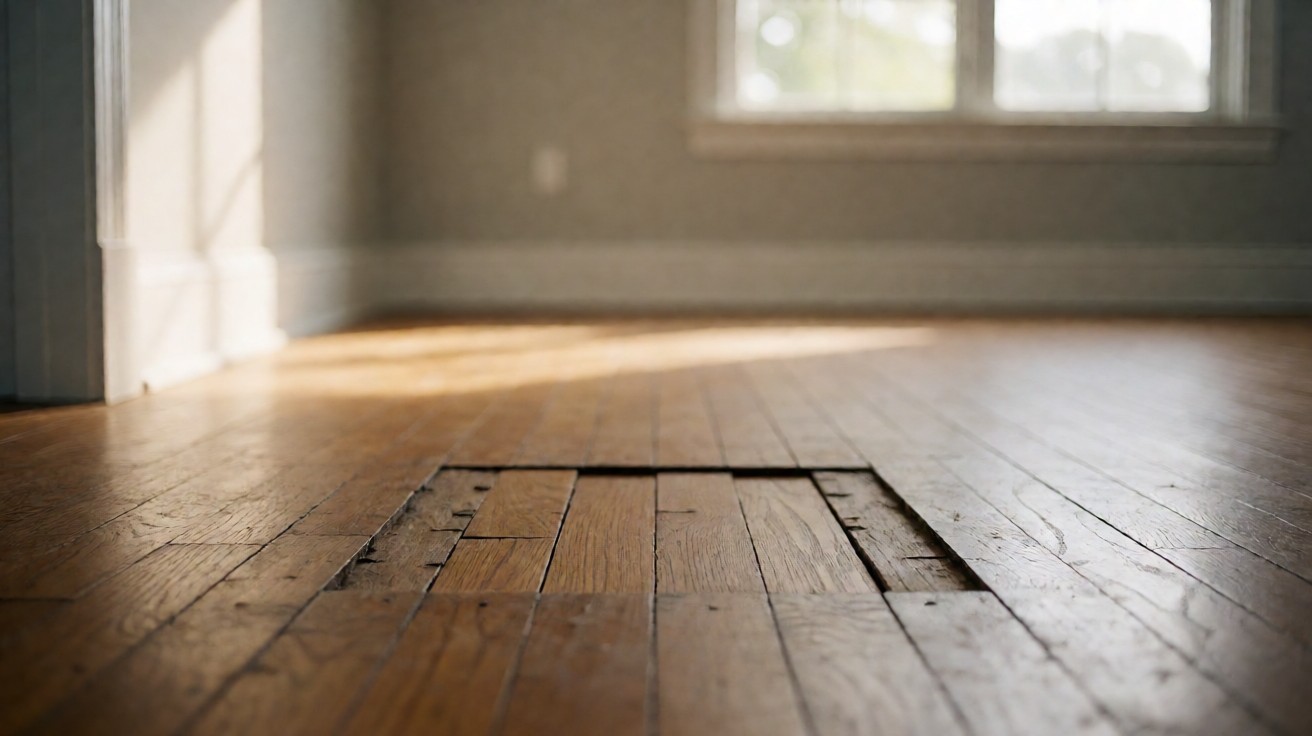
Where one worn board is the only defect, the repair versus replace math works differently from the per-year math, because you are extending the life of a floor you already own rather than choosing one.
The Environmental Cost Of Installing One Floor Three Times
Three installs in 30 years is three floors of material, three deliveries, and three sets of adhesive, pad, and packaging, for one room’s worth of service.
Carpet is the hardest of these to recycle because the fiber, the backing, and the latex coating are fused in a single mat, and most of what comes out of a room goes to landfill rather than into a second product.
Tile is the easiest, because fired clay is inert and a floor removed intact can be reused off site. A tile job demolished into rubble has lost that value, which is an argument for taking up intact tiles when the budget allows.
This is a reason to prefer service life, not a reason to buy the most expensive floor available. A floor that lasts twice as long at twice the price carries the same embodied material per year of service, and usually more.
Where The Two Answers Diverge, And What To Do
The cheapest floor per square foot and the cheapest floor per year disagree in exactly one place, and the disagreement is the price of the second install.
Cheapest per year is solid hardwood at $0.16 per sq ft, then porcelain or ceramic tile at $0.18. Cheapest upfront is carpet or laminate at $4.50, and that gap widens with the holding period because each extra install lands on the same square foot.
If you will be in the home more than 15 years, per-year cost is the right unit and the difference is real money. If you will be there less than 7 years, focus on installation and removal instead, because nobody recovers a 50 year floor.
Everything else in this comparison is a preference. Those three are a calculation.
Three inputs decide it: the installed price per sq ft including preparation, the service life in the specific room it will live in, and the number of years you will hold the floor. Every per-year figure comes from those three and nothing else.
When you are working from a material price rather than a room, start with the installed price per sq ft including prep, apply the service life range that matches your traffic and your moisture exposure, then divide.
If the family is not settled yet, the flooring types side by side comparison narrows the choice before any arithmetic starts, and the arithmetic is much faster once the family is fixed.
If a figure here does not match the figure in your own quote, the difference is nearly always one of three things: preparation, removal, or a service life quoted at the optimistic end of its range.