
High traffic is not one condition but three separate ones, and a floor that survives the hardest of them is not automatically right for the other two.
Traffic Comes in Three Different Patterns
The word high traffic covers three physically different conditions, and they wear a floor in three different ways.
The first is passage: people walking the same line from a door to somewhere else, thousands of times, in shoes. The second is concentration: a few square metres taking most of the load while the rest of the room gets none, which is the door mat area, the sofa front, and the dining table edge. The third is impact: dropped objects, dragged furniture, and point loads rather than distributed ones. A floor can be perfect at one and poor at another, and the best flooring for hallways page covers the hardest case of all of them.
| The pattern | What it asks of the floor | How it fails |
|---|---|---|
| Passage: the same line, thousands of times | A tough finish, or a restorable one | Signature is a dull worn path through the finish |
| Concentration: a few square metres | A thick wear layer, or a rug | Where shoes come off, in front of the sofa, at the table |
| Impact: dropped objects, dragged furniture | A forgiving core, and pads under legs | Fails in one event rather than gradually |
| None of the three | Any of them, chosen on appearance | In a showroom nothing wears out, so the test is useless |
Passage Traffic and the Wear Path
There is a practical corollary: the direction of the traffic matters to the appearance as much as the volume. A plank laid across the path shows the wear line as one continuous dull stripe; a plank laid along the path hides it in the joints, and in a corridor where the look matters that is a real layout choice rather than a matter of taste.
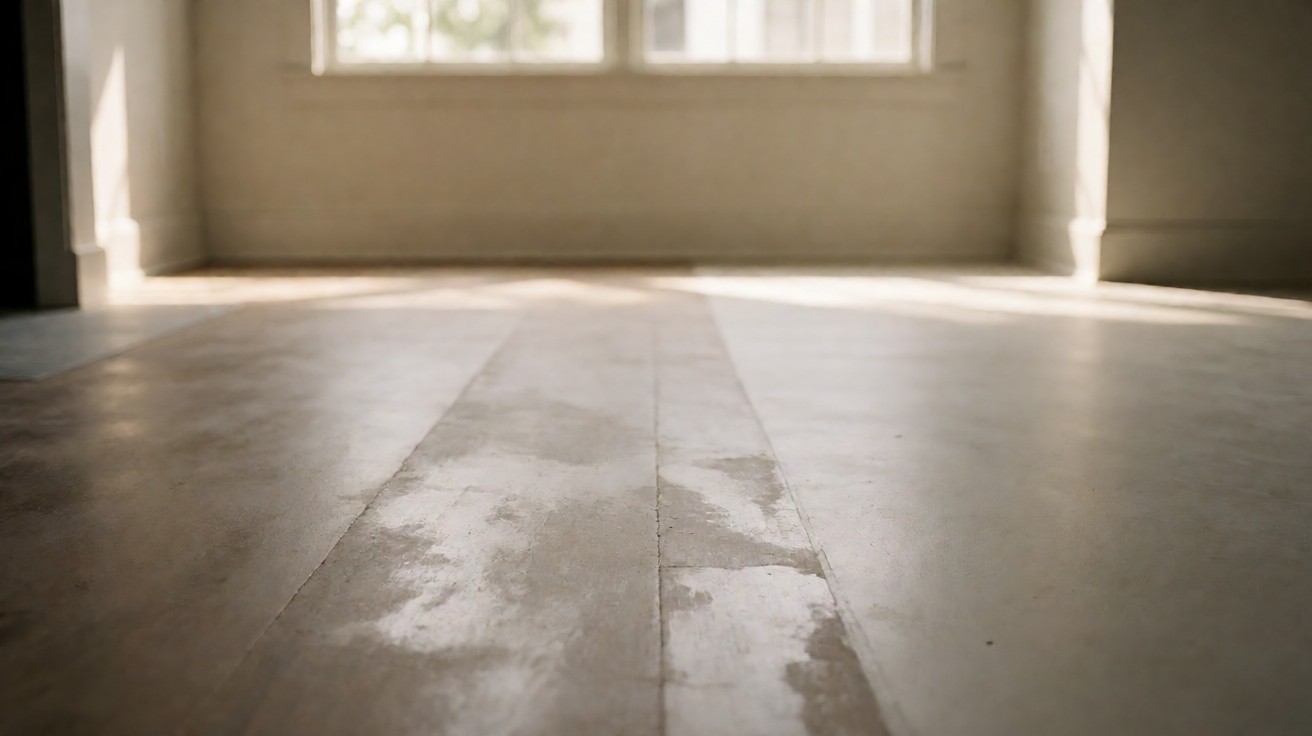
Passage traffic is the condition people picture when they say high traffic, and its signature is a visible dull path worn through the finish in a straight line.
That path is finish wear rather than material wear, which matters more than anything else on this page. A worn finish on a hardwood floor can be sanded and restored; the same path on a floor with a thin or non-recoatable finish means replacement. It is also why the location of the traffic decides the answer rather than the volume of it.
Concentration and the Few Square Metres
One of these is worth flagging because it is the most expensive: the strip in front of a sofa in a living room that is also the walk-through to the kitchen. It is the highest-concentration area in most houses, and the people who buy a hard floor there and discover the wear after three months are usually the ones who should have spent the difference on a better wear layer rather than a better colour.
Concentration is the condition that catches people, because it is invisible in a showroom and it is where floors actually fail in real houses.
The entry area where shoes come off, the strip in front of the sofa where feet go, the strip around a dining table, and the space in front of a wardrobe are all small areas carrying a disproportionate share of the load. A rug over one of them is a more effective answer than changing the floor for the whole room, and where a rug is not wanted the specification that matters is the wear layer rather than the material name.
Impact, and Why Point Loads Differ
Point loads are also why the underfloor matters as much as the top. A cast iron pan dropped on a floating plank over a bare subfloor makes a crater that does not come out; the same drop over a well-supported, padded subfloor dents the plank rather than the subfloor, and the dent is what can be lived with.
The third condition is impact, and it is the one that decides whether a floor can be repaired when something goes wrong.
A dropped cast iron pan, a dragged wardrobe, a furniture leg without a pad: each is a small area carrying a large force. Point loads chip tile, dent resilient flooring, and crush a laminate core, and they do it in one event rather than gradually. This is also why a floor can look perfect for years and then fail in a single afternoon, which is the failure mode most people describe as bad luck rather than as a specification error.
Rigid Core and Why It Leads Here
Rigid core and quality vinyl lead most high-traffic specifications, and the reason is the wear layer rather than the material itself.
A thick wear layer in a floating plank can take grit, dropped objects, and castors without splitting the board, and because the plank is the unit rather than the sheet, a damaged plank can be lifted and replaced rather than the whole floor being taken up. The rigid core vinyl page covers the stone core and the vinyl construction guide is where the wear layer figure is worth reading before buying.
Tile, and the Wear Path in Reverse
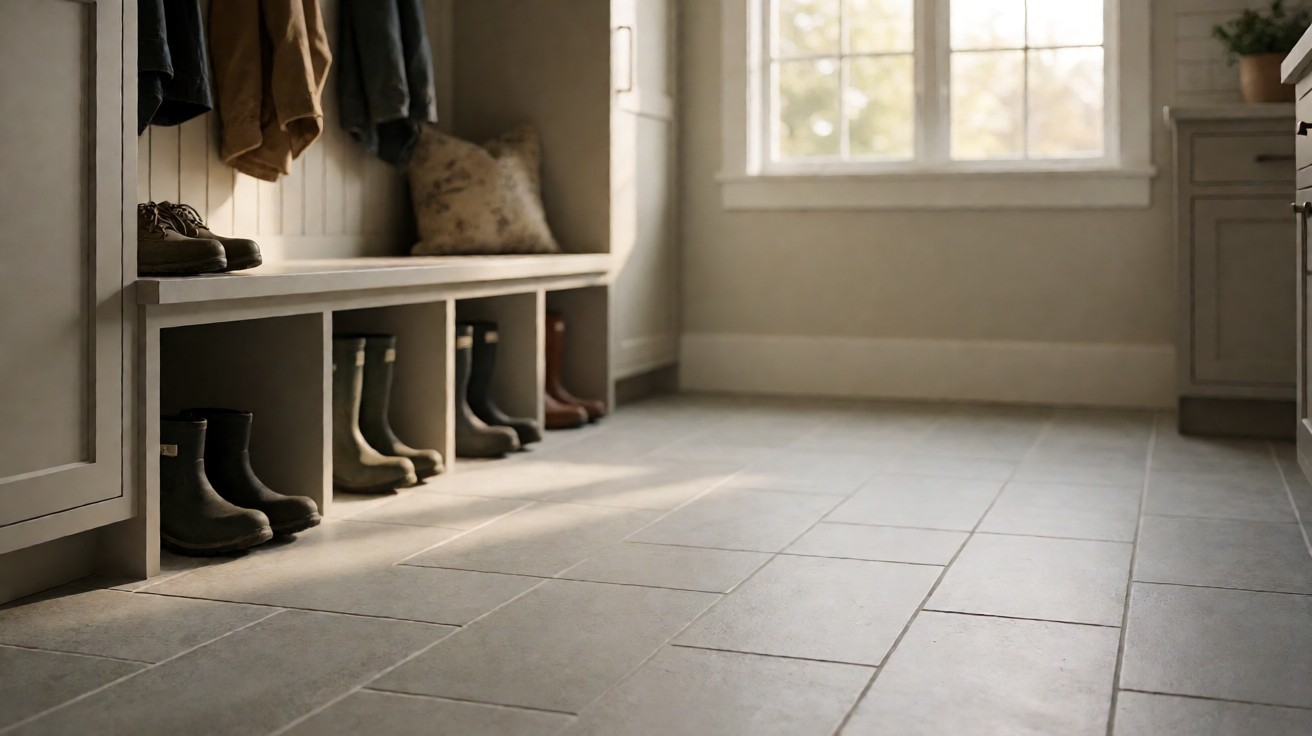
Tile is the hardest surface and it is the correct answer in an entry area where grit arrives from outside, because a glaze does not scratch.
It also fails differently. A grit path dulls the polish of a tile long before it scratches, so the answer is a matte or textured finish rather than a harder one, and a chipped edge from a dropped object is not repairable. Porcelain is the version that resists both better. The porcelain tile page covers the two tile families and the tile flooring guide covers the finish question in detail.
Wood, Laminate, and the Sanding Question
There is a version of this answer that is worth stating in one line, because it is where most of the cost is: a hardwood floor that has been refinished once, in a house that has been refinished once, is the same floor as the original at double the life. The sanded floor is the high-traffic answer that is not a specific material, it is a regime.
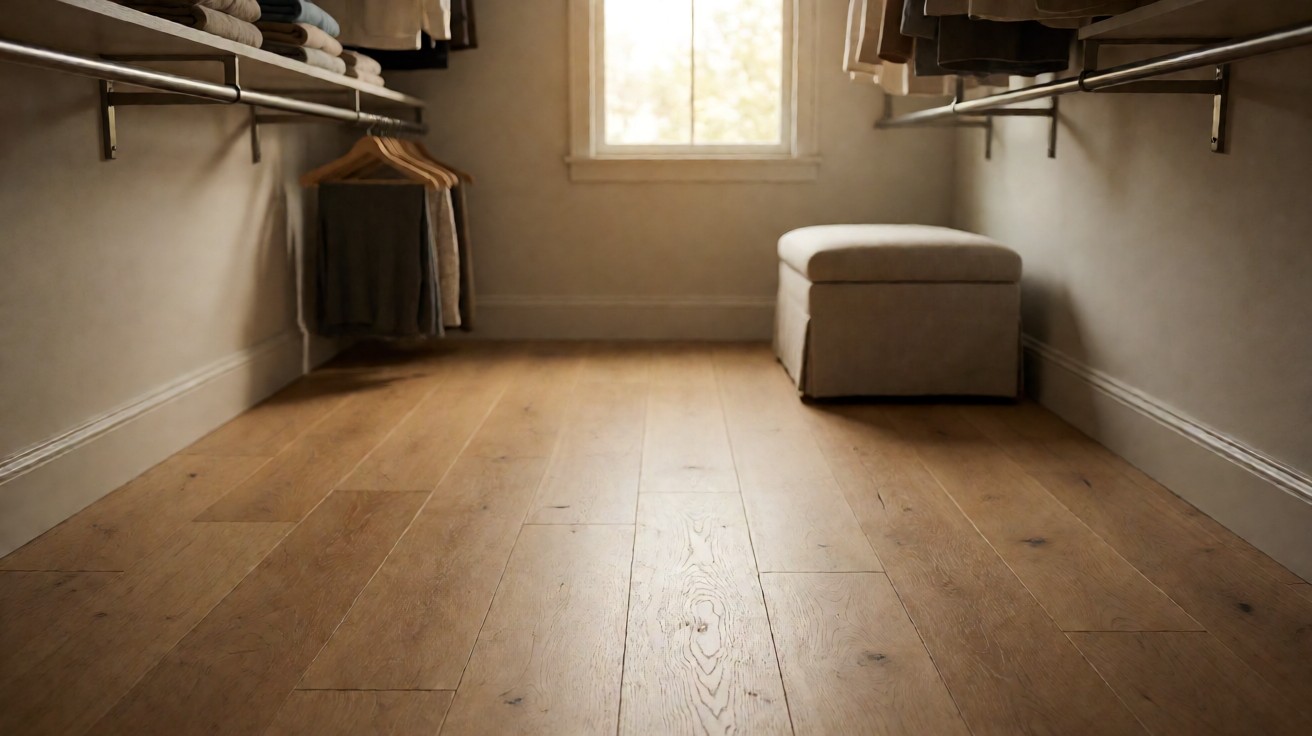
Wood handles passage traffic better than anything that looks like a floor, precisely because it can be restored.
A hardwood floor with a worn path can be sanded back and refinished, which effectively resets its life, and that is worth more in a hall than any harder material. The limit is what is underneath: on laminated board there is nothing to sand back to once the decorative layer is through, and the fibre core beneath it is exactly what a wet mop destroys. The hardwood flooring guide and the laminate flooring guide cover the two constructions.
Carpet and Where It Genuinely Wins on Traffic
Carpet is the correct answer in some high-traffic rooms and it is worth being clear about which ones, because it is usually dismissed too quickly.
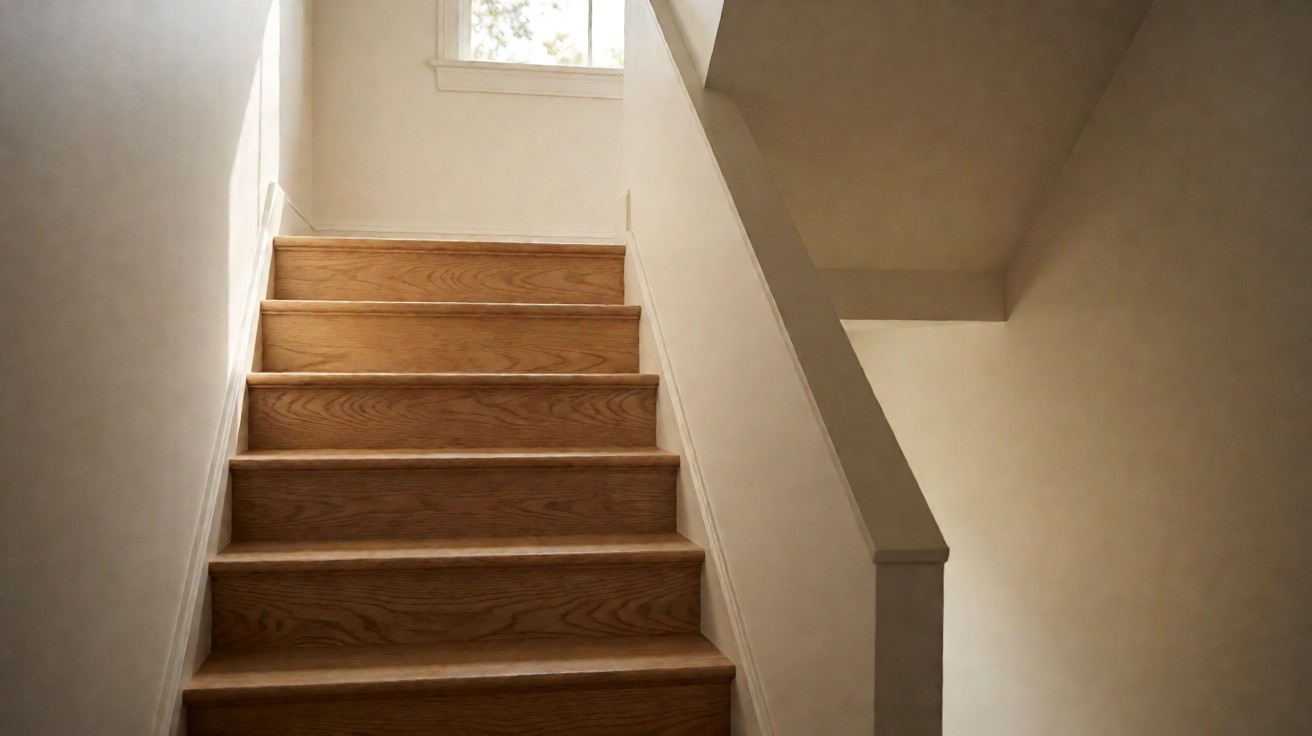
On a staircase it is quieter and softer underfoot than any hard floor and it is the one material that will not be slippery in the way a hard tread can be. In a bedroom that is walked through rather than lived in, it wears out quietly rather than visibly. In a room where shoes are removed, it holds grit rather than letting it travel across the rest of the house. The carpet flooring guide covers the fibre and the pad, and the best flooring for stairs page covers the staircase case.
Underlay, Mats, and the Cheapest Half of the Answer
There is one more that people skip, and it is the one that matters most in a house with children: the threshold. A threshold strip is what takes the impact every time someone crosses between two different floors, and a loose or poorly fitted one is a trip point and a failure point at the same time, and the flooring transitions page covers the strip itself and how it is fitted.
Half of what protects a floor in a high-traffic room is not the floor, and it costs a fraction as much.
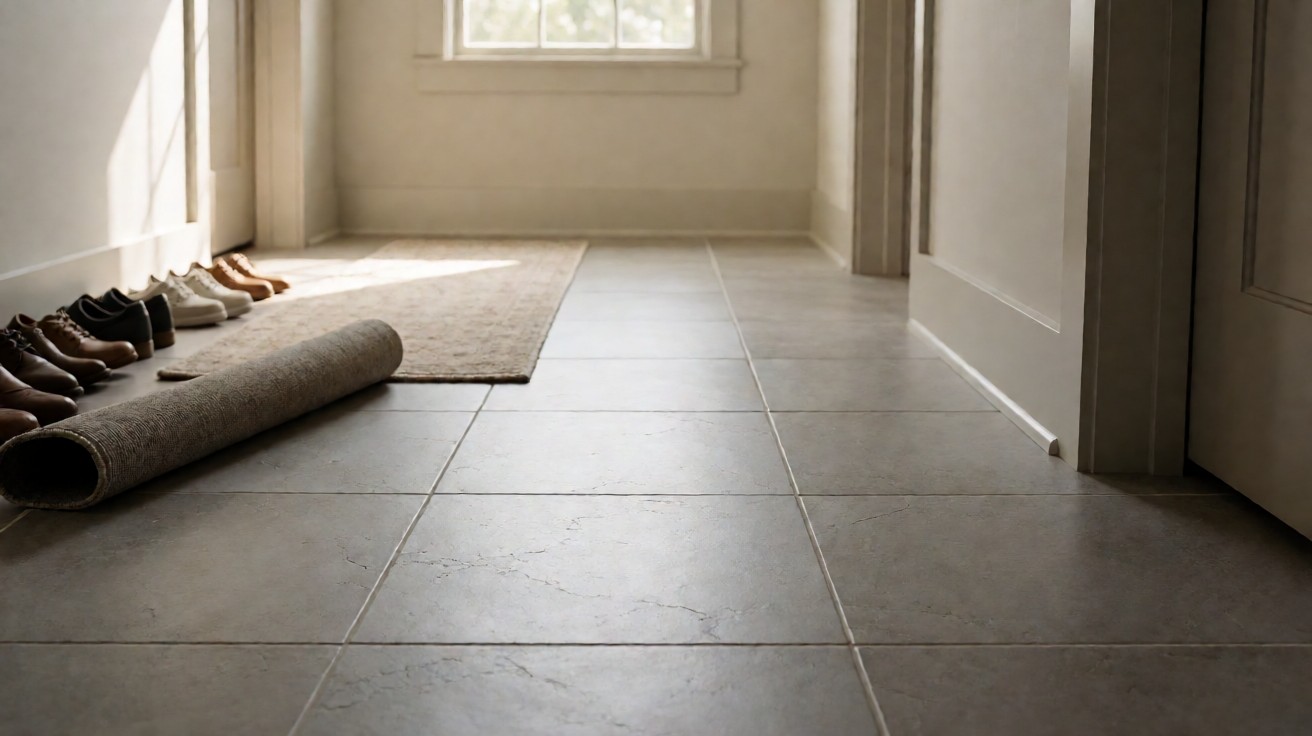
An entry mat that actually stays down catches grit before it reaches the finish, and it is worth more than the difference between two resilient products. A rug in front of the sofa takes the concentration instead of the floor. A felt pad under every furniture leg removes the point load. None of these are floor specifications, and together they usually do more than changing the material would.
Cost, Durability, and the Repair Question
It is also worth separating two costs that get lumped together: the cost of the floor failing at all, and the cost of the floor failing in the middle of the room. A failure at the edge of a room is a repair; a failure in the middle where no one can lift a plank without disturbing the surrounding ones is a re-lay, and that is where the whole-floor answer is the cheaper one.
The material price is the least useful number in a high-traffic room, because the number that decides the outcome is what it costs when something needs replacing.
A floor that can be repaired once is a different financial proposition from one that cannot be repaired at all, and over twenty years that difference is usually larger than the difference in the initial quote. The traffic is what makes a floor get repaired rather than merely cleaned, so it is worth doing that arithmetic before the order rather than after.
| Family | Where it sits on cost | How it behaves when something goes wrong |
|---|---|---|
| Rigid core (SPC) | Lower of the five | Replace one damaged plank rather than the whole floor |
| Porcelain tile | Middle to higher | Dulls before it scratches, and a chip is permanent |
| Engineered hardwood | Middle to higher | Sandable once; a worn path is a repair, not a replacement |
| Laminated board | Lower of the five | Nothing to sand back to once the decorative layer is through |
| Carpet and carpet tile | Middle of the five | Wears quietly in a path; a tile lifts out and is replaced |
How to Choose, and Where to Look Next
Identify which of the three patterns is actually in your room before choosing anything, because the answers differ and the strongest one usually dominates.
Then read the guide for the material that answers it. The rigid core vinyl page is the most common answer, the hardwood flooring guide is the answer for a room where restoring the floor matters more than resisting it, and the flooring types compared page has every family in one table. The best flooring for hallways, best flooring for kitchens, and best flooring for dining rooms pages each cover one of the three patterns as a room in its own right, and the best flooring for mudrooms page covers the entry area where the grit actually arrives.