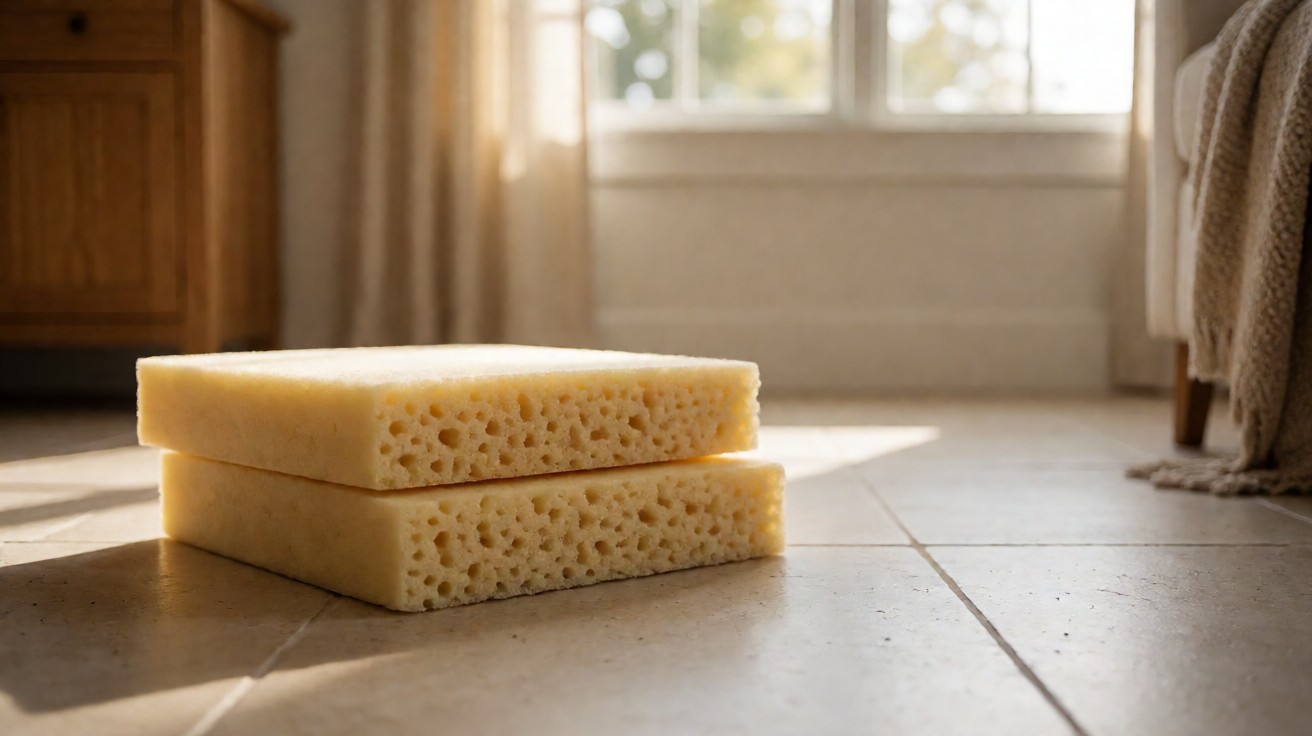

Carpet padding is the unseen half of a carpet installation, and it changes how the carpet feels and how long it lasts, sometimes more than the carpet itself.
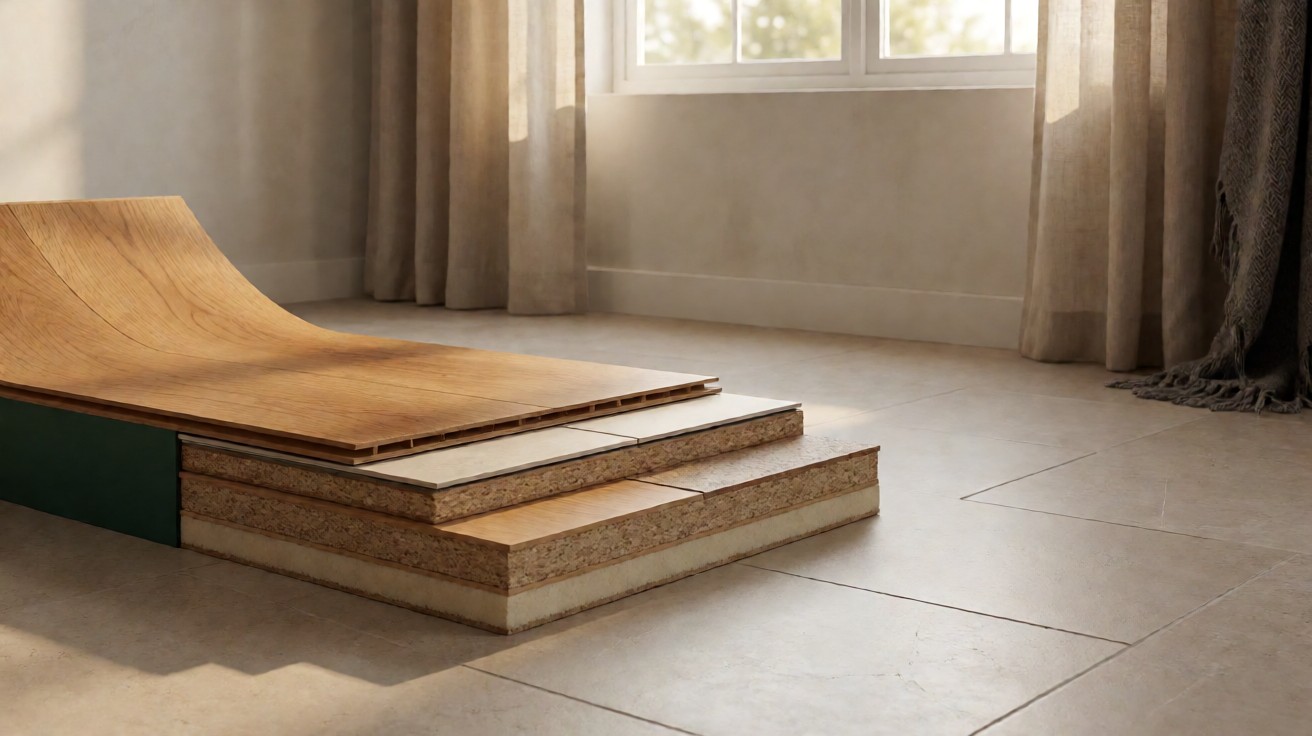
Almost every carpet is sold with a separate pad, often called underlay or cushion, and most homeowners pay little attention to it. The pad sits between the carpet and the subfloor, and it does three things: it absorbs the impact of footfall, it prevents the carpet backing from abrading against the subfloor, and it provides a small amount of thermal and acoustic insulation.
The carpet absorbs wear on top of the pad. The pad absorbs the impact that would otherwise reach the carpet. Together they decide how the floor ages.
This guide covers what carpet pad is made from, what the specification numbers mean, and how to pick the right pad for the carpet and the room. For the carpet itself, the carpet density, pile height, and twist page is the construction reference, and the carpet flooring guide sits above both.
Why the Pad Matters as Much as the Carpet
Most homeowners buy the carpet and treat the pad as the equivalent of the box the carpet comes in. That framing is wrong. The pad is half the installation, and a premium carpet with the wrong pad looks worse and ages faster than a mid-range carpet with the right pad.
The visible effect of pad is the softness underfoot. A firmer pad feels harder, a softer pad feels plusher, and the difference is real and immediate. A living room with the wrong pad can feel commercial, and a bedroom with the right pad can feel luxurious. Padding is the cheapest way to upgrade the feel of a carpet installation.
The invisible effect of pad is impact absorption. Footfall energy lands on the carpet, is partially absorbed by the carpet and the backing, and the rest reaches the pad.
A pad that absorbs the impact protects the carpet yarn from the back, which is the side that wears when the pad is too thin or too firm. A pad that does not absorb impact lets the energy move through the carpet and shorten its life.
The Common Pad Materials
Pad is sold in six common materials, and each one has different properties and a different price.
Urethane foam is the most common residential pad. It is sold in different densities and thicknesses, with the dense versions holding up underfoot better than the soft versions. The foam is firm underfoot and slightly springy, and it is the standard pad for a residential carpet install.
Memory foam, often sold as a luxury upgrade, is softer and more conforming than urethane foam. It feels plusher underfoot but it can bottom out under heavy furniture, leaving permanent compression marks. Memory foam pads are more expensive than urethane and the install is the same.
Rebonded foam is made from recycled foam scraps bonded into a single pad. It is the most common type sold under the label “bonded” or “rebond.” It is firm, it holds its shape, and it is inexpensive. Rebond is the standard pad for residential installs that want a balance of softness and durability.
Prime foam, often called frothed foam or prime urethane, is a higher-quality urethane foam produced in a single pour rather than bonded from scraps. It has a finer cell structure and a more consistent density than rebond, which translates to better impact absorption and longer life. Prime foam is more expensive.
Rubber pad, sold as waffle rubber or flat rubber, is the densest pad and the most resilient. It is heavier to install and more expensive than foam. It is the pad of choice for commercial installations and for high-end residential installs where the carpet is expected to last 20 years or more.
Felt pad, made from recycled carpet fibre or natural fibre, is the oldest pad type and is rare in new residential installations today. It is dense, firm, and quiet underfoot, and is typically used under wool carpet in heritage installations.
Density: The Spec That Matters Most
Pad density is measured in pounds per cubic foot, and the higher the number, the firmer and more resilient the pad. Most residential pad runs from 6 to 8 pounds per cubic foot, with 8 pound being the typical recommendation for a residential carpet with normal traffic.
A 4 to 6 pound pad is soft and inexpensive. It is sold as an upgrade but it is actually a downgrade, because a pad that is too soft bottoms out underfoot and exposes the carpet yarn to the impact the pad should have absorbed. Carpet warranties often exclude damage caused by insufficient pad density.
An 8 pound pad is the mainstream residential recommendation. It is firm enough to avoid bottoming out, soft enough to feel cushioning, and it supports the carpet yarn for the typical carpet warranty period. Most residential installs use an 8 pound pad, sometimes labelled as “8 lb” or “8 pound rebond” on the work order.
A 10 pound or heavier pad is the commercial and luxury residential standard. It holds its shape the longest and it absorbs the most impact. The cost is roughly 50% more than an 8 pound pad, and the carpet warranty usually extends further with a heavier pad.
Thickness: Why More Is Not Better
Pad thickness is sold in fractions of an inch, typically 0.25 to 0.5 inches, and the resistance to going thicker is more important than the resistance to going heavier. A thicker pad feels plusher underfoot but it has real downsides.
The first downside is carpet stretch. Carpet is installed stretched tight over the pad, and a too-thick pad lets the carpet stretch more under traffic, which causes wrinkles and ripples over time. A pad over 0.5 inches in a residential install is risky for this reason.
The second downside is bottoming out. A thick, soft pad compresses to the subfloor under furniture and foot traffic, and once compressed, the carpet yarn is bearing all the impact. The pad has stopped doing its job.
The third downside is warranty. Most carpet manufacturers specify a maximum pad thickness, typically 0.375 inches or 0.5 inches, and a thicker pad can void the warranty.
The standard residential thickness is 0.375 inches at an 8 pound density, which is firm enough to resist bottoming out but plush enough to feel cushioning. Heavier pads can be slightly thinner because they are more resilient. A 0.5 inch pad at 6 pound density is a soft, lower-quality installation. A 0.25 inch pad at 10 pound density is a high-quality commercial-grade install.
The Carpet and Pad Together: How to Match
The pad is selected to match the carpet and the room. The matched choices are not arbitrary, and they fall into a few clean patterns.
A residential cut-pile carpet at typical density and twist pairs with an 8 pound rebond pad at 0.375 inches. It is the mainstream residential choice and what most installs ship with.
A wool carpet or a high-end nylon carpet pairs with a 10 pound prime foam pad or a flat rubber pad at 0.25 to 0.375 inches. A premium carpet benefits from a premium pad, and the cost is in line with the carpet upgrade.
A berber or commercial-grade carpet pairs with a 10 pound rubber pad at 0.25 inches. A berber is a looped carpet that does not crush under traffic but does show backing if the pad is too soft. A dense, thin pad keeps the berber stable for years.
Stair Padding
Stairs use a thinner, denser pad than open floor, and many installers use a different pad altogether.
A stair carpet rolls over the nose of each step, and a pad over 0.25 inches thick creates a soft roll that wears out at the nose. The pad is usually 0.25 inches at 10 pound density, and it is wrapped to the step separately from the carpet installation on the floor.
Some stair installations use no pad at all, with the carpet bonded directly to the wooden stair. This is unusual in residential but common in commercial stairs, where the durability of the bond outweighs the comfort.
Stair Padding by Step Type
Stairs are the most demanding carpet location, and the padding is different from open floor in three ways.
First, the thickness goes down. A stair pad is typically 0.25 inches, sometimes less, because too much pad lets the carpet roll over the nosing and wear prematurely.
Second, the density goes up. Stair padding runs 10 pounds per cubic foot or higher, because the bent-over-the-edge stress concentrates wear at the nosing. A soft pad bottoms out at the bend and shows wear within months.
Third, the method of installation changes. Stair padding is wrapped to each step individually, separate from the open-floor pad, because the carpet rolls over the step nose. A stair runner installation that uses the same pad as the open floor will wear at the nosing before it wears in the field.
| Step type | Pad thickness (in) | Pad density (lb/ft³) | Notes |
|---|---|---|---|
| Closed stair (waterfall) | 0.25 | 10+ | Standard residential stair pad |
| Open stair (cap-and-band) | 0.25 to 0.375 | 10+ | Wraps the nosing and is visible |
| Box stair (with returns) | 0.25 | 10+ | Carpet wraps a return that is visible |
| Curved stair | 0.25 | 10+ | Custom runner, no pad compression |
| Commercial stair (bonded) | None | None | Carpet bonded directly to the wood step |
Acoustic and Thermal Insulation
The pad provides a small amount of acoustic and thermal insulation, and a good pad is genuinely the cheapest noise reduction in a home.
Acoustically, the pad absorbs impact noise (footfalls, dropped objects) rather than airborne noise (voices, music). A carpet-plus-pad floor is markedly quieter than a hard floor in the same room, and a thicker pad absorbs more impact noise than a thin one. For an upstairs bedroom above a living room, the pad is what makes the room livable.
Thermally, the pad adds 0.5 to 1.5 R-value to a floor, depending on the pad material and thickness. A foam pad gives more R-value than a rubber pad of the same thickness, and a thicker pad gives more than a thinner one. The contribution is small compared to wall insulation but real on a basement floor over a slab.
Pad Selection Quick Reference
| Pad type | Density (lb/ft³) | Thickness (in) | Cost | Best carpet | Best room |
|---|---|---|---|---|---|
| Bonded foam | 6 to 8 | 0.375 | Low | Cut-pile mainstream | Family room, bedroom |
| Prime urethane | 8 to 10 | 0.375 | Medium | High-end nylon, wool | Living room, primary suite |
| Memory foam | 5 to 7 | 0.375 | Medium-high | Plush, cut-pile | Bedroom |
| Flat rubber | 10+ | 0.25 to 0.375 | High | Berber, commercial | Stairs, heavy traffic |
| Waffle rubber | 8 to 10 | 0.375 | Medium-high | Loop, berber | Family room with kids |
| Felt | 8+ | 0.25 | High | Wool, heritage | Heritage or wool restoration |
The table is the typical pairing. Most residential installs are the bonded foam row. Most commercial installs are the flat rubber row.
What the Carpet Warranty Actually Requires
The carpet warranty has a clause about the pad, and the clause is usually stricter than the homeowner expects.
Most carpet warranties require a pad with at least 6 pound density and 0.25 to 0.5 inch thickness, and some require a specific pad material.
A pad that does not meet the spec can void the warranty on wear, texture retention, and stain resistance. The full warranty terms are in the small print of the carpet documentation that the installer should leave at the end of the job.
The carpet warranty does not usually cover wear caused by insufficient pad density, which means a cheap pad is a quiet way to lose the carpet warranty as well. The cost difference between a 6 pound pad and an 8 pound pad is small, and the warranty difference is large.
How thick should carpet padding be?
0.375 inches is the residential mainstream, and thicker is usually a mistake. A pad over 0.5 inches lets the carpet stretch and bottom out under traffic, and a pad under 0.25 inches feels firm and absorbs less impact.
For stairs, the pad is typically 0.25 inches at 10 pound density. For a basement over concrete, the pad is also thinner because the slab is rigid and any extra cushioning lets the carpet stretch.
What is the best carpet pad for allergies?
The pad itself is not a major source of allergens. Most carpet padding is closed-cell foam that does not harbour dust mites the way soft carpet fibres can.
The carpet fibre matters more than the pad for allergen control, and a low-pile commercial-style carpet with a thin rubber pad is the simplest allergy-friendly installation. For severe allergies, hard flooring with a thin, washable rug is typically recommended over wall-to-wall carpet regardless of pad.
Can old padding be reused under new carpet?
No. Old padding has compressed under the old carpet and can no longer absorb impact the way it did when new. New carpet needs new padding, and the cost of the pad is included in most carpet installation pricing. Trying to save the pad is one of the more common ways to lose both the carpet warranty and the lifespan of the new carpet.
How This Fits With the Rest of the Choice
This page covers the pad as half of a carpet installation. It does not cover the carpet itself, the carpet tile option, or the floor as a whole.
For the carpet’s three quality numbers (density, pile height, twist), the carpet density, pile height, and twist page is the construction reference. For the carpet style (cut, loop, frieze, textured), the cut pile versus loop pile versus frieze versus textured carpet page covers the look and feel.
For the carpet tile option, the carpet tiles versus broadloom carpet page is the format decision. And for the carpet as a whole, the carpet flooring guide sits above them as the umbrella.