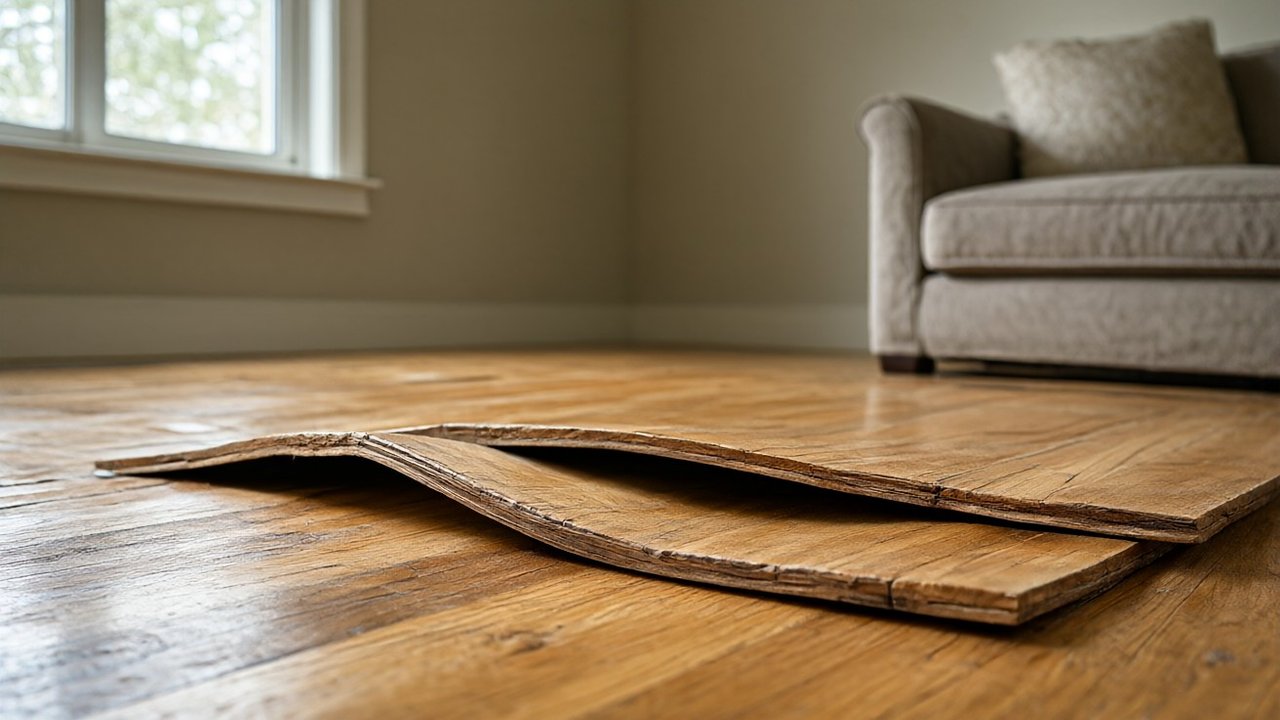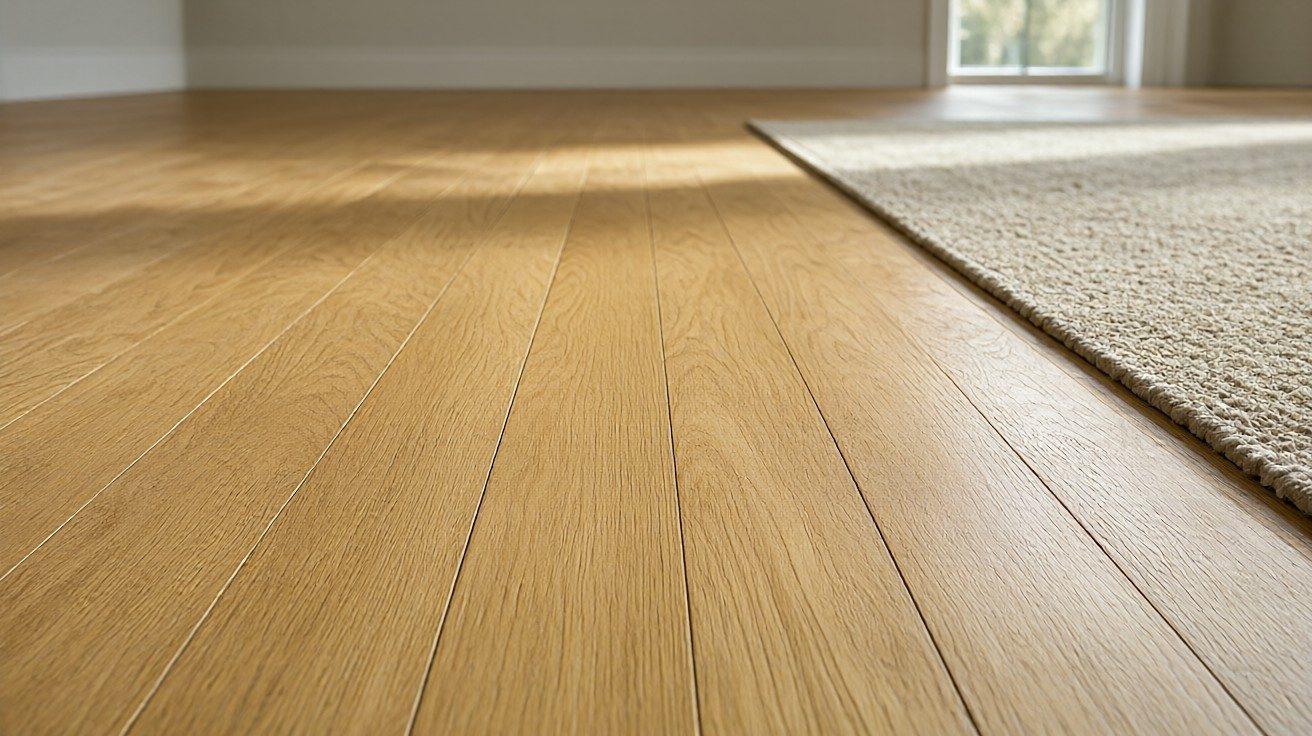

A pale rectangle where a rug sat for years signals discoloration, and the stain can start at the surface, in the finish, or beneath the floor entirely.
The short answer is that vinyl, laminate, and hardwood discolor when light, moisture, heat, or chemicals break the bonds in pigments, dyes, or polymers.
ASTM F1515 measures light stability of resilient flooring by color change in Delta E units, and most premium products are specified at Delta E 4 or lower after accelerated exposure. For vinyl and laminate, a Delta E 4 or lower rating is the right target.
A stain above the finish can often be cleaned; one that has migrated into the fiber or substrate usually requires replacement.
What Causes Flooring To Discolor
Discoloration is a change in the apparent color of the floor surface. It is not the same as wear, which removes material and dulls the finish. Four forces drive almost every case: ultraviolet and visible light, moisture, heat, and reactive chemicals. Each acts on a different layer of the floor system.
Light attacks dyes and polymers through photooxidation. Moisture carries tannins, iron, and mold to the surface. Heat accelerates both reactions and softens adhesives that can bleed upward. Chemicals such as bleach, ammonia, and high pH cleaners react directly with finishes and pigments.
The National Wood Flooring Association Problems, Causes, and Cures manual groups wood floor stains into moisture stains and chemical stains. Moisture stains change color with exposure to water and can appear black, brown, white, or grey. Chemical stains are irregular spots caused by reactive substances and air pollution.
Sunlight And UV Fading
UV light is the single largest driver of color change in finished wood, vinyl, and carpet.
Research cited by Johnson Hardwood attributes roughly 40 percent of fading to UV light, 25 percent to heat, 25 percent to visible light, and 10 percent to artificial lighting.
Window glass blocks most UVB radiation but transmits UVA, so indoor floors still fade, only more slowly.
Wood is photosensitive. Brazilian cherry can shift from light salmon pink to deep reddish gold after UV exposure. Dyes are not colorfast and photodegrade when exposed to light or heat. Clear coatings slow but do not stop the process, because UV penetrates through them into the substrate.
Resilient flooring is tested under ASTM F1515 using a xenon arc lamp with daylight filters, with half the specimen masked as a reference. Color difference is measured in CIE Lab space as Delta E. Common specifications require Delta E 8 or lower after 72 to 96 hours of exposure; premium products require Delta E 4 or lower.
Why does the floor under a rug look lighter or darker?
The covered area received no UV or visible light, so it kept its original color while the exposed area changed. The contrast is usually most visible at the rug edge. After removing the rug, the difference softens over weeks to months as the covered area catches up, but deep dye loss is permanent.
Moisture Stains And Tannin Bleed
Moisture stains appear when water reaches the wood or finish and carries dissolved compounds to the surface.
The NWFA lists rust from fasteners, plant pots, pet urine, mildew, decay fungi, and alkaline conditions as causes.
Topical moisture from incompatible cleaners, spills, or steam can blush or damage the finish itself.
Tannic acid is water soluble and discolors when it contacts iron and water, producing a bluish grey stain on oak, walnut, and other tannin rich species. Water that migrates from below can cause dark staining or a white haze between seams and on the surface.
On wood floors, the first step is to eliminate the moisture source and then evaluate the floor. Factory finished floors may need board replacement. Resanding works when the structural integrity is intact and sanding removes the stain. See how to identify flooring moisture damage for a deeper moisture checklist.
Chemical And Cleaning Damage
Household chemicals react with finishes and pigments. The NWFA lists nail polish remover, ammonia, chlorine, mustard, iodine, oil, milk, ethyl alcohol, and acetic acid among common culprits. Stone and tile grout drips and sulfamic acid used to remove grout haze can also stain adjacent wood floors. A musty odor alongside staining points to why flooring smells musty.
Resilient flooring is sensitive to pH extremes. Heavy duty degreasers run pH 13 to 14 and acidic rust removers run pH 2 to 4, and both can permanently stain or reduce service life. Damaged wear layers leave the floor prone to scratches and deeper staining.
Urethane and isocyanate adhesives can react with factory finished floors and cause discoloration at seams. Naturally occurring oils in some exotic species can interfere with finish drying and leave surface discoloration.
Can a steam mop discolor vinyl or laminate?
Yes. Steam forces moisture into seams and under the wear layer, which can whiten, swell, or permanently stain the core. Most manufacturers void warranty coverage for steam cleaning. Use a damp microfiber mop with a pH neutral cleaner instead.
Rubber Mat And Asphalt Tracking Stains
Rubber backed mats, furniture pads, and rug underlayments are a common source of yellow or brown staining on vinyl, linoleum, and polyurethane coated floors. The plasticizers in rubber migrate into the flooring polymer and cause permanent discoloration at the contact area.
Asphalt tracking from driveways and parking lots can yellow carpet and resilient floors over time. The Carpet and Rug Institute notes that oily material from asphalt sealers tracked into a building can yellow carpet and other flooring, and that once it penetrates the fiber it is virtually impossible to remove.
Prevention is straightforward. Use non staining mats and breathable underlayments, choose latex based driveway sealers, and clean entry areas frequently. Avoid light colored flooring in high traffic entries where asphalt tracking is likely.
Mold Mildew And Biological Growth
Mold and mildew discolor floors when moisture stays on or under the surface. The EPA states that the key to mold control is moisture control, and that water damaged areas should be dried within 24 to 48 hours to prevent mold growth. Mold may cause staining and cosmetic damage that cannot be fully restored.
On wood, mold and mildew typically appear black, grey, or orange, while decay stains run brown or white and fungus stains run grey, black, blue, or orange. Carpet and padding that stay wet beyond 48 hours usually need replacement of the padding at minimum.
Surface mold on hard floors can be removed with a damp mop and mild detergent after the moisture source is fixed. Porous materials such as carpet and padding may need to be discarded if moldy. Do not paint or caulk over moldy surfaces.
Adhesive Off Gassing And Subfloor Migration
Discoloration can migrate from below the floor. Hydrostatic pressure from the subfloor can contribute to mold or mildew, and prior adhesive contamination can bleed through. When rubber, adhesives, and vinyl surfaces contact each other during installation, plasticizer migration can cause unpleasant discoloration. If the floor is also buckling or lifting, address moisture first.
Some resilient floors also react with alkaline conditions in concrete substrates. Moisture from below can create dark staining or a white haze between seams. Evaluating the subfloor moisture content and pH is essential before any repair.
ASTM standards require manufacturers to test the finished flooring product, not the installed floor with adhesive, cleaning chemicals, and disinfectants. That gap means a product can pass light and chemical stability tests while the installed system still discolors.
Carpet Yellowing And Fume Fading
Carpet yellowing has several distinct causes. The Carpet and Rug Institute attributes yellowing to pollutants from heating fuels, changes in alkalinity, cleaning solutions, and atmospheric contaminants. Oily soil absorbed into fiber can take on a yellow cast that frequent cleaning helps prevent.
BHT yellowing, also called phenolic yellowing, produces a yellowish color under rugs and flat furniture on carpets that contain BHT in the latex backing. The covered area lacks airflow, which triggers the reaction. Removing the object and exposing the carpet to air can gradually restore color.
Bleach causes complete or moderate color loss. The IICRC S100 cleaning standard notes that chlorine bleach and oxygen bleach spotters can leave light yellow to pure white discoloration that only dyeing or patching can correct. Fume fading from ozone and subfloor fumes also affects dyes over time.
Is yellowing under a rug permanent?
BHT yellowing can be partially or fully reversible by removing the rug and allowing airflow for several weeks. Yellowing from oily soil or heating fuel pollutants is usually permanent. Test by exposing a small area to air for two to four weeks before deciding on replacement.
How To Tell Temporary From Permanent Stains
A stain that sits on top of the finish can often be removed with the right cleaner. A stain that has penetrated the finish, fiber, or substrate is usually permanent. The table below summarizes the common cases.
| Stain type | Typical appearance | Reversible? | First action |
|---|---|---|---|
| Surface residue from cleaner | Cloudy haze, dull film | Yes | Clean with manufacturer approved product |
| Moisture stain on wood | Dark or white spot, haze at seams | Sometimes | Eliminate moisture, then resand or replace boards |
| Tannin and iron stain | Bluish grey on oak or walnut | Rarely | Replace affected boards |
| Chemical spot | Irregular discoloration at spill point | Rarely | Replace or refinish affected area |
| UV fade | Even lightening in sun exposed zones | No | Shade windows, accept or replace |
| BHT yellowing under rugs | Yellow outline matching rug shape | Sometimes | Remove rug and allow airflow |
Three quick tests help classify the stain. Wipe with a damp white cloth and the manufacturer cleaner.
If the color transfers, it is surface residue. Place a piece of flooring over the stain for 48 hours.
If the stain lightens, UV or oxidation is involved. Check moisture with a pinless meter.
Readings more than 2 percent above the unaffected floor indicate an active moisture source.
Testing And Diagnosis Steps
Work from the least invasive test to the most. Start with the surface and move downward only when needed. Document each step with photos and moisture readings so a warranty claim has evidence.
| Step | Tool or method | What it tells you |
|---|---|---|
| 1. Visual and light test | Flashlight at low angle | Whether the stain is on the surface or in the finish |
| 2. Surface cleaning test | Manufacturer approved cleaner | Whether residue can be removed without damage |
| 3. Moisture scan | Pinless dielectric meter | Whether an active moisture source exists |
| 4. pH check of cleaner | pH test strips | Whether a cleaning product is too acidic or alkaline |
| 5. Board removal and inspection | Pull one board or plank | Whether the stain extends into the substrate or adhesive |
For warranty claims, manufacturers often send an independent inspector. The NWFA and CRI both stress that maintenance records and product specifications matter. Keep receipts for cleaners and follow the manufacturer care guide.
Prevention And Maintenance That Works
Prevention is cheaper than replacement. The most effective steps target the four drivers directly. Shade south and east facing windows with UV filtering film or curtains. Keep indoor relative humidity between 30 and 50 percent and use a hygrometer to monitor it.
Clean with manufacturer approved pH neutral products. Avoid steam mops, bleach, ammonia, and high pH degreasers. Wipe spills immediately and dry the area within 24 hours. Use non staining mats and breathable underlayments, and rotate rugs and furniture every few months to even out exposure.
For carpet, vacuum high traffic areas daily and perform restorative cleaning on a schedule. Entry mats that trap soil reduce asphalt tracking and oily buildup. The CRI recommends checking traffic lanes for slight dulling as an early sign of soil accumulation.
For wood, use felt pads under furniture and avoid plant pots in direct contact with the floor. Reseal or refinish on the schedule the manufacturer recommends. For vinyl and laminate, protect the wear layer and avoid dragging heavy objects.
When Replacement Is The Right Call
Replacement is justified when the stain has penetrated the fiber, substrate, or adhesive, or when the affected area exceeds what sanding or board replacement can reasonably fix. Factory finished floors often require board replacement rather than resanding.
Consider replacement when UV fade is severe and uneven, when pet urine has penetrated into the subfloor, or when mold has contaminated padding or subfloor. A professional assessment of moisture and structural integrity should precede any decision.
Most discoloration is preventable with the right habits. Matching the floor to the room, the light exposure, and the cleaning routine prevents the majority of cases. Document the original color with a photo at installation so future changes are easy to spot.