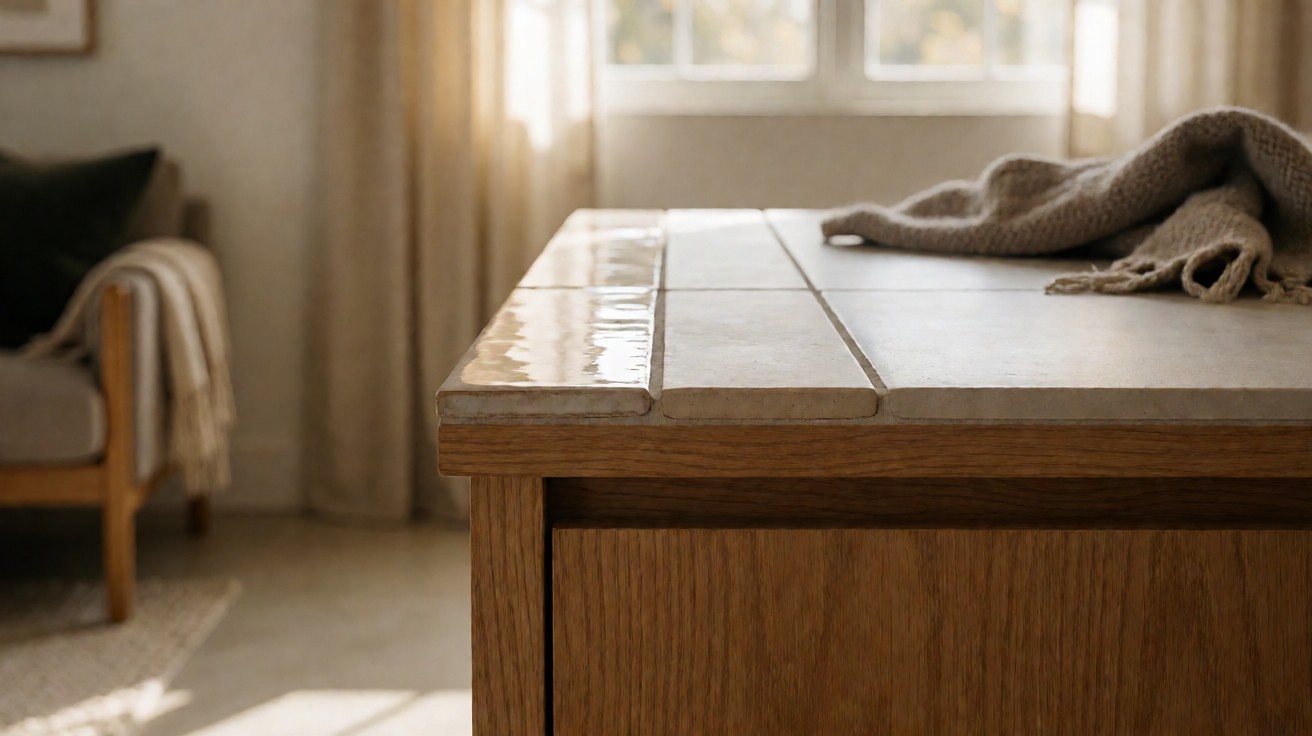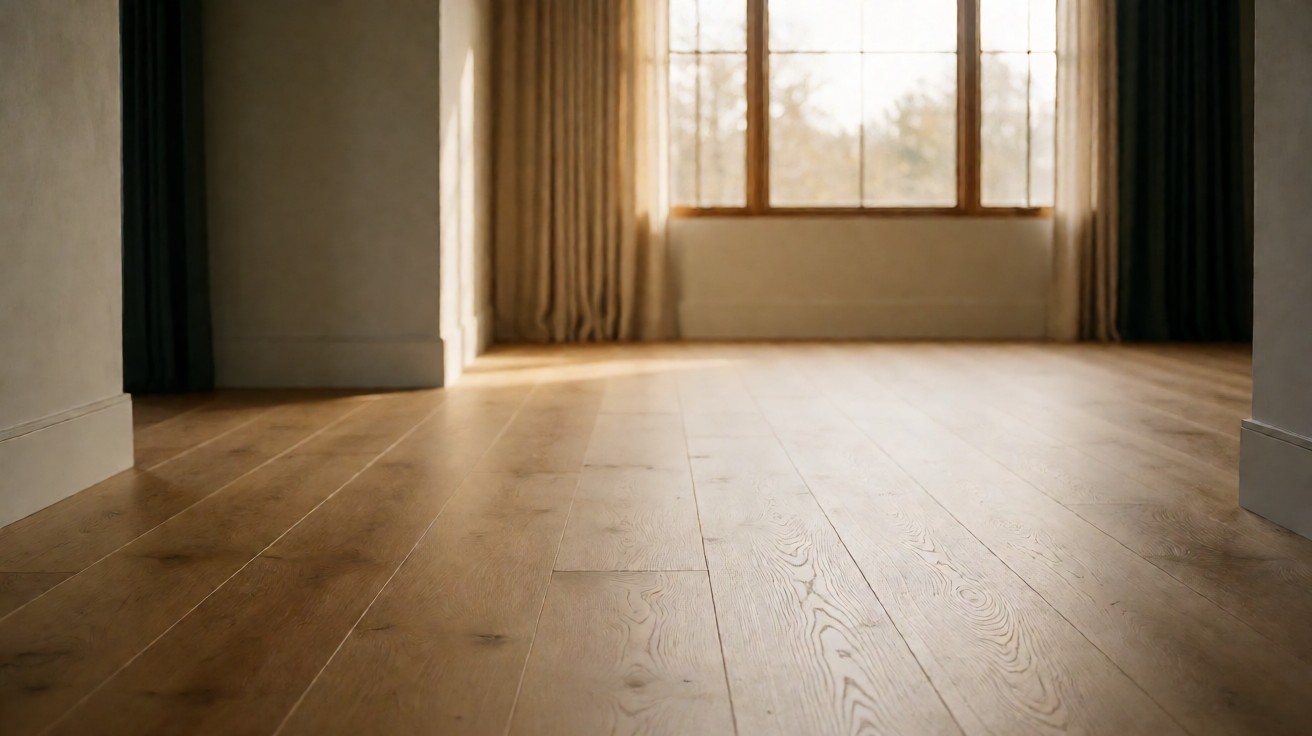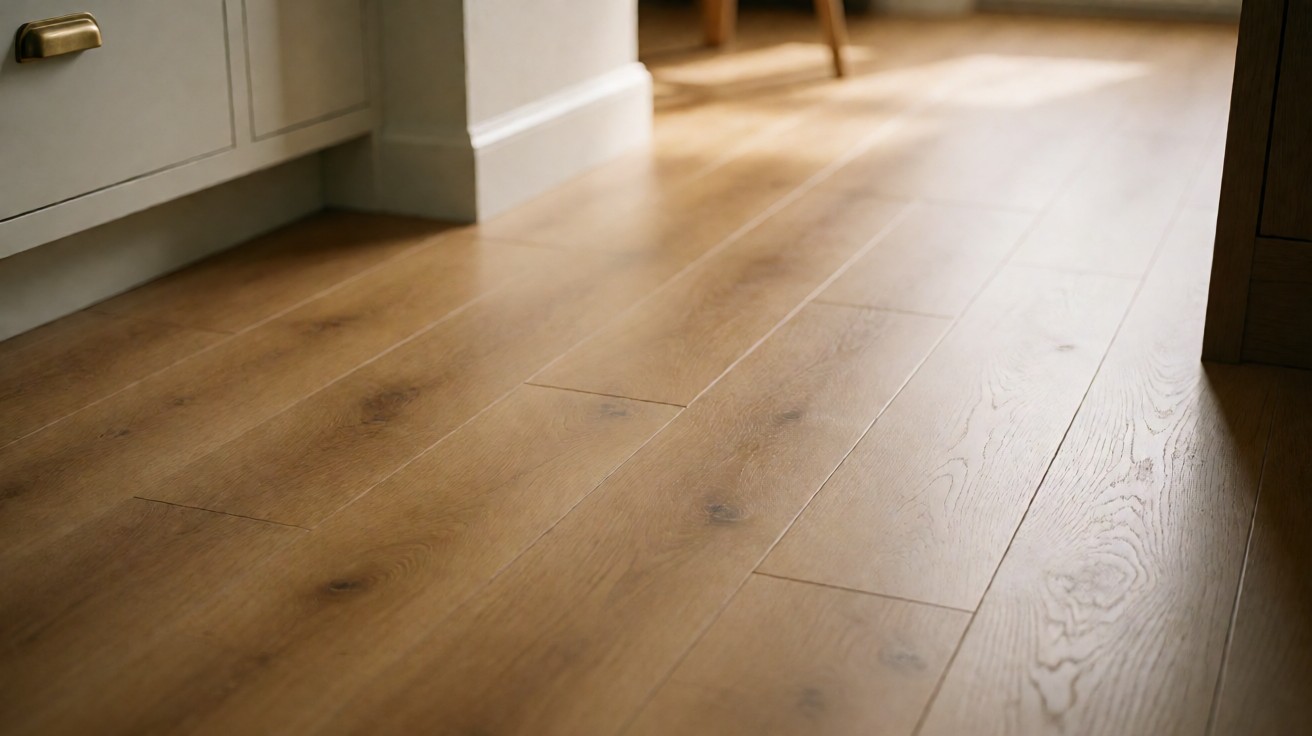

Prefinished and site-finished hardwood look almost identical in a showroom photo, but they are made at completely different moments, and that single difference changes who absorbs the risk. A prefinished board is sanded and coated in a factory. A site-finished board arrives raw and is sanded and coated inside your home, weeks later.
That timing is the whole argument. Because site finishing happens after installation, it can match an existing floor and reach a deeper colour, but its outcome depends on the moisture and flatness of your subfloor on the day the crew shows up. Prefinished flooring trades that control for predictability.
This guide works through the decision rather than listing pros and cons. It covers what each option actually gives up, when site finishing earns its extra cost, and how to tell the difference between the two when a salesperson shows you a sample.
Prefinished vs. Unfinished: The Short Answer
Buy prefinished unless you have a specific reason not to. It arrives ready to walk on, the finish is applied under controlled factory conditions, and the board’s warranty travels with the product. Most homeowners get a better-looking floor with less schedule risk for a similar or lower installed price.
Choose site-finished when the floor has to blend with an existing hardwood floor that will stay in place, or when the job involves stairs, thresholds, or uneven wear that no factory coating can hide. In those cases, matching a continuous field of colour matters more than a fast install.
Everything else is a preference. Some people simply prefer the deeper, more custom look that a wet film can deliver, and that is a legitimate reason.
What Each Option Actually Is
A prefinished board has already passed through several sanding and coating stages before it reaches the truck. The factory sands the raw stock, applies stain if the colour calls for it, and lays down the wear coats that will protect the floor for its first decade or more.
An unfinished or site-finished board is milled and sometimes prefilled with a sealer, but it arrives sanded or rough-sanded. The installer still has to sand the installed floor to a uniform bare surface, then apply the stain and finish coat by hand.
One consequence runs through everything else: a factory coat is applied to a flat, single-board surface, while a site coat is applied to an assembled floor. That is why site finishing can blend tones across board transitions that factory finishing leaves visible.
The cost difference between the two is usually smaller than the schedule difference. Most of the extra money on a site-finished job buys on-site sanding and hand-blending rather than a superior coating material. That reframing matters when you are comparing quotes.
Colour Depth and Grain Clarity
This is where the two genuinely diverge, and it is the strongest argument for site finishing. Factory finishes are thin, even coats, which means they mostly seal the surface and leave the grain readable. That is desirable if you want the wood to look like wood.
Site finishing allows a wetter, more saturating film. Colour goes deeper into the wood, grain definition can be stronger, and an experienced finisher can produce a look that a thin factory coat will never reach. If your heart is set on a specific rich tone, site finishing is the way to chase it.
The catch is that the result is not repeatable. A factory board looks the same on every board in the box. A site-finished floor looks the way a good crew finished your floor, and that varies with the material, the stains, and the weather on the day of application.
Timing, Dust, and Living In the Space
Prefinished flooring changes the calendar. Boards can be walked on as soon as they are laid, and furniture can go back in within days. Site finishing adds several days of sanding, coating, and curing, and the room is unusable throughout.
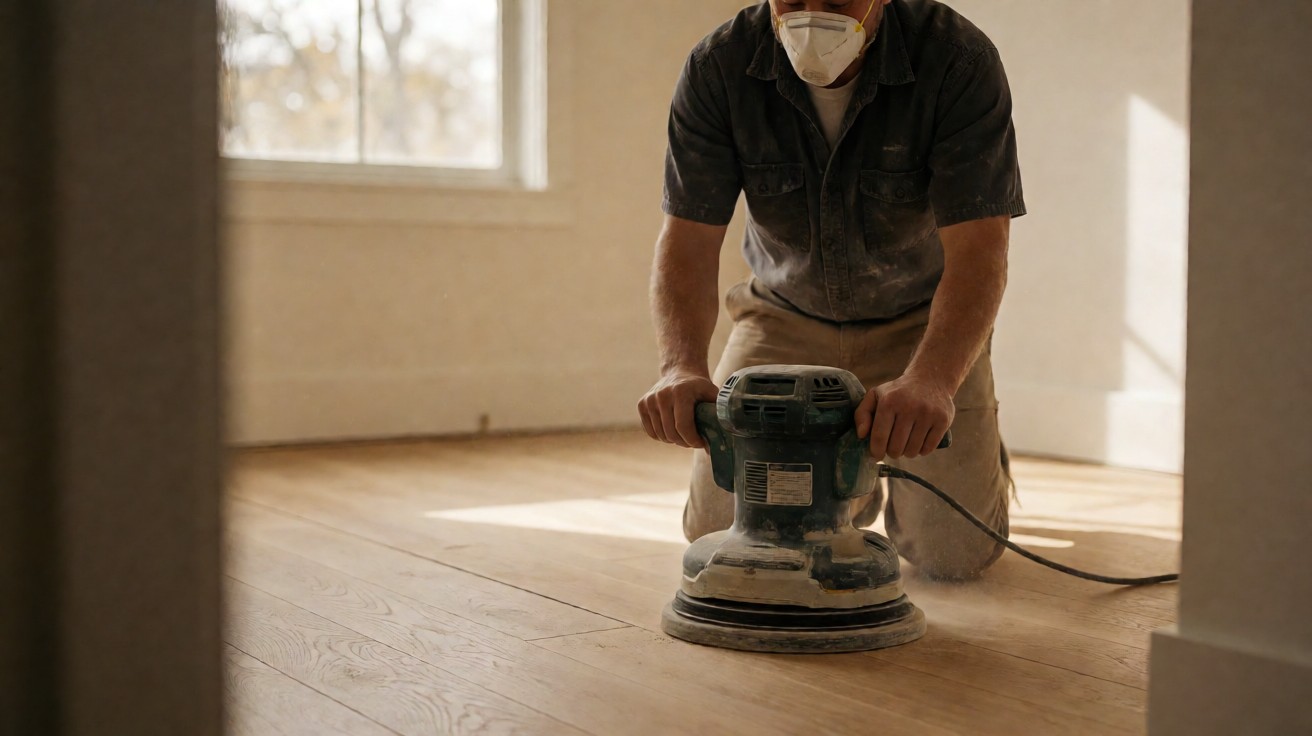
Dust is the other practical difference. Factory finishing happens in a controlled shop, so your house sees a small amount of sawdust from installation and nothing else. Site finishing puts a dust-producing sander and sprayers inside your home, and the coats need ventilation and cure time before you can move furniture back.
If you have a baby, pets, someone with respiratory sensitivity, or a deadline that does not move, those two facts alone usually settle the decision in favour of prefinished.
What It Costs, and Who Absorbs the Risk
Site finishing adds labour that you are buying for a reason: on-site colour control, seamless blending, and a repair-friendly floor. That labour is usually quoted as a separate line, so when you compare two flooring quotes, make sure you are comparing the same scope.
Risk follows the same line. With prefinished flooring, a defect that appears on day one is a product problem, and the manufacturer warranty is the remedy. With site finishing, a blotchy or uneven result is an installation problem, and your recourse is the installer.
The table below is the decision in short form.
| Factor | Prefinished | Site-finished |
|---|---|---|
| Who applies the finish | Factory, before delivery | On site, after installation |
| Colour depth | Lighter, even, grain readable | Deeper, richer, hand-blended |
| Colour consistency | Identical on every board | Varies with crew and conditions |
| Time to walk on | Immediately after install | Days, after coating and cure |
| Dust in the home | Minimal | Substantial, needs ventilation |
| Best for | Most whole-home jobs | Matching an existing floor, stairs |
| Defect remedy | Product warranty | Installer’s workmanship |
When Site Finishing Earns Its Cost
Three situations justify it. First, an existing hardwood floor stays in place and the new material must blend with it, because a visible tone line in a hallway reads as a mistake. Second, stairs and landings, because factory finishing cannot produce a continuous hand-rubbed tread surface the way a site finisher can.
Third, an unevenly worn floor in a room you are keeping, where you want a full refinish but not a full replacement. Site finishing lets the crew sand the whole field back to a single tone instead of leaving old and new patches side by side.
Outside those cases, you are paying extra labour for a look you can live without, and a schedule you do not need.
How to Inspect a Prefinished Board Before You Buy
Pick up the box and look at the end faces first, not the top. End faces show the coating layers edge-on, which is the only way to judge how many coats are actually on the board without a cross-section.
Run a thumbnail across the surface in a couple of places. It should feel smooth and should not catch on a raised grain, which is a sign of an inconsistent build. Look along the length of the board for any cross-grain hesitation marks that the factory sander left behind.
Check the sheen on two or three boards together in the same light, because gloss levels read differently one board at a time. A matte board next to a satin board will make the matte one look flatter than it is.
Can you tell prefinished from site-finished just by the sample?
Often, yes. A factory board has sealed end faces and usually a slight sheen consistency across the whole plank. An unfinished board shows bare or filled end grain, and any colour is only in the wood itself. But the reliable test is still the technical data sheet: ask for the number of finish coats and the wear layer build-up.
Is site-finished hardwood always better looking?
No. A skilled site finisher can produce a deeper, more custom colour, but a mediocre job will look worse than any factory board, and you cannot see it until the last coat dries. Prefinished limits the worst case, which is why it is the safer default for most homes.
The inspection above assumes a boxed product. If you are buying from a showroom, ask to see the end face of a board with the packaging removed, and check whether the coat build-up matches what the printed specification claims.
How to Judge a Site-Finished Floor After the Crew Leaves
Walk the floor in raking light, which is light that comes in low and sideways from a window. Raking light exposes sheen differences, buffing marks, and anywhere the coat did not level properly.
Look at the transitions between boards, which is where a site finish either succeeded or failed to blend. A smooth transition is the clearest sign that the crew managed the floor as one surface rather than board by board.
Finally, check the window areas and the areas away from them. A finish that applied too heavily tends to collect in the open and read glossier than the same finish at the edges, and that difference is obvious in the same light.
Choosing the Finish Type Itself
Whichever route you take, the finish system still has to be chosen. Most hardwood is finished with either a water-based polyurethane, an oil-modified polyurethane, or a hardwax oil. Each behaves differently on a surface that has been sanded once versus one that will be refinished years from now.
Water-based polyurethane cures harder and faster, which suits prefinished boards that need to survive a warehouse and a truck ride before they reach your floor. It is thinner in colour, so it lightens the wood slightly. Oil-modified and hardwax oil penetrate more deeply, producing the saturated, hand-rubbed look that site finishing is usually chosen for.
Sheen is the other half of the finish decision. Matte and satin hide dust and scuffs best, which matters in a home with pets or active children. Gloss shows the wood grain most vividly but turns every footprint and swirl into a visible mark.
| Finish system | Cure behaviour | Colour effect | Best suited to |
|---|---|---|---|
| Water-based polyurethane | Cures fast and hard | Lighter, less colour change | Prefinished, high-traffic rooms |
| Oil-modified polyurethane | Cures slower, deeper film | Warmer, richer tone | Site-finished floors, deeper colour |
| Hardwax oil | Cures very slowly | Natural, hand-rubbed feel | Restore-on-demand maintenance |
| Sheen: matte | N/A | Softens grain | Homes with pets and heavy traffic |
| Sheen: satin | N/A | Balanced | Most residential floors |
| Sheen: gloss | N/A | Shows grain most | Formal rooms, showroom look |
This decision interacts with the prefinished-versus-site-finished choice you made earlier. A hardwax oil floor that is finished on site can often be spot-repaired and re-oiled later, which suits a future refinishing in a room where a full sanding is disruptive.
Where This Fits With the Rest of the Decision
Finish is the last decision in a hardwood job, and it sits downstream of everything else. The construction and species question comes first, and the broader material comparison is worth reading before you commit to wood at all.
The complete hardwood guide covers species, grades, and plank dimensions, including how construction interacts with the finish choices discussed here. If you are still weighing wood against the alternatives, the head-to-head material comparison sets prefinished hardwood against vinyl, laminate, tile, and carpet on the factors that decide most rooms.
One related topic deserves its own answer: some jobs end up comparing a factory finish to a full factory finish rather than to site finishing, because the flooring is being replaced entirely and the subfloor is out of scope. That comparison lives in the site-finished versus factory-finished guide, and it is a different question from the one answered here.
Related reading: the hand-scraped vs. wire-brushed vs. smooth hardwoo.