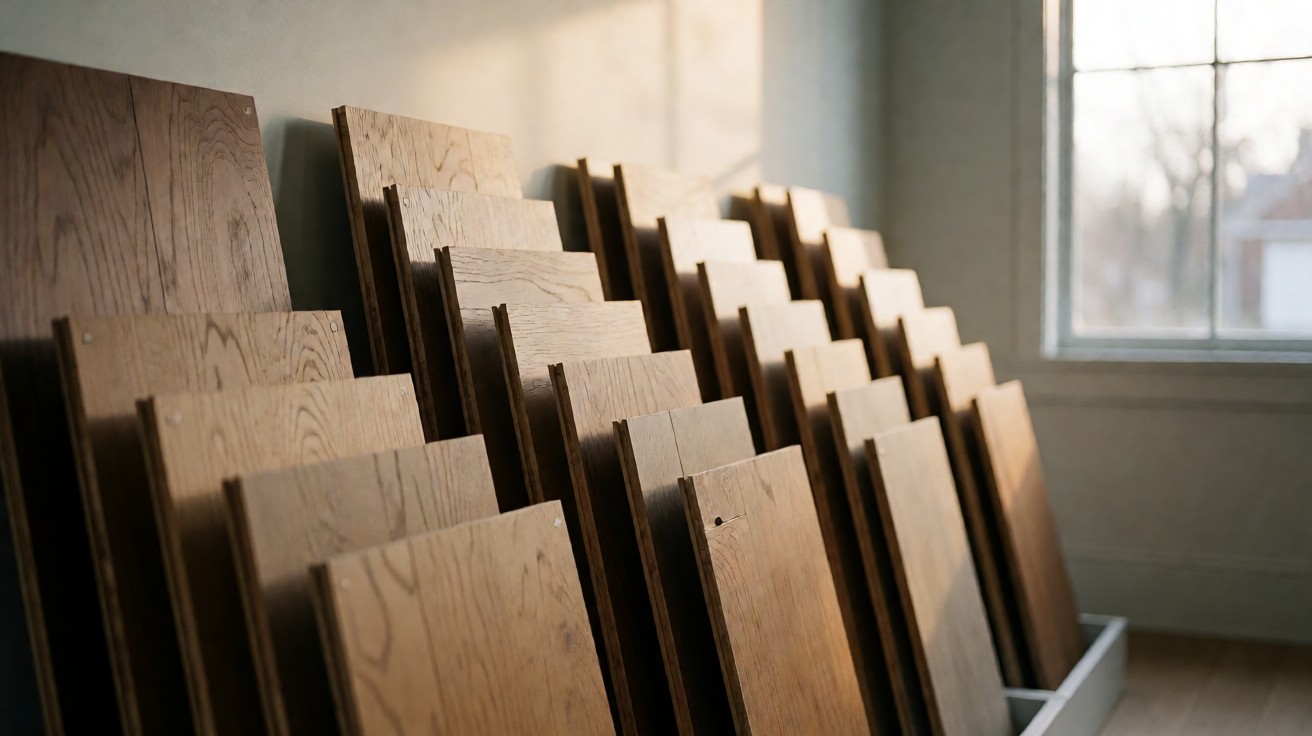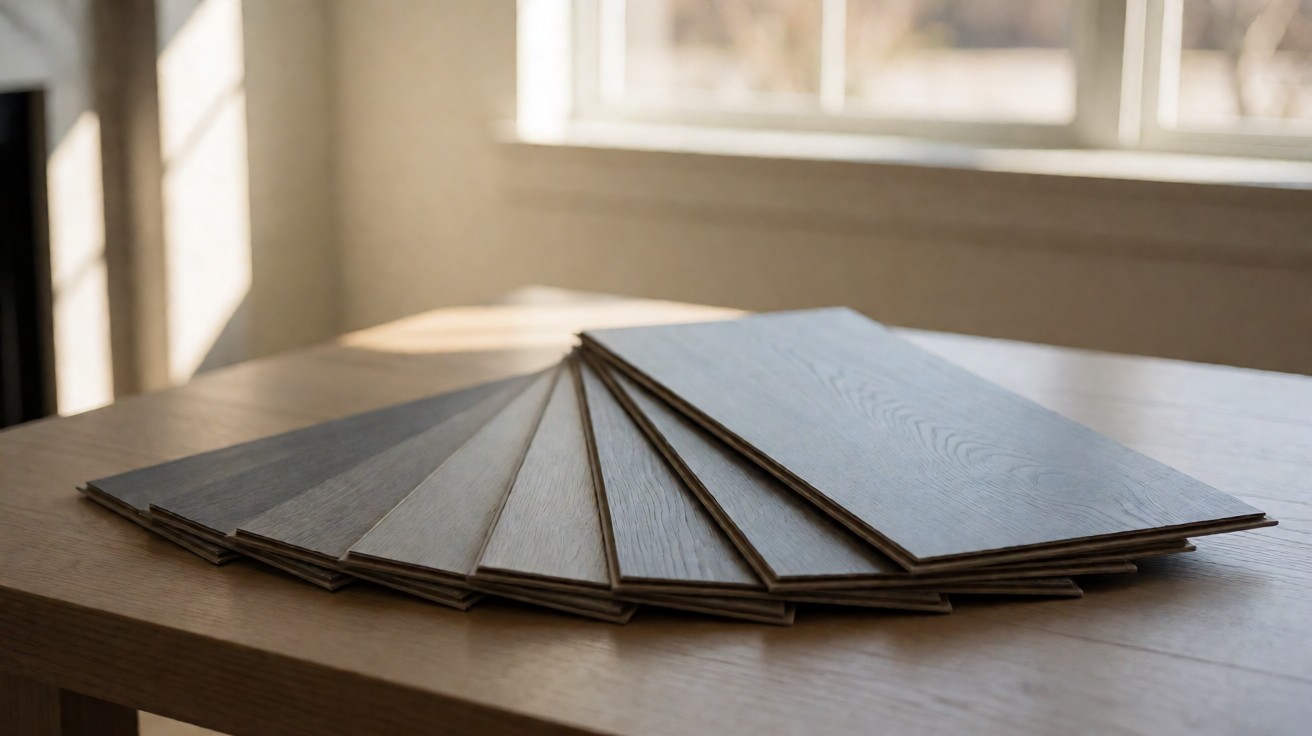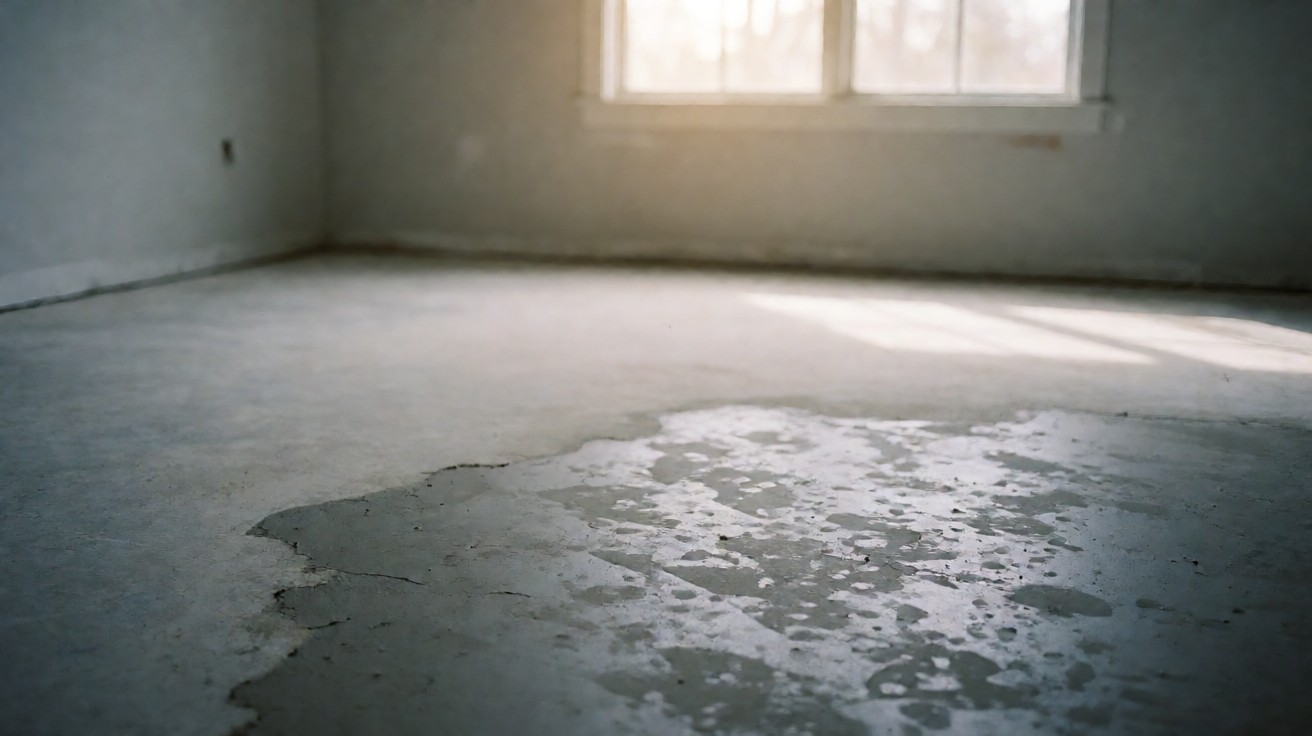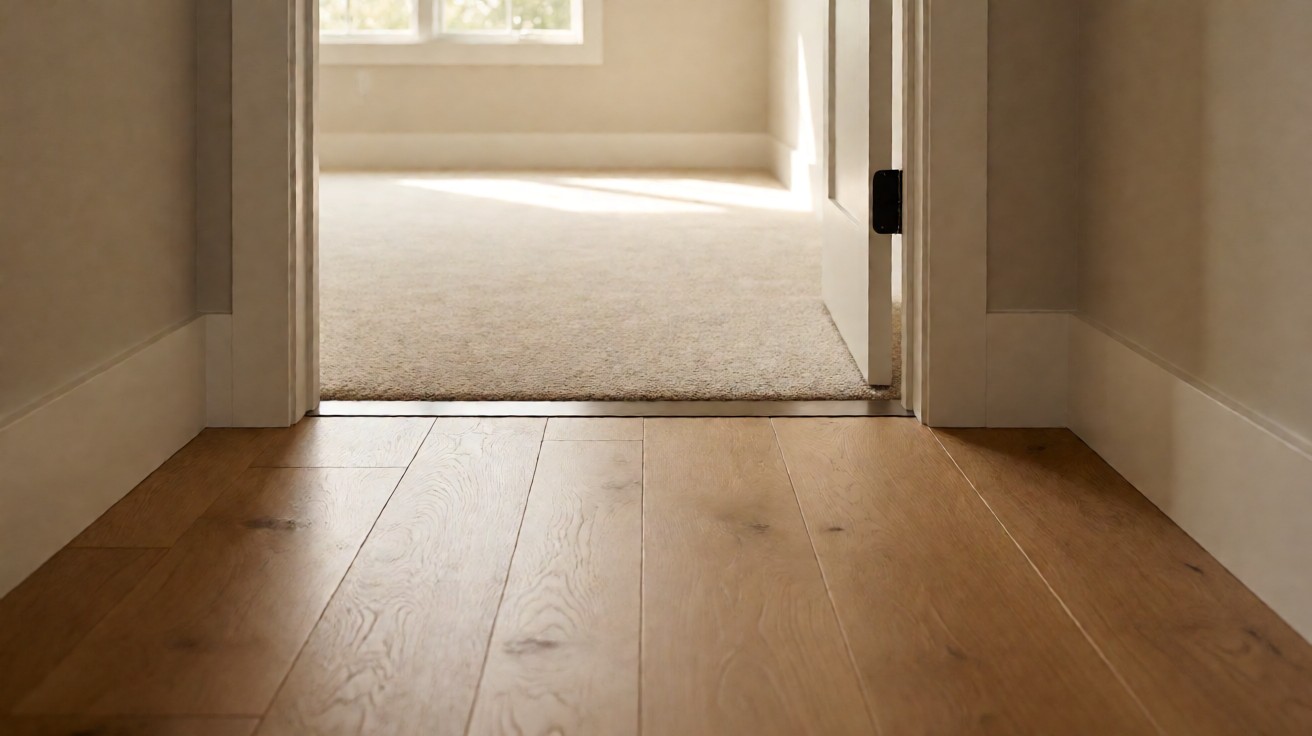

Transitions, trim, and finishing add a separate line to every flooring budget, from a few hundred dollars to several thousand on a whole-house project.
The answer is simple: strips and trim are priced per linear foot, and finishing work is priced per square foot. Refinishing is usually the biggest line, at $3 to $8 per square foot.
The Add-Ons Behind the Floor Itself
Once the material decision is made, three separate work streams start charging. Transitions connect the new floor to the old one at every doorway, trim wraps the perimeter where floor meets wall, and finishing makes the surface ready to live on.
None of those is the floor. The installed price is four costs added together, and trim, transitions, removal, and disposal are the items that are not flooring at all. The full breakdown of that structure is in Flooring Cost per Square Foot: Material vs. Installed Price.
If you are comparing two quotes for the same material, the gap between them is usually in these lines. A published commercial quote template from D&G Flooring prices a whole-house trim and transitions block at $400 to $1,200, with individual door transitions running $35 to $85 each.
Removal of the old floor sits in the same block and carries its own figures, which are worked out in Flooring Removal and Disposal Cost. When the quote bundles removal with trim, the add-on block is where the surprise lives.
What Transition Strips Cost per Linear Foot
Strip material is priced per linear foot, and the spread is wide. Per Angi, aluminum strip material runs $1.30 to $4.90 per foot, wood runs $3 to $5, and vinyl runs $2 to $4.60. The full published range, across every strip type, is $1 to $30 per foot.
Installed prices are a different number. Labor adds a per-foot charge on top of the material.
Per the cost guide published by Builds & Buys, a T-mold installs at $5 to $8 per foot, a reducer at $8 to $12, a threshold at $12 to $20, stair nosing at $15 to $30, quarter-round at $3 to $5, and a carpet bar at $6 to $12.
| Transition Type | Material Price (per foot) | Installed Price (per foot) |
|---|---|---|
| T-mold | $3 to $5 | $5 to $8 |
| Reducer | $5 to $8 | $8 to $12 |
| Threshold | $8 to $15 | $12 to $20 |
| Stair nosing | $10 to $20 | $15 to $30 |
| Quarter-round | $1 to $3 | $3 to $5 |
| Carpet bar | $4 to $8 | $6 to $12 |
What Is the Most Common Transition Strip in a Home?
The T-mold and the threshold. A T-mold bridges two surfaces of the same height, and a threshold works where one side drops. In a residential project those two cover most doorways, and the per-opening cost of $35 to $85 is the number to budget at each one.
Which strip to specify is an installation decision, and the selection method is in How to Handle Flooring Transitions and Thresholds. The cost page only tells you what that strip adds to the budget once it is chosen.
Choosing a Transition by Height Difference
The height difference between the two surfaces picks the product. A difference of 1/4 inch or less takes a beveled or flat transition, and anything over 1/2 inch needs a reducing strip, per Builds & Buys. The gap in between is where the choice is not free.
Accessibility rules fix the numbers. Per ADA 2010, a vertical change of level up to 1/4 inch is permitted as is (section 303.2). Between 1/4 inch and 1/2 inch, the edge must be beveled with a slope no steeper than 1:2 (section 303.3).
Above 1/2 inch, the change of level must be a ramp with running slope no steeper than 1:12 (sections 303.4 and 405.2). Doorway thresholds up to 1/2 inch are permitted when beveled in existing work (section 404.2.5). That last one is the clause most home quotes rely on.
Does Accessibility Compliance Change the Transition Cost?
Yes, and it changes the product. A 1:12 ramp against a 1/2-inch step runs 6 inches of strip material, while the same step beveled at 1:2 takes only 1 inch of beveled edge.
When a doorway must stay accessible, the quote line is a ramp, not a $12 to $20 threshold, and the linear footage in the price goes up with it. The cost difference is the whole point of the height rules.
Trim and Baseboard Costs Around the Room
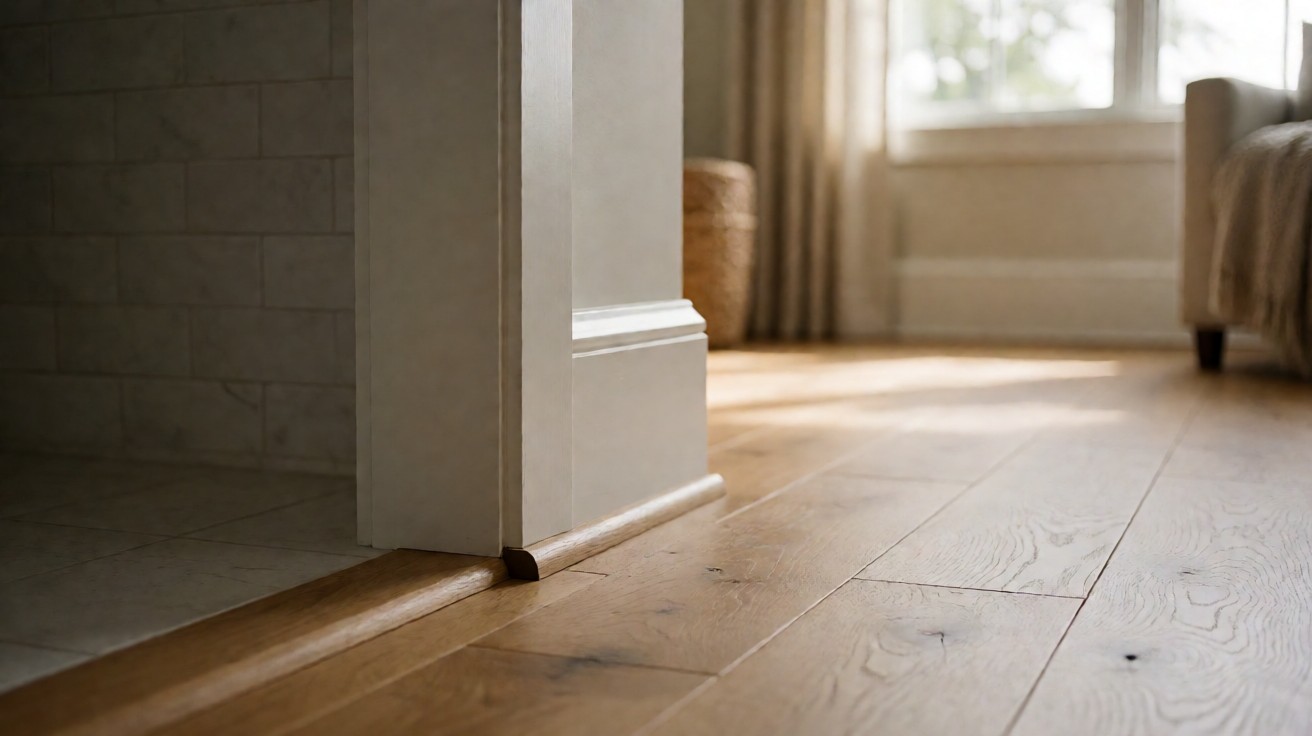
Baseboard is priced per linear foot of wall, and the material decides the rate. Per Angi, PVC runs $0.90 to $1.40 per foot, MDF $1 to $1.40, polystyrene $1.15 to $1.65, and pine $1.40 to $1.85.
Poplar runs $1.90 to $2.50, maple and oak $2.50 to $5, and cherry and mahogany $4.50 to $10.
Installed, a baseboard project averages $1,100, with a range of $750 to $3,000, and the all-in rate is $5.70 to $9 per linear foot of material plus labor.
Removal runs $50 to $100 per hour, and a paint touch-up adds $1 to $6 per foot. Thumbtack’s tracked average is $805, from $426 to $1,494.
| Baseboard Material | Material Price (per foot) | Notes |
|---|---|---|
| PVC | $0.90 to $1.40 | Lowest-cost line |
| MDF | $1 to $1.40 | Paint grade |
| Polystyrene | $1.15 to $1.65 | Lightweight, paint grade |
| Pine | $1.40 to $1.85 | Common residential stock |
| Poplar | $1.90 to $2.50 | Paint grade |
| Maple / oak | $2.50 to $5 | Natural finish or paint |
| Cherry / mahogany | $4.50 to $10 | Natural finish only |
When a room is refinished, the baseboard usually comes off and gets rehung, and that labor shows up as a removal line at $50 to $100 per hour. If the baseboard is already in place and straight, the quote should not charge for replacement at all.
Finishing Costs That Depend on the Material
The floor you bought decides which finishing work happens. Site-finished hardwood needs on-site sanding and coating, so the finishing is a real line item. Prefinished hardwood needs none of it, and concrete needs a sealer or a grind-and-seal to be finished at all.
Finishing is also the line that gets scoped late. It is usually priced after the floor is down, which is why it surprises. Two honest quotes for the same installed floor can differ by 60 percent, and the difference is almost never the material.
That is the installed-price point from the cost hub, and it is why the add-on block deserves its own reading of the quote. If the finishing is not named line by line, the total is a guess.
Hardwood Refinishing: The Most Variable Finishing Cost
Refinishing is the single largest finishing line on a hardwood project. HomeAdvisor tracks a national average of $3 to $8 per square foot, with a $1,892 average project. The traditional sand-and-coat method runs $3 to $5 per square foot, and the dust-free method runs $5 to $8.
Stairs are priced separately at $4.50 to $8 per square foot of stair, and labor alone runs $2 to $8 per square foot or $60 to $160 per hour.
Species change the rate: oak, cherry, and engineered all run $3 to $5, pine $4 to $7, and maple and mahogany $6 to $8, per the same source.
One more variable is how many times the floor can take a refinish. Solid hardwood can be sanded and refinished many times over its life, while an engineered plank takes one or two, per HomeAdvisor and Bob Vila.
When you buy an engineered floor, the refinishing budget is a one-time line, not a recurring one.
| Refinishing Work | Cost Range | Basis |
|---|---|---|
| Traditional sand and coat | $3 to $5 per sq ft | HomeAdvisor |
| Dust-free method | $5 to $8 per sq ft | HomeAdvisor |
| Stairs | $4.50 to $8 per sq ft | HomeAdvisor |
| Labor only | $2 to $8 per sq ft or $60 to $160 per hour | HomeAdvisor |
| Recoat of existing finish | $1 to $2 per sq ft | Angi |
| By species: oak, cherry, engineered | $3 to $5 per sq ft | HomeAdvisor |
| By species: pine | $4 to $7 per sq ft | HomeAdvisor |
| By species: maple, mahogany | $6 to $8 per sq ft | HomeAdvisor |
How Much Does Refinishing a 1,000 Square Foot Floor Cost?
Between $3,000 and $8,000. That is the $3 to $8 per square foot average applied to 1,000 square feet, which is the range HomeAdvisor quotes for a 1,000-square-foot project. It is the number that separates a refinishing project from the material cost of the same floor.
The material cost of the hardwood itself is a separate decision, worked out in Hardwood Flooring Cost. A refinish is not a replacement, so the two budgets stay on different lines even when they happen in the same room.
Concrete Sealing and Polishing Costs
Sealing is the cheapest finishing line when the floor is concrete. Material only, a sealer costs $0.10 to $0.75 per square foot, and with labor it is $1.35 to $2.50, per Angi.
A can runs $20 to $60 and covers 150 to 300 square feet, so a 1,000-square-foot slab uses roughly 4 to 7 gallons.
Forbes puts the material-only figure at $0.20 to $0.60 per square foot and the with-labor figure at $2 to $3. Contracted concrete finishing is a separate rate card: per the published pricing guide from Roe Paint, a penetrating sealer runs $1.25 to $1.75 per square foot installed.
A grind-and-seal runs $3.00 to $3.50 per square foot, and a grind, stain, and seal runs $3.50 to $4.00. If you chose a sealed concrete floor, the sealer is not an add-on. It is the finish, and a slab that is not sealed is an unfinished floor.
| Concrete Finish | Material Only | With Labor | Source |
|---|---|---|---|
| Sealer | $0.10 to $0.75 per sq ft | $1.35 to $2.50 per sq ft | Angi |
| Sealer (second source) | $0.20 to $0.60 per sq ft | $2 to $3 per sq ft | Forbes Home |
| Penetrating sealer, installed | colored in installed rate | $1.25 to $1.75 per sq ft | Roe Paint |
| Grind and seal | colored in installed rate | $3.00 to $3.50 per sq ft | Roe Paint |
| Grind, stain, and seal | colored in installed rate | $3.50 to $4.00 per sq ft | Roe Paint |
Stair Tread and Nosing Costs
Stair work is priced per tread, not per foot. Stair nosing installs at $15 to $30 per linear foot per the Builds & Buys figures, and the D&G Flooring quote template prices nosing at $24 to $48 per tread, which puts a 14-step flight at $350 to $840.
When the whole floor is refinished, the stairs go in the same job at the stair rate of $4.50 to $8 per square foot of stair, above the room rate.
If you scope the refinishing on the rooms only, the stairs are the finishing work that still has to happen, at that same stair rate.
What a Whole-House Project Adds for Transitions and Trim
A whole-house project multiplies every add-on by the number of rooms. The trim and transitions block is $400 to $1,200 on the D&G template, baseboard adds $750 to $3,000 per room at the Angi installed range, and each door opening adds $35 to $85 at the per-transition figure.
The refinishing line is the one that scales hardest. At $3 to $8 per square foot, a 1,000-square-foot floor is $3,000 to $8,000, and a 3,000-square-foot first floor stretches that to $9,000 to $24,000 before a strip of trim is bought.
If you are replacing flooring room by room over several years, budget a transition at every boundary you touch, not just at the end of the project. Each room that gets a new floor adds a transition line against every neighbor it shares a wall with.
When Accessibility Changes What You Must Spend
When the house is expected to meet accessibility standards, the ADA 2010 figures from the earlier section change what the strip must be.
Per ADA 2010, up to 1/4 inch of height difference can stay vertical (section 303.2), and between 1/4 inch and 1/2 inch the edge must be beveled at no steeper than 1:2 (section 303.3).
Above 1/2 inch, it becomes a ramp at 1:12 (sections 303.4 and 405.2). A doorway threshold is permitted up to 1/2 inch when beveled, in existing work, per section 404.2.5.
The cost effect is in the linear footage: a 1:12 ramp against a 1/2-inch step is six inches of strip material, where a 1:2 bevel takes one inch of beveled edge.
When a doorway must serve a wheelchair user, the quote line is ramp material at the higher rate, and the strip count in the estimate goes up with it. If accessibility is not in the brief, the lower threshold is the cheaper line and the spec is the contractor’s.
How to Read These Line Items in a Quote
A quote that lets you compare like with like splits the block into four lines. Transitions carry a per-opening count and a per-foot price, trim a per-foot material plus install rate, finishing a named method with a per-square-foot rate, and removal an hourly or per-room rate.
Three lines deserve a second look. A lumped trim and transitions total with no per-opening count hides how many doorways you are paying for.
A refinishing line with no named method hides the $2 to $3 per square foot gap between the traditional method at $3 to $5 and the dust-free method at $5 to $8.
A sealer line with no coverage spec hides the gallon count, which is where a 150-square-foot can and a 300-square-foot can meet on the same 1,000-square-foot slab. Ask the quote to break each of the three out before you sign.
What Line Items Do Quotes Commonly Leave Out?
Four, in the order they appear on real quotes.
Transitions where the material changes are counted only in whole-house quotes, not single-room ones. Stair nosing drops out of refinishing quotes that scope rooms only, and baseboard paint touch-up is a $1 to $6 per foot line that shows up after the sanding dust settles.
And on a concrete floor, the sealer itself is the line a material-only quote leaves out entirely. When the quote names the material but not the finish, the finish is the number to ask for first.
Where These Costs Fit in the Total Budget
Order the budget the way the work happens. Material per square foot is the largest single number, labor per square foot is the next, and then the add-on block: transitions per opening, trim per foot, finishing per square foot, and removal before any of it starts.
If two quotes for the same floor differ by 60 percent, read the add-on block first. The material is usually the same number on both, and the gap sits in the transitions, the trim, and the finishing method. That is where the reading of the quote earns its keep.
Before you sign, walk the house with a tape measure. List every doorway and every material change as one transition each, count the stair treads, and run the baseboard footage room by room.
Then ask the quote to price the per-opening and per-foot lines at exactly those counts, not at the contractor’s estimate.