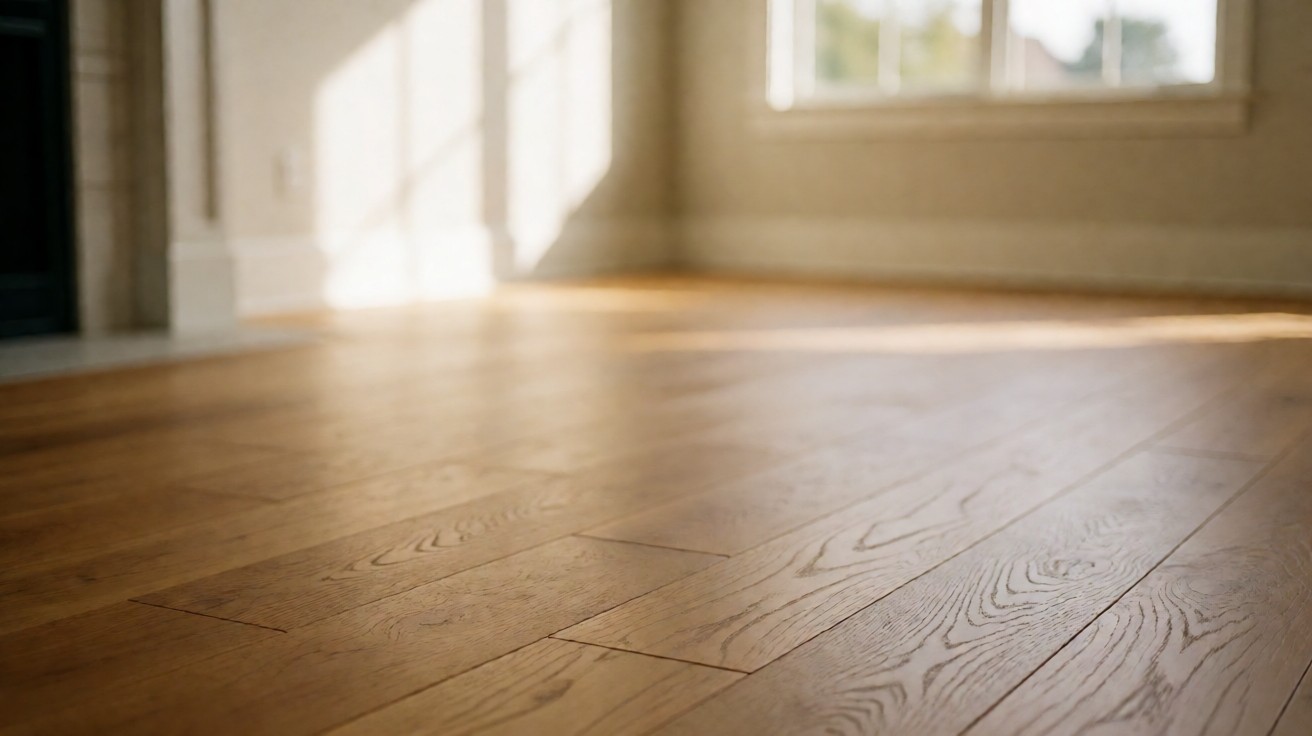
Glue-down and click-lock vinyl install almost identically in the showroom. Both are called luxury vinyl plank, both look like wood, and both cost about the same per square foot. The difference between them is not the plank. It is what happens underneath it and how the floor behaves for the next fifteen years.
A click-lock plank is a floating floor. It locks to its neighbours and to a pad underneath, and it moves across the subfloor as one sheet. A glue-down plank is bonded directly to the subfloor with adhesive. That single mechanical difference changes the subfloor preparation you need, how permanent the floor is, whether you can install it yourself, and what happens when something goes wrong.
This guide helps you choose between them. It does not teach you either installation; the step-by-step for each is a separate guide linked below. The goal here is a decision, with the reasoning behind it.
Glue-Down vs. Click-Lock Vinyl: The Short Answer
Choose click-lock when your subfloor is reasonably flat, you want to install it yourself, and the room is not subject to extreme heat or heavy point loads. It is the right default for most DIY and rental projects.
Choose glue-down when the subfloor is concrete that can be levelled, the room gets direct sun or a garage-temperature swing, you need the floor to feel solid and quiet underfoot, or you want it permanently bonded. It is worth the extra labour when the room is important.
The decision ultimately cascades backward from the floor underneath you. Before you compare planks, ask how flat, clean, and dry your subfloor actually is. That single answer usually picks the method for you.
What Each Method Physically Is
A floating or click-lock plank has a tongue and groove edge, an interlocking profile usually called I-lock or 5G. You angle the plank into its neighbour and it clicks. Beneath the whole floor sits an underlayment, typically foam or fibre, that provides a little cushion, some sound deadening, and the flat reference surface the planks ride on.
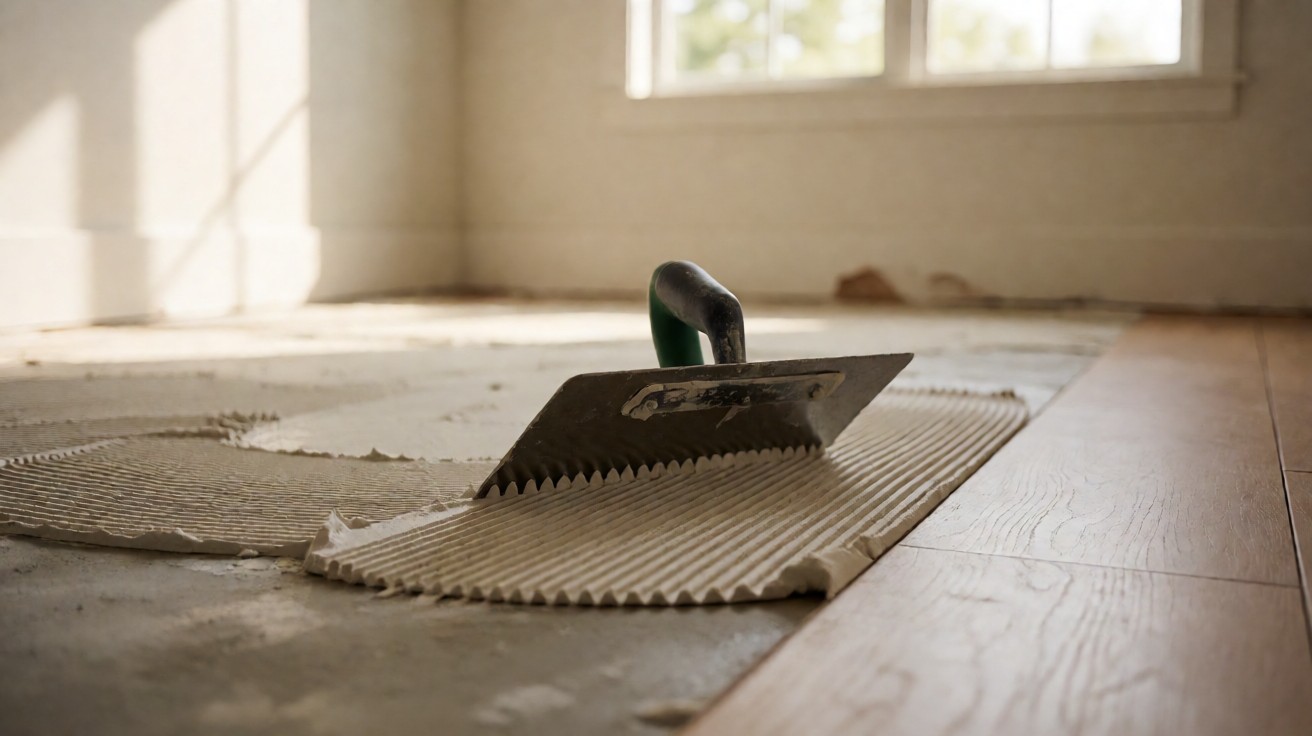
A glue-down plank is a flat plank with no locking edge. An installer spreads adhesive across the subfloor with a notched trowel, lays the plank into the adhesive, and rolls it. The bond is direct to the subfloor, so there is no floating layer and no underlayment required for structure.
A loose-lay vinyl is the third option, a heavier sheet that is simply laid, adhered at the seams only, and weighted into place. It has a different feel again, usually the most forgiving of a slightly uneven floor.
The Subfloor Difference: The Real Dividing Line
This is the part that decides the method, and it is where most guidance buries the lede. Because a click-lock floor floats, small dips and high spots in the subfloor are bridged by the underlayment and absorbed by the joint. The floor tolerates a subfloor that is flat enough to be safe, not perfectly flat.
A glue-down floor has nothing between it and the subfloor. Any high spot telegraphs straight up through the plank as a visible ridge, and any dip shows as a hollow-sounding area. The subfloor must be genuinely flat, clean, and free of old adhesive before the first plank is laid.
That means glue-down often requires levelling compound and more prep time up front, in exchange for a flatter finished floor. Click-lock trades some of that flatness for far less preparation. Neither is better; they are answering different subfloor conditions.
Permanence, Sound, and How It Feels
The mechanical difference is worth being precise about, because it is what produces every other trade-off on this page.
| Mechanism | Click-lock (floating) | Glue-down (bonded) |
|---|---|---|
| What connects the floor | A locking edge and an underlayment | Adhesive to the subfloor |
| Layer under the planks | Underlayment pad | Adhesive, sometimes a primer |
| Key tool | Saw and rubber mallet | Notched trowel and roller |
| What hides a high spot | The underlayment and the joint | Nothing, it shows through |
| Whole-floor movement | Floats as one sheet | Locked to the subfloor |
A bonded floor feels solid. There is no hollow click and no slight give, which some people find noticeably more substantial underfoot. It also tends to be quieter, because the plank and the subfloor move as one. If a floor will take heavy foot traffic or you are sensitive to a hollow, quiet feel, glue-down wins.
A floating floor gives a slight, almost springy give underfoot, which many people find comfortable and some dislike. It is never as quiet as a bonded floor because the plank and underlayment can move independently. On sound-sensitive upper floors that difference can matter.
Permanence follows the same line. A glued plank cannot be lifted without deliberately breaking the bond, so the floor is effectively permanent. A floating plank can often be lifted, and in a good condition the planks can even be re-used elsewhere, which has real resale value for a DIY seller.
DIY-Ability, Cost, and Removal
Click-lock is the clear DIY winner. It needs only a flat-enough subfloor and an underlayment, the tools are a saw and a rubber mallet, and a mistake can be backed out by unlocking the plank. Many homeowners finish a click-lock floor in a weekend without ever calling an installer.
Glue-down is professional territory for most people. It demands correct trowel notch, adhesive coverage, open-time discipline, and rolling, and a mistake means adhesive on the wrong surface. The material cost is similar, but the labour cost is a real multiple of a click-lock install.
Removal reverses the logic. Pulling up a floating floor is straightforward and leaves the subfloor ready for the next one. Removing bonded vinyl means breaking a chemical bond and often scraping old adhesive, which is the least pleasant job in flooring. If you expect to change the floor again in a few years, that difference matters.
Where Glue-Down Is Genuinely Worth It
Three situations justify the extra cost and effort. First, direct sun through a window or a south-facing glass wall, where a floating floor can move enough in an extreme heat swing to open a visible gap or stress a joint. Bonding the floor reduces that movement.
Second, heavy point loads: large rugs that will not move, dumbbells in a home gym, heavy cabinetry, or a kitchen island that is fixed in place. A floating floor can deflect under these and eventually telegraph a dent. A bonded floor does not.
Third, the feel of permanence. If you want the floor to be the floor for the life of the house and do not expect to change it, bonding removes a whole category of movement and sound complaints. That is a legitimate reason to pay for glue-down even in a DIY-capable home.
Where Click-Lock Is Genuinely Enough
Click-lock earns its place in most bedrooms, a rental property you want to be able to lift and re-use, a basement or room with a flat slab, and any space where the floor is likely to be replaced within a decade. It is also the right call when the subfloor is decent but not perfect, because it forgives small unevenness that glue-down would amplify.
The common mistake is paying for glue-down out of an assumption that it is higher quality. The quality difference between a good click-lock plank and a good glue-down plank is usually small. What differs is the install and the feel, and neither is automatically better. Judge the two planks first, then pick the method that suits the subfloor and the plan.
Choosing Based on Room and Household
Match the method to the conditions of the specific room, the same way you would match any flooring choice to its location. A sunlit living room or a garage-temperature porch pushes toward glue-down. A quiet bedroom, a rental unit, or a flat-floored basement suits click-lock perfectly.
Think about who lives with the floor too. A house with small children and heavy furniture benefits from a bonded floor that will not deflect or telegraph dents. A first-time renovator who wants the satisfaction and the resale flexibility of doing it themselves will get more out of click-lock.
How the Method Affects the Planks You Can Choose
The installation method and the plank itself are not fully independent choices. A plank sold for floating installation has a locking profile machined into its edge, which makes it a little thicker and gives it a specific tolerance for the underlayment underneath. A plank sold for glue-down can be thinner, because it does not need to accommodate a floating joint.
This is why the same product is not always available in both methods. Rigid-core vinyl in particular is designed around a floating install, and a lot of it is only rated that way. If you are set on glue-down, you are choosing from a somewhat narrower selection of sheets and planks, and that can limit the style and colour options you have.
Practical advice is to pick the plank you like first, then install it the way the manufacturer specifies for that plank. Treat the method as a consequence of the product as much as a free choice you make about it.
The Comparison at a Glance
The table below is the practical summary of the decision, before you commit to a plank or a subfloor.
| Factor | Glue-down | Click-lock (floating) |
|---|---|---|
| Subfloor flatness needed | High, must be level | Moderate, underlayment helps |
| Underlayment | Not required | Required |
| Expansion gap | Minimal | Around the perimeter |
| Feel underfoot | Solid, quiet | Slight give, quieter than nothing |
| DIY-friendly | Professional recommended | Yes, most cases |
| Direct sun / heat swings | More resistant | Can gap in extreme heat |
| Heavy fixed point loads | Holds firm | Can deflect over time |
| Removal | Hard, adhesive likely | Easy, may re-use planks |
| Best in | Sunlit, heavy-use, permanent floors | Bedrooms, rentals, flat basements |
Can you glue down click-lock vinyl?
You can, and many installers do it in heavy-use areas. Some manufacturers make their click-lock plank approved for glue-down as well as floating, using the same adhesive. It gives the solid feel of a bonded floor while keeping the locking edge.
Check that the specific product is rated for glue-down, because not every click-lock plank is, and using the wrong adhesive or too much moisture can void the warranty.
Does click-lock vinyl need an underlayment?
Yes, almost always. The underlayment is what the planks float on. It provides the flat reference surface, a little acoustic and comfort benefit, and it is often where a moisture barrier lives if the subfloor is concrete.
Using the wrong underlayment, or none, is one of the most common reasons a floating floor ends up hollow-sounding or uneven. Always follow the plank manufacturer’s underlayment requirement, because some products specify a particular type.
How This Connects to the Rest of the Vinyl Choice
Installation method is the last decision you make about a vinyl floor, and it comes after the plank itself. The material, wear layer, and core type determine how the floor wears; the installation method determines how it sits, sounds, and ages in place.
The complete vinyl flooring guide covers types, cores, wear layers, and buying criteria, including what to check on a sample before you commit. Each method has a specific step-by-step, and the right sequence matters more than speed. Use the install guide that matches the method you chose, and check the plank manufacturer’s requirements for underlayment, adhesive, and expansion before you start.
If you are still weighing vinyl against the other resilient options, the head-to-head material comparison sets vinyl, hardwood, laminate, tile, and carpet against each other on the factors that decide most rooms.