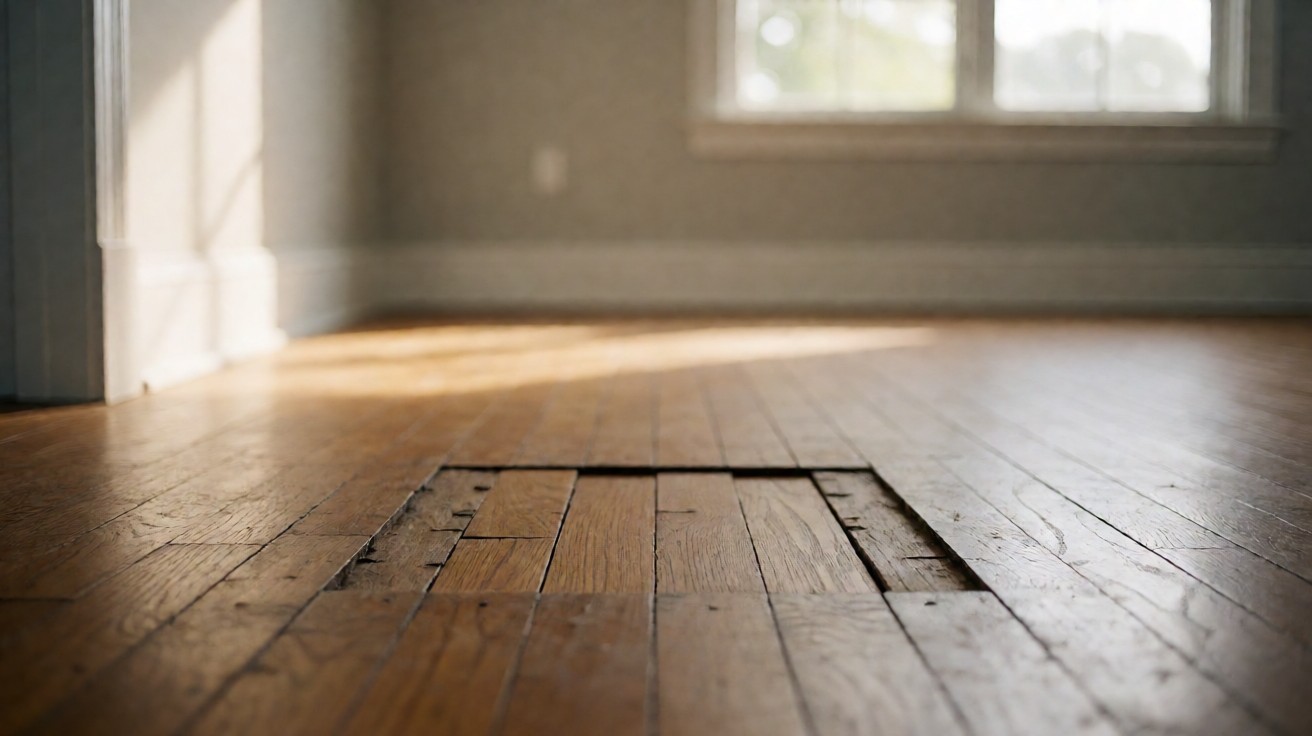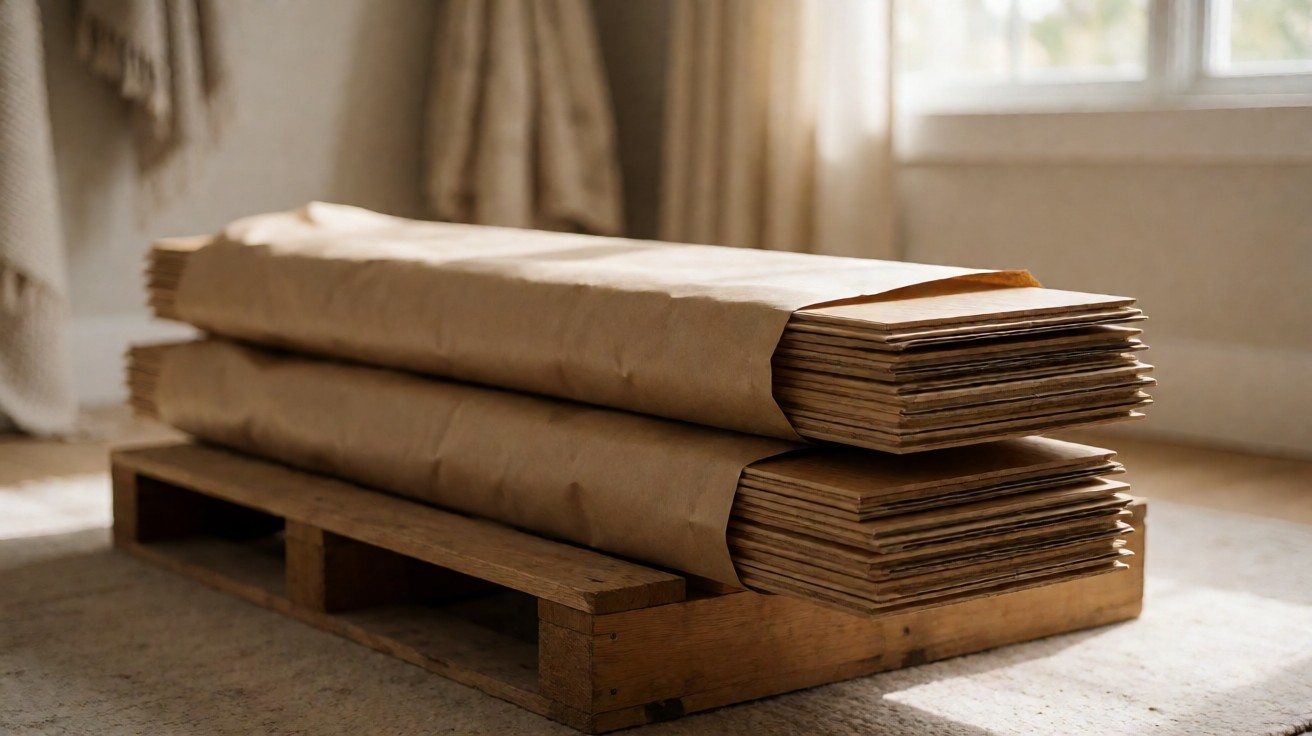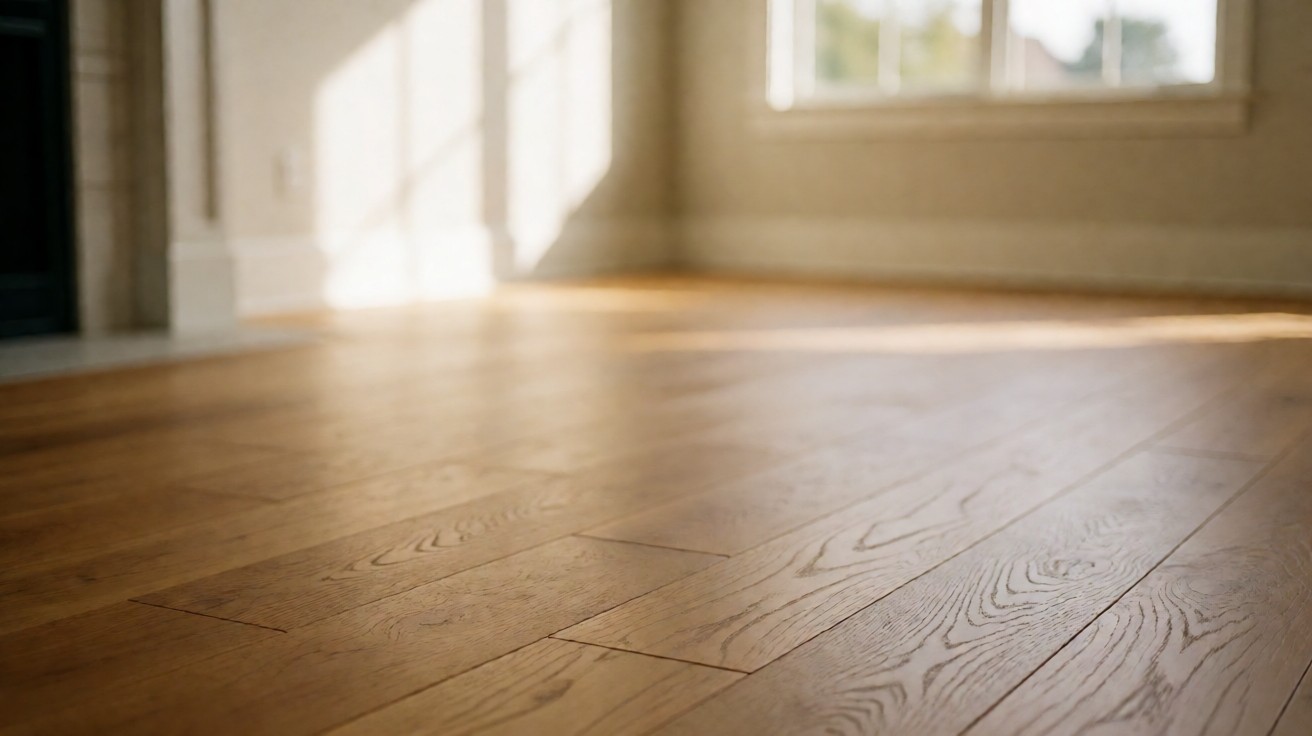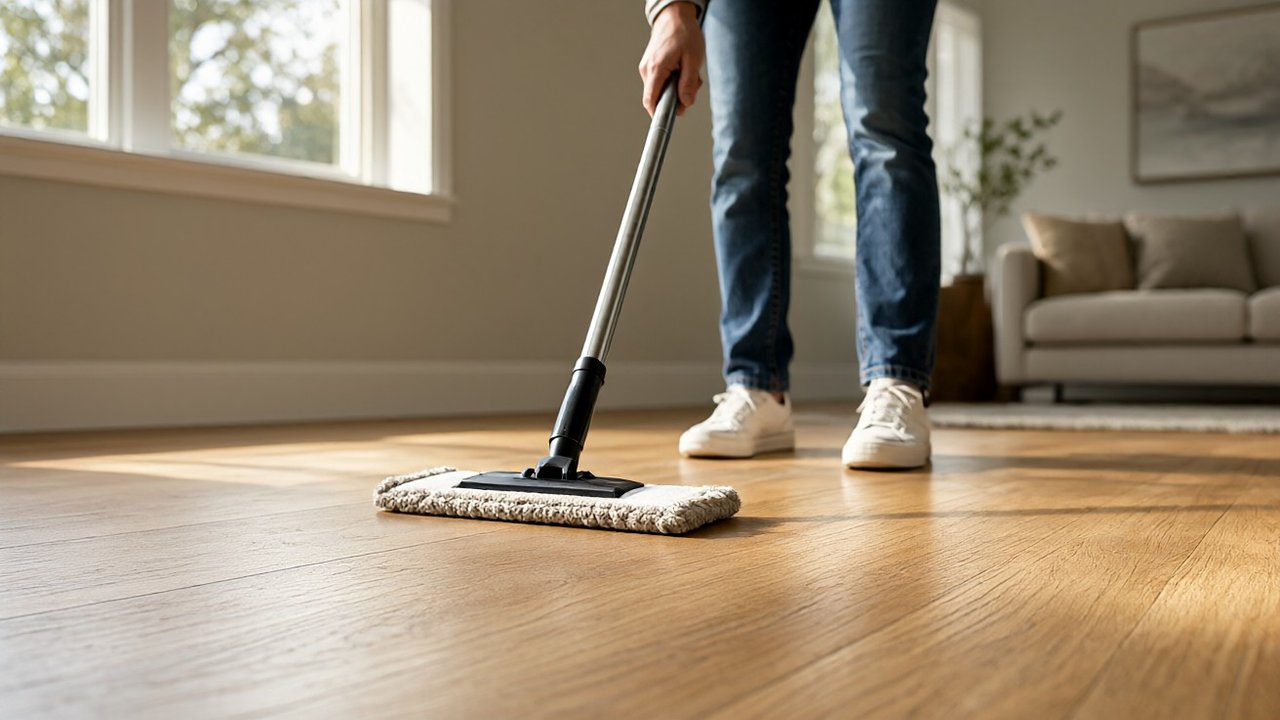

Engineered hardwood is a wear layer glued to a core and a backing, and that construction decides how much water the floor can take before damage.
The answer is the finish and the warranty tier, not the core type. If the floor is factory-finished with a wet warranty, damp mop with a neutral cleaner and keep topical moisture off it for no longer than the warranty limit.
That limit is 30 minutes on a basic wet resistance warranty. On products covered by a WetProtect or a steam mop warranty, the terms are broader and set by the manufacturer. If the floor is unfinished or has no wet warranty, treat it like solid hardwood and use a barely damp cloth.
What Makes Engineered Hardwood Different To Clean
Engineered hardwood is built in three layers: a wear layer of real wood on top, a core of plywood, HDF/MDF core in the middle, and a backing bonded underneath for balance. Each layer reacts to water differently, which is why cleaning rules for solid hardwood do not transfer cleanly.
The wear layer is the visible wood surface. The core provides thickness and dimensional stability. The backing keeps the plank flat. Moisture that gets past the finish and the joints reaches the core first, and a wood-based or fiber-based core swells when it stays wet.
That is the construction-first rule for care: the finish decides how much water the surface tolerates, but the construction decides whether the floor can survive that water at all. Seams and glue lines are where a spill does its real damage, not the face of the plank.
Engineered hardwood is not waterproof flooring. Some products carry wet warranties that extend how long topical moisture can sit, but those warranties cover topical spills only, not flooding, plumbing accidents or leaking appliances.
| Core type | Water tolerance | Best for |
|---|---|---|
| Plywood core | Better resistance to swelling than fiberboard | Rooms with seasonal humidity swings |
| HDF or MDF core | Less tolerant of standing water | Stable, climate-controlled interiors |
| Solid wood core | Behaves like solid hardwood | Refinishing depth and traditional feel |
The Daily Routine
Sweep or vacuum daily in high-traffic areas and two or three times a week elsewhere. Grit acts like sandpaper on the finish, so removing it before it gets ground in is the single most useful daily habit.
Use a microfiber dust mop or a vacuum with a felt-bottom vacuum head. Microfiber picks up dust without scratching, and a felt-bottom head keeps the vacuum from marking the finish. This is the core of scratch prevention on a finished surface.
Spot clean spills as they happen. Wipe with a microfiber cloth, working from the outside of the spill toward the center, and dry the area completely afterward.
Grit is the real enemy here.
Vacuuming Without Scratching The Finish
Vacuums with a beater bar or power rotary brush head should never be used on wood flooring. The rotating brush scratches the finish and dulls the surface over time.
Use a vacuum with suction only, or a hard-floor attachment with a felt or soft brush bottom. Check the wheels as well, since worn or dirty wheels can leave marks on the finish.
If you use a stick vacuum, switch it to hard-floor mode so the beater bar stops spinning. A broom with soft bristles works for small areas, but a microfiber mop is more effective at lifting fine dust.
| Warranty tier | Topical moisture limit | Steam mop permitted |
|---|---|---|
| Basic wet resistance | 30 minutes | No |
| WetProtect warranty | Per manufacturer | Per manufacturer |
| Steam mop warranty | Per manufacturer | Lowest setting, length direction only |
How Wet Is Too Wet For An Engineered Core
Time on the floor matters as much as volume.
Water that sits on the surface seeps through joints and into the core, threatening joint integrity. On engineered hardwood, the question is not whether the top can handle moisture but how long the core can stay dry underneath.
If the product carries a wet resistance warranty, topical moisture must not remain on the floor longer than 30 minutes. If it carries a WetProtect warranty, the manufacturer’s terms set the limit rather than a fixed hour count. Coverage assumes the perimeter of the floor is sealed per the installation instructions; an unsealed perimeter voids the waterproof and WetProtect coverage.
If there is no wet warranty, never damp mop. Use a barely damp cloth for spot cleaning only and dry the area right away. Flood mopping is never recommended, since mop water can damage the flooring and leave spots.
When liquids are spilled, blot immediately with a soft absorbent cloth and dry the affected area. Do not let water pool or stand on the surface.
The Wear Layer And What It Means For Cleaning
The wear layer is the outermost layer of engineered flooring, the visible wood side when installed. Its thickness decides whether the floor can ever be sanded and refinished, which in turn decides how aggressively it can be cleaned over its life.
Under the NWFA Engineered Wood Flooring Refinishable Program, unfinished engineered products need a minimum wear layer of 3.2mm, and factory-finished products need a minimum of 2.5mm. Sculpted or distressed products are evaluated product by product with a minimum of 2.5mm at the lowest point.
If the wear layer is thinner than those thresholds, the floor cannot be refinished. Aggressive scrubbing, abrasive pads or power scrubbers then remove material that cannot be replaced, shortening the life of the floor.
Products and tools to avoid include oil soaps, wax, detergents, abrasive cleaners, polishes, surfactants and other household products. Power scrubbers should never be used. These products can damage the finish and, on a thin wear layer, the wood itself.
How Do I Know If My Floor Is Factory-Finished?
Factory-finished engineered flooring is colored and finished at the manufacturer’s facility before packaging. Unfinished engineered flooring must have stain and finish applied after installation. The distinction changes both the cleaning chemistry and the refinishing option.
A factory finish is harder and more uniform than a site-applied finish, and it is what makes damp mopping possible on products that carry a wet warranty. A water-based finish is common on factory-finished products. Unfinished floors finished on site follow the same rules as solid hardwood, since the finish chemistry, not the core, governs surface water tolerance.
Whether a floor is factory-finished or unfinished also sets the refinishing threshold: 2.5mm of wear layer for factory-finished products versus 3.2mm for unfinished. If you are unsure which you have, check the product documentation or the prefinished versus unfinished comparison.
Products That Void The Warranty
Do not use oil soaps, wax, detergents, abrasive cleaners, polishes, surfactants or other household products to clean the floor. Vacuums with a beater bar or power rotary brush head should never be used. Power scrubbers are also excluded.
Read the warranty before you buy a cleaner.
Fabric softener residue may cause streaking on the floors, so wash microfiber pads without softener. Pads or mats must be used under all furniture with caster wheels, and casters should be cleaned routinely to remove grit.
If the product allows damp mopping, use water only, or a Mohawk-recommended cleaner. If needed, use 1 cup of vinegar per gallon of water or 1/3 cup of non-sudsing ammonia per gallon. Never wet mop unless the product is covered by a WetProtect warranty.
Steam mops are a separate case and are covered below. On most engineered products, steam mopping voids the warranty outright.
Spot Cleaning Spills And Stains
Blot the spill, do not rub it.
Blot spills immediately with a microfiber cloth. Work from the outside of the stain toward the center, using a recommended cleaner if needed, and dry the area completely.
For stubborn spots, a slightly damp cloth with a neutral pH cleaner is the limit. Apply the cleaner to the cloth, not directly to the floor, and never let liquid sit in a joint.
Pet urine is not covered by a wet resistance warranty, so clean it up immediately and dry the area thoroughly. Standing moisture in a joint is where mold risk begins.
Deep Cleaning And Drying A Wet Floor
Deep clean only when needed, using a well-wrung mop and a neutral pH cleaner. Wring the mop until it is barely damp, mop in the direction of the planks, and dry the floor with a clean towel afterward.
Dry the floor fast.
If the floor gets genuinely wet, dry it as fast as possible. Standing water and moisture left on a floor create a mold risk, and mold growth is a health and structural problem that goes beyond the finish. The NWFA Installation Guidelines include an addressing water damage section under repairs, replacement and removal.
After any wet event, check the perimeter and the joints. If water reached an unsealed perimeter, the waterproof and WetProtect warranties do not apply to that damage.
Steam Mops And Why The Industry Rejects Them
Can I Steam Mop Engineered Hardwood?
Steam cleaning is not recommended for hardwood floors, and steam mop warranties frequently exclude it. The American Cleaning Institute position is that steam should not be used on hardwood.
Mohawk’s guidance is explicit: never steam mop wood products unless the product is covered by a Steam Mop Warranty, and even then set the steam mop to the lowest setting and run it in the length direction of the planks only. A basic wet resistance warranty does not permit steam mopping at all.
Steam forces moisture and heat into joints and the core, which is the opposite of what engineered construction can tolerate. If a product does permit steam, follow the manufacturer’s setting and direction instructions exactly.
Humidity And Seasonal Care
Engineered hardwood is more dimensionally stable than solid hardwood, but the core still responds to humidity. Keep indoor relative humidity within the range recommended by the manufacturer and the NWFA Installation Guidelines, and maintain temperature and relative humidity within the recommended range for the product to keep any refinishing eligibility.
In winter, heating dries the air and gaps can open at joints. In summer, humidity rises and planks can cup. A humidifier in winter and dehumidification in summer keeps the floor within its working range.
Acclimation matters before installation. The NWFA Installation Guidelines cover acclimation and conditioning for engineered wood, along with moisture testing for wood and concrete subfloors. Cleaning cannot fix a floor that was installed out of acclimation.
When The Floor Needs Refinishing Rather Than Cleaning
When Should I Refinish Instead Of Clean?
Cleaning fixes dirt, residue and minor marks. It does not fix a worn-through finish, deep scratches or a dull surface that no longer responds to cleaning.
If the wear layer is at least 2.5mm on a factory-finished product or 3.2mm on an unfinished product, the floor may be eligible for refinishing under the NWFA Refinishable Program. The product must also have been installed per the manufacturer’s instructions or NWFA’s, and the end user must have maintained temperature and relative humidity within the recommended range.
If the wear layer is thinner than those thresholds, refinishing is not an option. At that point the choice is between living with the wear or replacing the floor. Construction details and product performance are covered in the engineered hardwood construction and performance guide, and the broader routine is in the flooring cleaning and maintenance hub.
For the finish-type cleaning routine that this page deliberately does not repeat, including water-based versus oil-modified versus wax finishes, see how to clean hardwood floors. For a different construction entirely, vinyl cleaning rules are in how to clean LVP floors.
Formaldehyde And What The Core Is Made Of
Engineered hardwood cores are commonly plywood, HDF or MDF, all composite wood products under EPA TSCA Title VI. The standard, 40 CFR 770.10, sets formaldehyde emission limits of 0.05 ppm for hardwood plywood made with a veneer core or a composite core, 0.11 ppm for medium-density fiberboard, 0.13 ppm for thin medium-density fiberboard, and 0.09 ppm for particleboard, tested by ASTM E1333-14.
The rule applies to composite wood products sold, supplied, offered for sale or manufactured, including imported, on or after June 1, 2018 in the United States, whether as a panel, a component part or incorporated into a finished good. That is a compliance fact about the core material, not a cleaning instruction, but it is the reason the core construction matters beyond moisture.
Knowing the core type helps predict water behavior: plywood cores tolerate moisture better than fiberboard cores, and a product’s wet warranty tier should be read against that core, not just the finish.
“