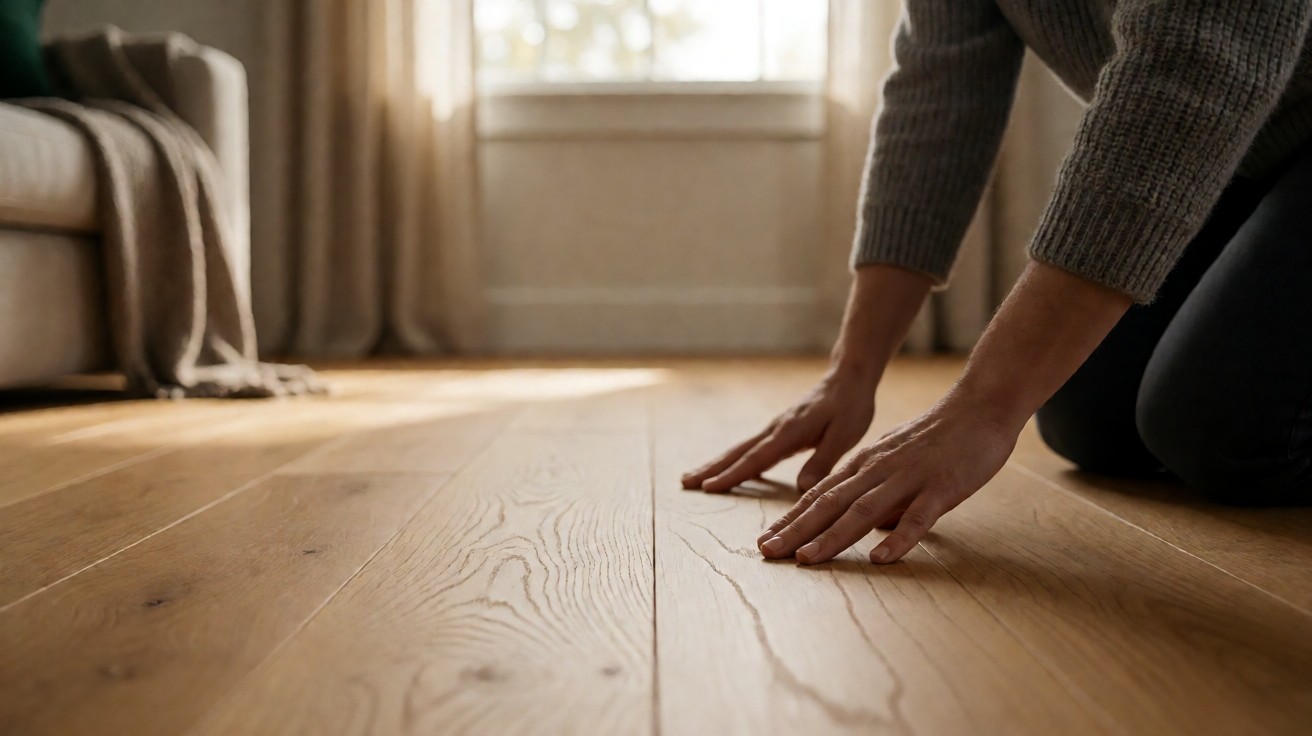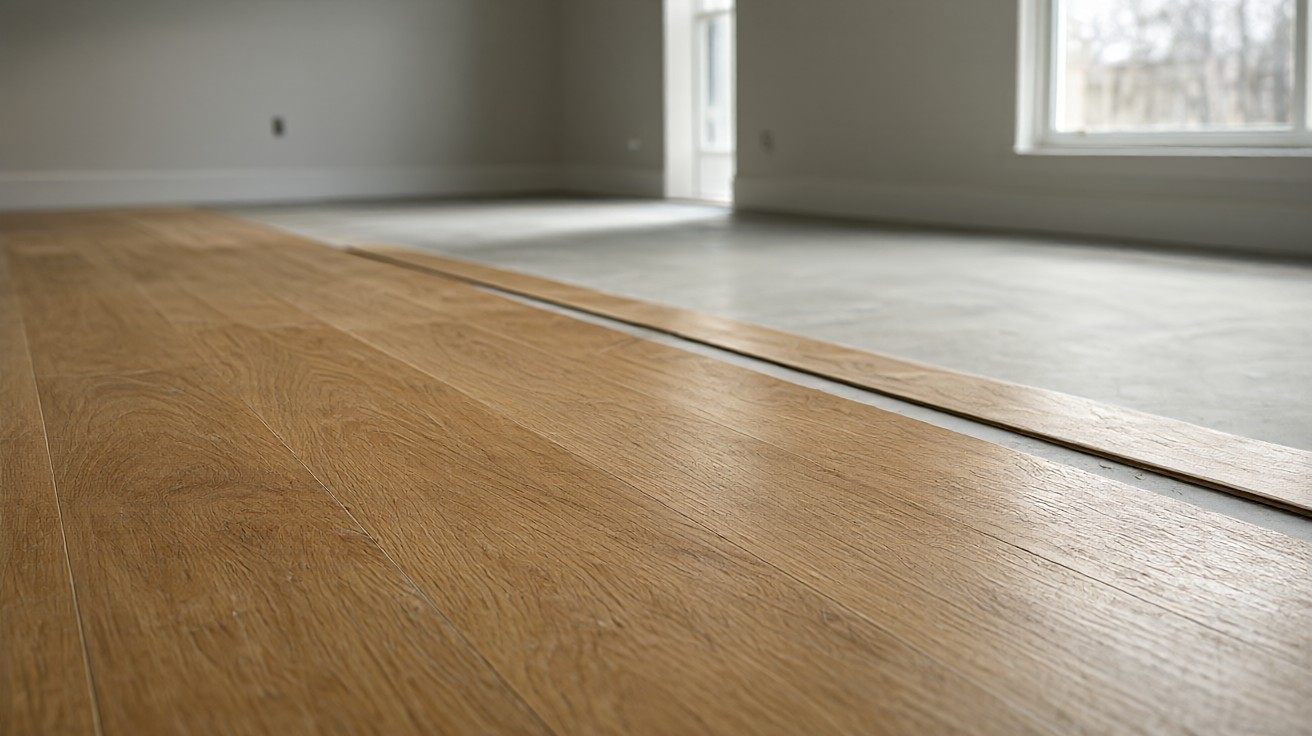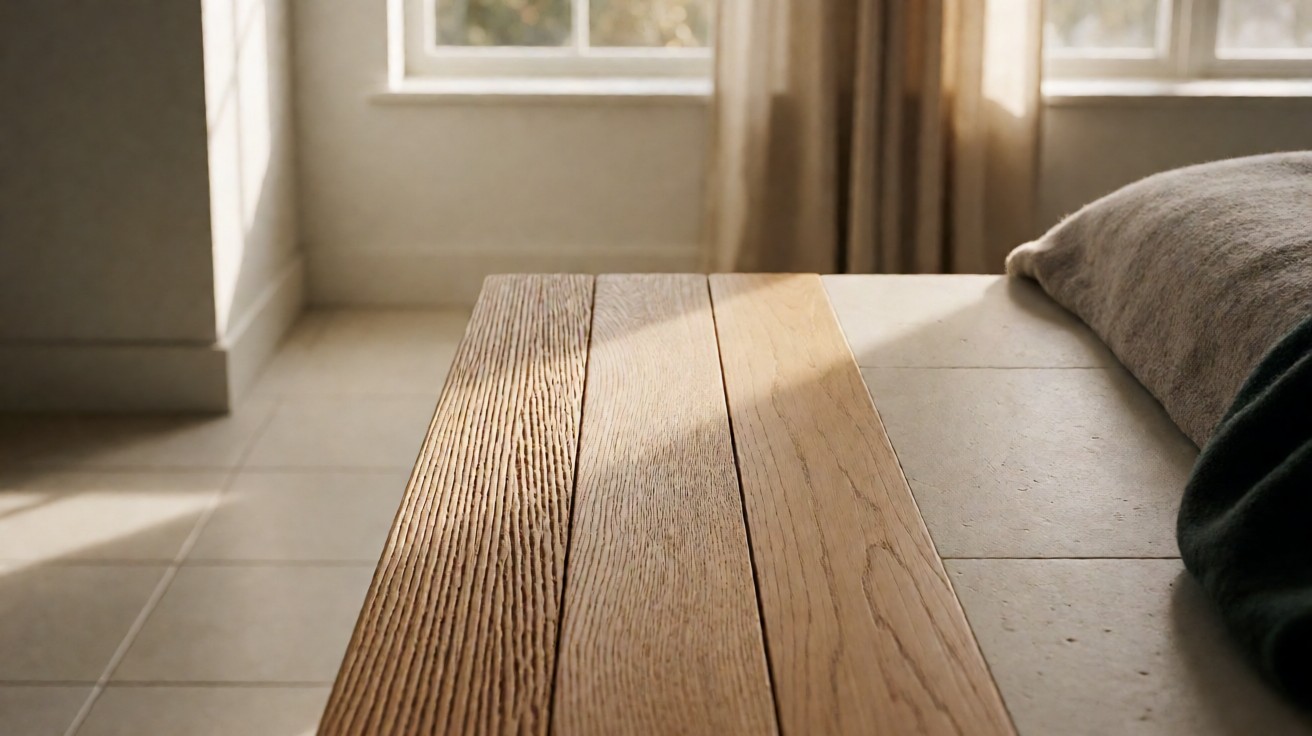

Hardwood floors take a vacuum, a damp mop, and steady habits, but only when you know which finish is on the wood under your feet before you start.
The answer is that the finish sets the water limit and the warranty terms. A water-based finish on a factory-finished floor can take an occasional damp mop. An oil-modified finish or a wax finish cannot, and most manufacturers will not cover the damage that follows.
Identify the finish first, then the rest of this page becomes a lookup.
What A Hardwood Floor Can Take And What It Cannot
Solid hardwood is a finished product, not a raw material. Species, factory finish, and the moisture content of the wood are all part of one product specification, which is why the care sheet that came with your floor matters more than anything on a store shelf.
Per the NWFA and NOFMA International Standards for Factory Finished Wood Flooring, the flooring is manufactured with a moisture content between 6 to 10 percent, with a 5 percent allowance for pieces outside that variance. That specification is why a floor can look dry in the box and still move in your home.
The floor can take a vacuum with a brush or felt head, a dry dust mop, spot cleaning with a clean cloth, and on some water-based finishes an occasional damp mop. It cannot take standing water, steam, flooding, or liquid poured straight onto the boards.
If you are still working out what is underfoot, the hardwood flooring guide covers how solid and engineered floors are built and why the wear layer changes what you can put on them.
How do you identify the finish?
Start with the paperwork. A factory-finished solid floor ships with a finish the mill applied, plus a care sheet and a warranty that name it. A site-finished floor, sealed on site, is a different case, because the finish went on after the boards were nailed down. The prefinished versus unfinished comparison covers how that difference changes the job.
If the paperwork is gone, ask the retailer who sold the floor or the installer who laid it, and check the sample board in a closet or under a rug. The finish name is worth an afternoon of looking.
The Daily Routine
The daily job is small. Pick up what walks in, wipe what spills, and leave the floor alone the rest of the time.
Two habits do most of the damage control. First, wipe a spill as soon as you see it. Second, keep grit off the floor, because grit underfoot works like sandpaper no matter how good the finish is.
Manufacturers are consistent on frequency: vacuum, sweep, or dust mop your floor once a week, or more if needed. The vacuum head must be brush or felt.
Do not leave wet mats down. Allow the floor to dry completely before replacing interior mats.
Vacuuming Without Scratching The Finish
A vacuum does the most good and the most damage in the same pass. The good part is the grit it removes. The damage comes from a hard plastic head and a spinning beater bar dragging across the finish.
Use a felt-bottom vacuum head, run it slowly, and keep the wand off the baseboards. Vacuums with beater bars or hard heads are not for this floor, and a wand attachment is preferable.
Lift the rugs before you vacuum, not after. A rug edge that has crept into the grain will grab and pull.
Should you vacuum or dust mop first?
Vacuum first, then dust mop if the floor needs it. Vacuum picks up the coarse grit that scratches, and the dust mop takes the fine dust the vacuum leaves behind. Doing it the other way around just moves the grit around.
On a busy week, more than once a week is fine. What is not fine is the same dry grit sitting on the boards for a month.
Damp Mopping And How Wet Is Too Wet
Damp mopping is where most hardwood floors get damaged, and the rule comes from the warranty rather than from the mop.
How wet should the mop be?
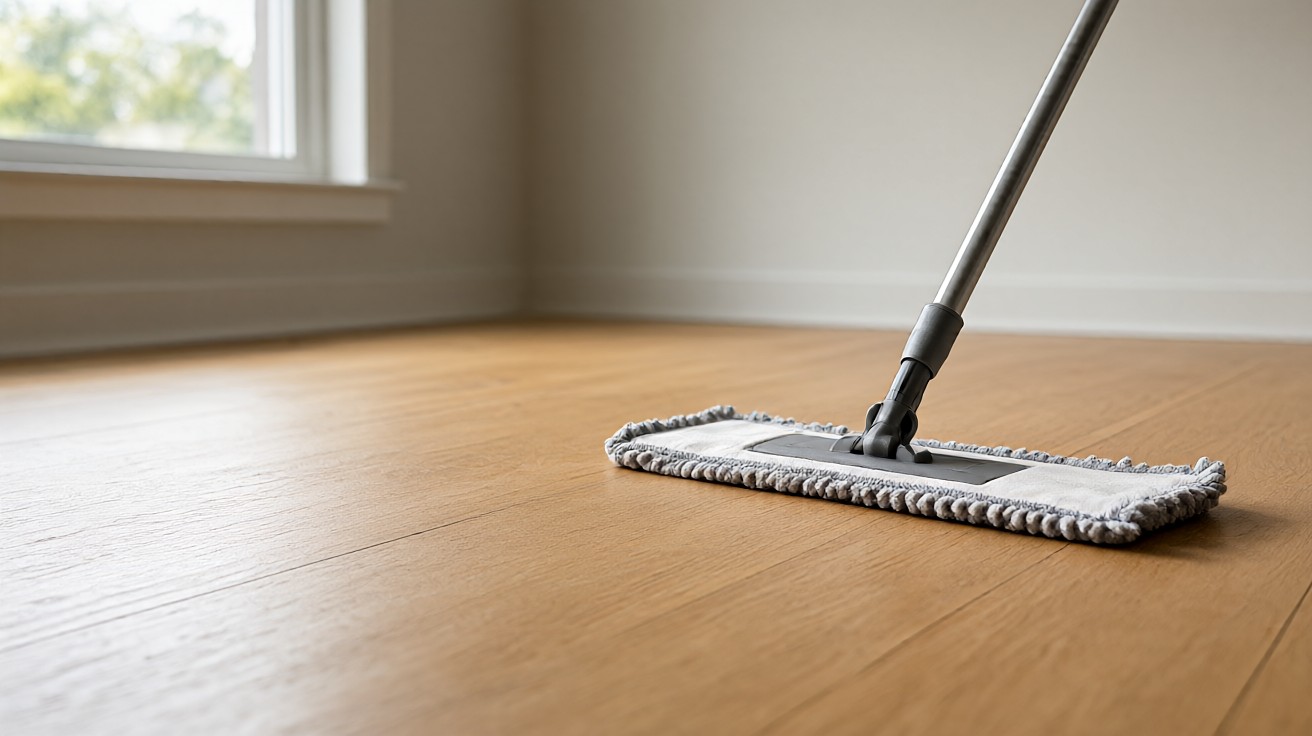
Damp means damp. A flat microfiber mop wrung until it barely drips, with no water left sitting in the pad.
Four limits govern a damp mop, and each one is a hard stop. Do not pour liquid directly on the floor. Do not use an excessively wet mop. Do not allow liquid to puddle or leave moisture standing on the floor. Flood mopping is never recommended, because mop water may damage flooring and leave spots.
Mohawk puts it plainly: never damp mop wood flooring unless it is covered by a wet resistance warranty or greater wet warranty. If the flooring product allows it, occasionally damp mop with water only.
Bruce and Armstrong are stricter still: do not clean with water or steam, because that may permanently damage the floor and void the warranty on a hardwood floor.
Engineered floors have a thinner wear layer over a different core, so their water limits are tighter. The engineered hardwood construction and performance page covers what that changes.
Compare that with the neighbouring material. The guide to cleaning LVP floors covers a wear layer that takes more water than wood does, and the two routines differ because of it.
The Difference Between Water-Based, Oil-Modified And Wax Finishes
A urethane finish is the usual factory coating, and it is not the same thing as wax. Inside that coating family, the water-based finish, the oil-modified finish, and the wax finish behave differently under moisture.
| Finish | Damp mopping | What to avoid |
|---|---|---|
| Water-based finish | Commonly warranted for an occasional damp mop | Standing water, flood mopping, steam |
| Oil-modified finish | Not warranted, dry cleaning only | Any wet mopping, wax treatments |
| Wax finish | Not warranted, dry cleaning only | Any wet mopping, additional wax products |
The distinction that matters day to day is water. Manufacturers commonly warrant a damp mop on a water-based finish. They do not extend that warranty to an oil-modified finish or a wax finish, and the care sheet for those products tells you to stay dry.
Read the warranty language rather than the finish name alone. A wet resistance warranty, or a greater wet warranty, is the phrase that tells you a damp mop is covered.
Bruce and Armstrong add a separate warning: never apply wax treatments to a urethane-coated floor. Wax-based products sit on the never-use list because many of them can pit or etch the finish of the flooring, or prevent the proper use of recommended maintenance materials.
Products That Void The Warranty
Manufacturer care documentation is blunt about the products that cause claims. The list is short and specific, and it is a warranty list rather than a preference list.
Check the manufacturer warranty before you buy a cleaner, because the products on that list are exactly the ones that turn a routine cleaning job into a claim.
Which hardwood cleaners are safe?
The safest cleaner is the manufacturer’s own hardwood cleaner, applied to a clean cloth and wiped onto the spot. If the product in your hand is not that cleaner, a neutral pH cleaner is the next safest choice.
Never use any of the following, or products similar in nature:
- ammonia-based cleaners
- acrylic finishes
- wax-based products
- detergents
- bleach
- polishes
- oil soap
- abrasive cleaning soaps
- acidic materials such as vinegar
These are not a matter of taste. Many of them can pit or etch the finish of the flooring, or prevent the proper use of recommended maintenance materials.
One more category is easy to miss: excess cleaner left on the surface. Excess liquid may damage the fiber of the wood core, so wipe it off rather than letting it sit.
Spot Cleaning Spills And Stains
Spills are the one thing that should never wait. Spills and tracked-in dirt should be wiped up immediately.
For a spot, apply the hardwood and laminate floor cleaner onto a clean cloth and wipe it onto the spot. Do not pour the cleaner straight onto the floor.
If a spill has already soaked in, work from the outside of the spot inward, so you push contamination away from the clean area instead of spreading it.
For a larger wet area, the US EPA mold guidance sets the pace. Mold will not grow if wet items are dried within 24 to 48 hours. For wood, dry with fans, dehumidifiers, and gentle heat, and be very careful applying heat to hardwood floors.
The same guidance notes that treated or finished wood surfaces can be cleaned with mild detergent and clean water, then allowed to dry. A wet vacuum should be used only when materials are still wet, otherwise it may spread mold spores.
Drying is the goal. A floor that dries quickly has no time to grow anything.
Deep Cleaning A Neglected Floor
A floor that has been ignored does not need a stronger product. It needs the same sequence done in the right order.
Take up the rugs first. Area rugs are recommended in front of kitchen sinks, at all pivot points and within high-traffic areas. Do not use rugs with solid rubber or vinyl backings, and make sure the rug material is breathable so moisture is not trapped under it.
Then vacuum every square inch, working from the far end of the room toward the door. Grit that has been pressed into the grain comes out with a slow pass and a felt head.
After that, damp mop only if the finish allows it, and change the mop water often enough that you are not spreading what you lifted.
If the finish is already worn through, no cleaner restores it, and a deep clean will only make the bare wood look worse. That is a refinishing decision rather than a cleaning one.
Steam Mops And Why The Industry Rejects Them
The steam mop is the most common piece of bad advice in floor care, and the industry has been unusually consistent about it.
Can you use a steam mop on hardwood?
The American Cleaning Institute says it plainly: as a general rule, the hardwood flooring industry does not recommend using steam mops on wood floors of any type. The manufacturers have recommended cleaning practices and solutions, and using other products and machines will void your warranty.
The reason is warranty language rather than marketing. Mohawk says never steam mop wood flooring unless it is covered by a steam mop warranty. Bruce and Armstrong say do not clean with water or steam, because it may permanently damage the floor and void the warranty on a hardwood floor.
Heat and moisture together drive water into the wood and under the film, and the finish is the part that cannot be replaced without sanding.
| Method | What the guidance says | Warranty position |
|---|---|---|
| Steam mop | Industry does not recommend steam mops on wood floors of any type | Voids the warranty unless a steam mop warranty exists |
| Damp mop with water only | Occasionally, and only if the flooring product allows it | Covered only by a wet resistance warranty or greater |
| Flood mopping | Never recommended, mop water may damage flooring and leave spots | Not covered |
| Pouring liquid directly | Do not pour liquid directly on the floor or use an excessively wet mop | Not covered |
If a steam mop warranty does not appear in your paperwork, treat the steam mop as off limits. If it does appear, follow the manufacturer instructions exactly, because the warranty is what you are holding.
Humidity And Seasonal Care
Humidity is the environmental number that governs a wood floor. Per the NWFA Installation Guidelines, appropriate conditions for solid wood flooring are an interior relative humidity range between 30 to 50 percent and a temperature range between 60 to 80 degrees Fahrenheit, with geographic exceptions.
The NWFA also notes that the rule has geographic exceptions. Some manufacturers intentionally produce flooring products at higher 8 to 13 percent or lower 4 to 9 percent moisture content levels to accommodate different regions. In some climates, the ideal average humidity range can be higher 45 to 65 percent or lower 20 to 40 percent.
Bruce and Armstrong state the homeowner version simply: keep the relative humidity in your home between 30% and 50%.
| Situation | Relative humidity | Temperature |
|---|---|---|
| Standard condition per the NWFA | 30% to 50% | 60-80 degrees Fahrenheit |
| Humid climate band per the NWFA | 45% to 65% | 60-80 degrees Fahrenheit |
| Dry climate band per the NWFA | 20% to 40% | 60-80 degrees Fahrenheit |
| Home target per Bruce and Armstrong | 30% to 50% | Not stated |
The seasonal part is not about cleaning frequency. A winter furnace dries the air, and a humid summer pushes the other way, so watch the readings rather than the calendar.
A cheap hygrometer in the room is more useful than a schedule.
Protecting The Floor Between Cleanings
Most finish damage is not caused by cleaning. It is caused by grit, sunlight, water, and furniture.
Sunlight is a chemical attack, and it is controllable. Protect the floor from direct sunlight, and use curtains and UV resistant film on large glass doors and windows.
Furniture is the physical half of the problem. Use floor protectors or protective caster cups on furniture legs, and note that certain caster types damage hardwood. Barrel-type caster wheels or wide, flat glides are best for protecting a hardwood floor.
Do not roll or slide heavy objects directly on the floor. When moving appliances or heavy furniture, lay a plywood panel on the floor and gently walk the item across it. Carpet or cardboard is not adequate to prevent surface compression scratches.
Keep animal nails trimmed to minimize finish scratches, and do not wear shoes with spiked heels or heel taps on the floor.
This is scratch prevention as a habit rather than as a product. Entry mats, deliberate rugs, and furniture care do more than any cleaner sold.
When The Floor Needs Refinishing Rather Than Cleaning
Cleaning restores the condition of a surface. It does not restore a finish that has already failed.
When a scratch has already formed, cleaning will not remove it. That is a repair job rather than a cleaning job, and no cleaner on the shelf will close a scratch that has already cut into the finish.
Three signals mean the answer is refinishing rather than cleaning. The finish is worn through to bare wood in the traffic lanes. There are deep scratches or gouges that catch a fingernail. The surface has lost its sheen and shows water staining or cupping along the boards.
None of those signals is a cleaning problem, and treating them as one spends money on the wrong fix. A refinishing decision comes down to the condition of the floor and the finish you want to live with, which is a different job from the one described here.