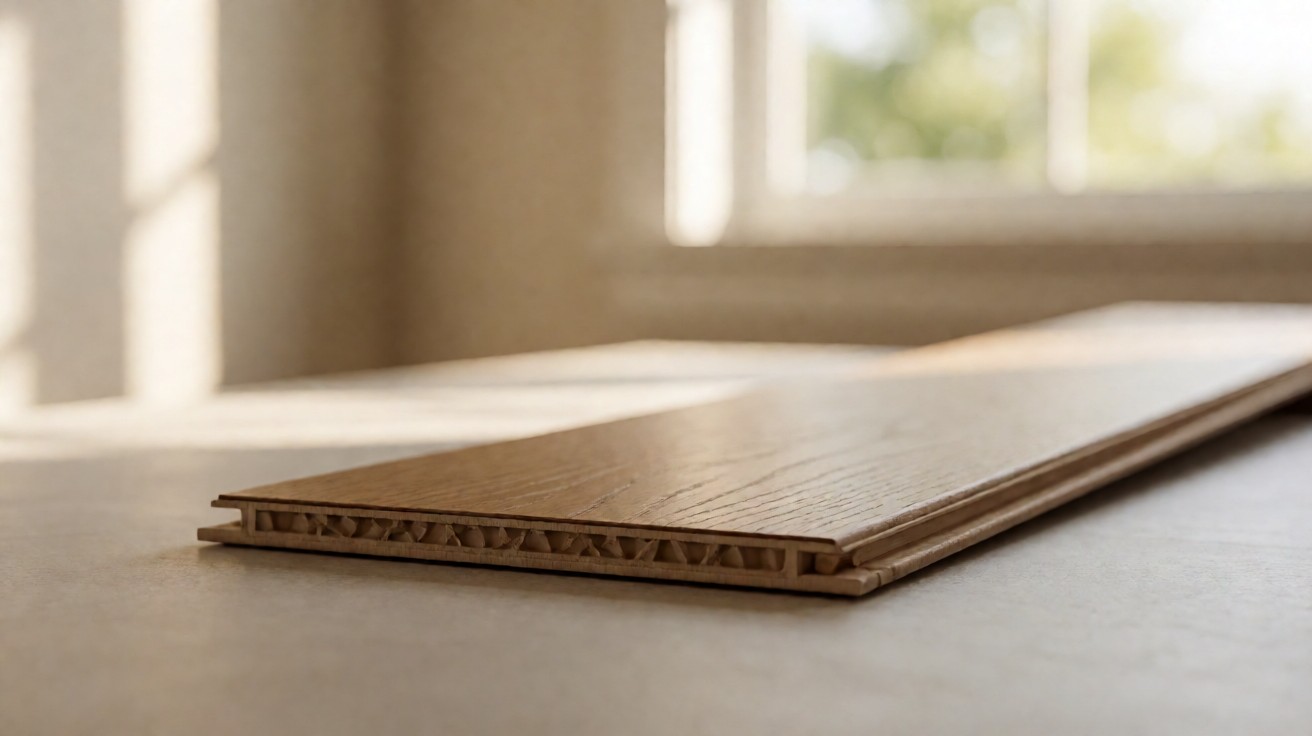

Read a flooring description for the specification, not the adjective. The claim on the box is a statement, and the specification is the number you can check.
The right way to read a description is to find the number behind the adjective: the wear layer in mil, the core in millimetres, the rating as an AC class, and the water claim as a percentage. If the number is not there, the claim is marketing.
Descriptions are written to sell, and specifications are written to be measured. The gap between them is where a bad purchase hides.
Why the Description Is a Claim
A product description is written by the seller. A specification is written by the manufacturer and checked against a standard. The two are not the same document, and they do not say the same thing.
The description tells you what the floor looks like and how it will feel. The specification tells you what the floor is made of and how it will behave.
Read both, and trust the second. A description that cannot be traced to a number is a description you cannot verify.
The seller has a reason to write the description, and the reason is the sale. The manufacturer has a reason to write the specification, and the reason is the standard. That is why the specification is the safer document.
Read the Specification, Not the Adjective
The adjectives are the easy part. Premium, commercial grade, waterproof, and luxury are marketing words, and they are not measurable.
The specification is the hard part. Wear layer thickness, core composition, plank thickness, and the rating are numbers, and they can be compared across products.
When a description uses an adjective, ask what number it stands for. Premium vinyl with no wear layer stated is not a specification, it is a promise.
If the description names a number, check it against the standard, and if it names none, treat the claim as marketing.
| Adjective in the description | The number that proves it |
|---|---|
| Premium, luxury | Wear layer thickness |
| Heavy duty, commercial | AC rating or wear layer |
| Waterproof | Water absorption percent |
| Rigid core | Core material and thickness |
| Long lasting | Warranty term and exclusions |
The Wear Layer Claim
The wear layer is the most common claim, and the most common exaggeration. A description that says durable or heavy duty without a mil number is not telling you anything you can compare.
A residential vinyl wear layer runs from 12 mil to 20 mil. A description that says premium without naming the mil is asking you to trust the word instead of the number.
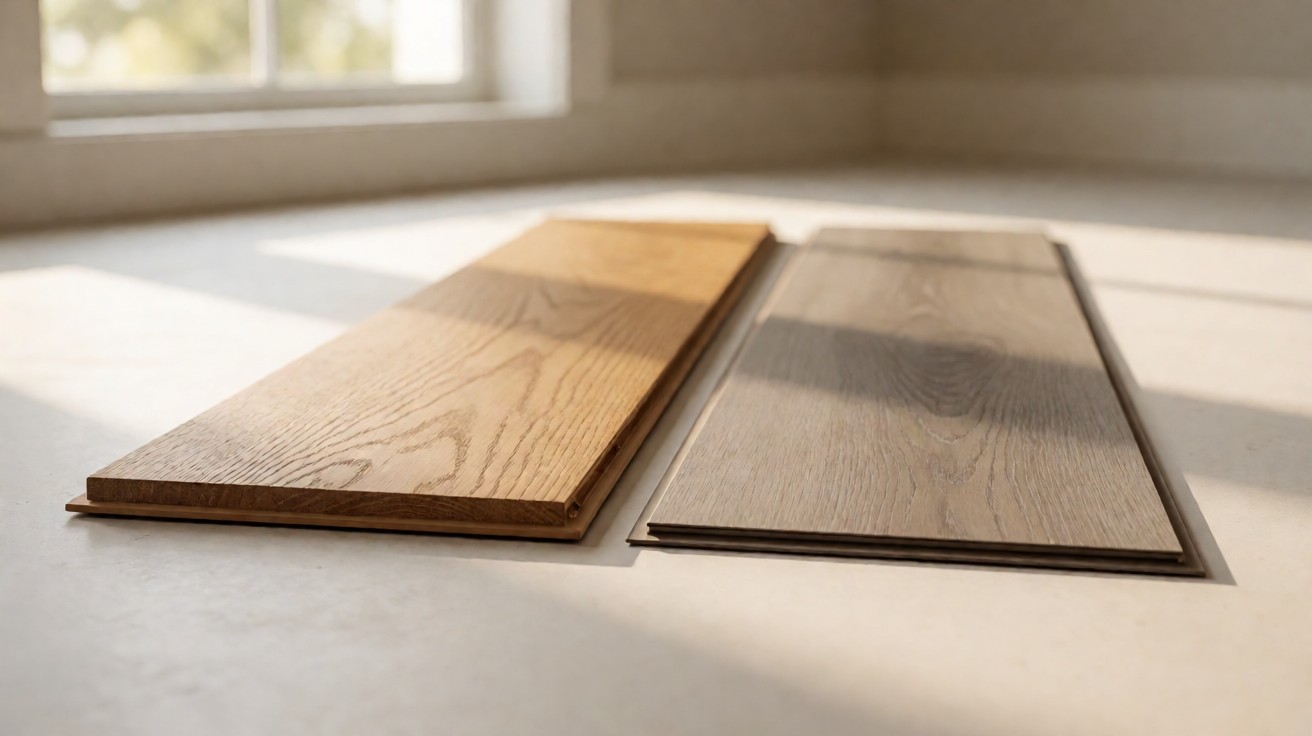
On an engineered wood floor, the wear layer is the wood face, and it runs from 2 mm to 6 mm. A face of 2 mm is the minimum, and a face of 4 mm can be refinished.
On a laminate floor, the wear layer is the overlay, and the rating is the number. The AC rating runs from AC1 to AC5, and AC3 is the threshold for a standard residential floor.
What Does a Wear Layer Number Mean?
The wear layer is the clear top layer that takes the damage. A thicker wear layer lasts longer, but it is not the only measure of quality. A thick wear layer over a soft core still dents, and the two have to be judged together. Ask for the mil number and the core thickness, and you have the two halves of the claim.
| Claim in the description | The number to look for | What it means |
|---|---|---|
| Durable, heavy duty | Wear layer in mil | 12 to 20 mil residential |
| Premium, luxury | Face thickness in mm | 2 to 6 mm engineered wood |
| Commercial grade | AC rating | AC4 or AC5 |
| Waterproof | Water absorption percent | 0.5 percent or less for porcelain |
The Core and Construction Claim
The core is what the floor is made of, and the description often hides it behind a format name. Rigid core, stone core, and SPC are construction terms, and they are not all the same product.
An SPC core is a stone plastic composite, and it is rigid. A WPC core is a wood plastic composite, and it is softer underfoot. A plywood core is layered wood, and a fiberboard core is a dense board.
Ask what the core is made of, and ask how thick it is. A vinyl plank runs from 4 mm to 8 mm, and the core is the part that decides how it feels.
When the description names the core material, ask how thick it is, because the thickness is what decides how the floor behaves in a humid room.
The description that says rigid core without naming the material is asking you to accept a category. The category is not a specification, and it will not tell you how the floor behaves in a humid room.
The Rating Claim
The rating is the most useful number in the description, because it is the one that comes from a standard. Laminate carries an AC rating from the National Laminate Flooring Association (NALFA), and tile is calibrated under ANSI/TCNA A137.1.
A laminate floor rated AC3 is a residential floor. A floor rated AC5 is a heavy commercial floor, and it will cost more. The description should name the rating, and the number should match the standard.
Wood flooring follows the grading rules of the National Wood Flooring Association (NWFA), and the grade is the number that describes how much variation the floor will show.
The rating is the one claim you can check against an external body. If the description names a rating, look it up, and see whether the product meets it.
The rating is also the claim that varies most between products at the same price. Two floors at the same price can carry different ratings, and the rating is the difference you can see on the specification sheet.
The Moisture and Water Claim
Waterproof is the most abused word in flooring. A floor can be water resistant, waterproof, or water tolerant, and the three are not the same.
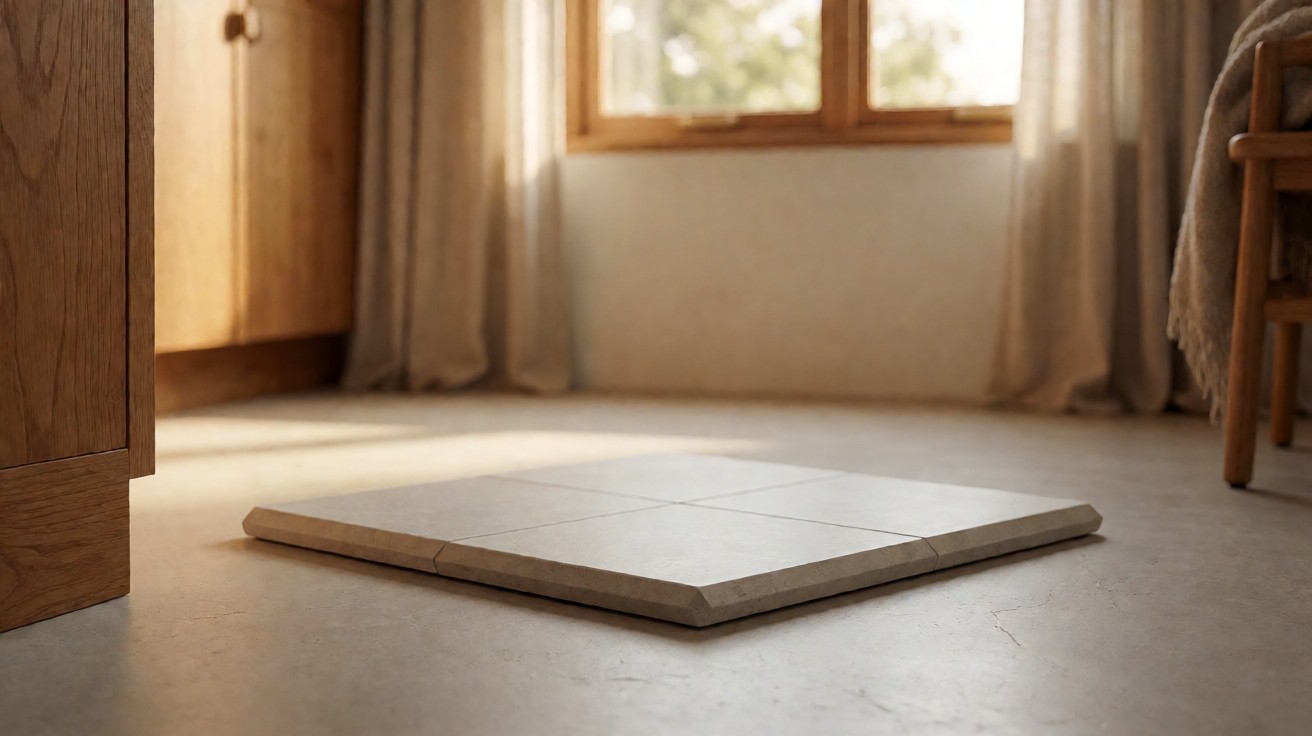
Porcelain is defined by its water absorption, and the threshold is 0.5 percent by weight under ASTM C373. A tile that absorbs more than that is not porcelain, whatever the description says.
Wood is not waterproof. A wood floor can be water resistant for a spill, and it can be damaged by a leak. A description that says waterproof wood is describing a finish, not the material.
Is Waterproof the Same as Water Resistant?
No. Water resistant means the floor handles a spill for a time. Waterproof means the floor will not be damaged by water, which is a stronger claim and one that most wood floors cannot meet. A description that uses the two words interchangeably is not giving you a specification.
The Warranty Claim
The warranty is a promise, and the description often quotes the headline number without the exclusions. A 50 year residential warranty is a real number, and the exclusions are the real terms.
A material warranty covers the product, and a workmanship warranty covers the work. A description that quotes one without the other is telling you half the promise.
Ask what the warranty excludes. Moisture, subfloor movement, and improper maintenance are the common exclusions, and they are the ones that matter.
What Does a Warranty Exclude?
The exclusions are the part of the warranty that decides whether a claim is paid. Moisture damage, subfloor movement, and damage from improper cleaning are the common ones, and a description that quotes the years without the exclusions is quoting the number that matters least. Ask for the exclusions in writing before you buy.
The Comparison Claim
A description that compares the product to another is usually comparing a specification to an adjective. Better than laminate and more durable than vinyl are comparisons without a number.
A comparison is only useful when it names the number. A 20 mil wear layer is better than a 12 mil wear layer, and that is a comparison you can check.
When a description compares the product to a price, ask what the price includes. A floor that is cheaper than another may be cheaper because it is thinner, not because it is a better deal.
The Installation and Maintenance Claim
A description will often claim that a floor is easy to install and easy to maintain, and both claims are worth testing.
Click lock is the format that is described as easy to install, and it is the one a DIY installer can lay. Glue down and nail down need tools and practice, and the description that says easy across all formats is overstating.
The maintenance claim is the one that decides your week. A floor that needs a specific cleaner, a specific mop, and a specific routine is not a low maintenance floor, whatever the description says.
Ask what the maintenance routine is, and ask what cleaner the manufacturer recommends. A floor that needs a proprietary cleaner is a floor with a recurring cost.
Where Descriptions Mislead
The most common misleading claim is the adjective without a number. Premium, commercial grade, and luxury are words, and the specification is the number.
The second is the rounded number. A wear layer that is quoted as 0.5 mm when it is 0.4 mm is a rounded claim, and the rounding is in the seller’s favour.
The third is the omitted exclusion. A warranty that quotes the years without the exclusions is a half promise, and the exclusion is the part that will matter. If a warranty quotes the term without the exclusions, ask for the exclusions in writing before you sign.
The fourth is the format substitution. A description that says rigid core without naming SPC or WPC is asking you to accept a category instead of a product.
How to Verify a Claim
Verify the claim by finding the number. A wear layer claim is verified by the mil number, a water claim by the absorption percentage, and a rating claim by the standard.
Then verify the number against the standard. ASTM C373 defines porcelain, ANSI/TCNA A137.1 defines ceramic tile, NALFA defines the laminate rating, and NWFA defines the wood grade.
The product specification comparison guide shows how to line up two products on the same numbers.
The flooring quality evaluation guide shows how to check the claim against the sample in your hands.
Ask the installer what the description claims that the installer has seen fail. An installer who has laid the product knows which claims hold and which do not, and if the installer has seen a claim fail, that claim is not a specification.
The Closing Procedure
Before you trust a description, run this list.
- Find the wear layer number, not the adjective.
- Find the core material and the thickness.
- Find the rating and the standard behind it.
- Find the water absorption number, not the word waterproof.
- Find the warranty exclusions, not just the years.
- Check the claim against the sample in your hands.
Trust the specification over the adjective. A description that cannot be traced to a number is a description you cannot verify, and the number is the only part you can compare.