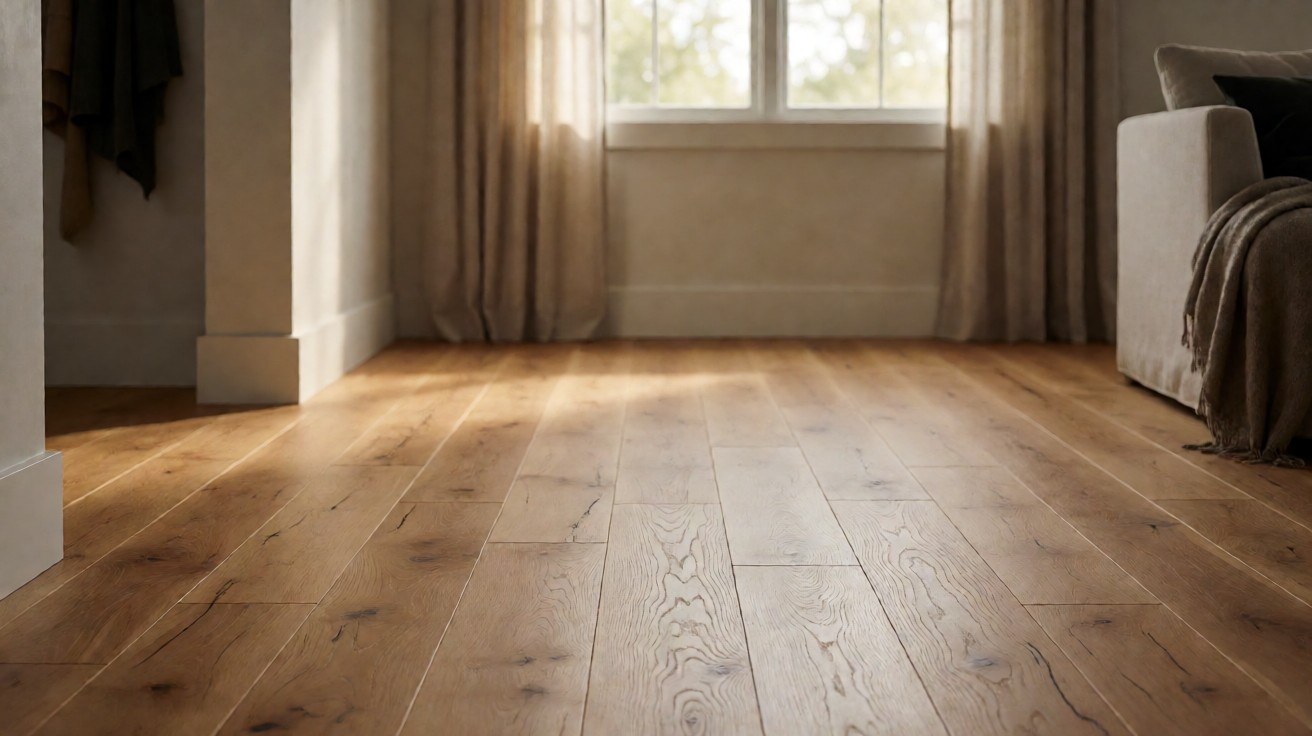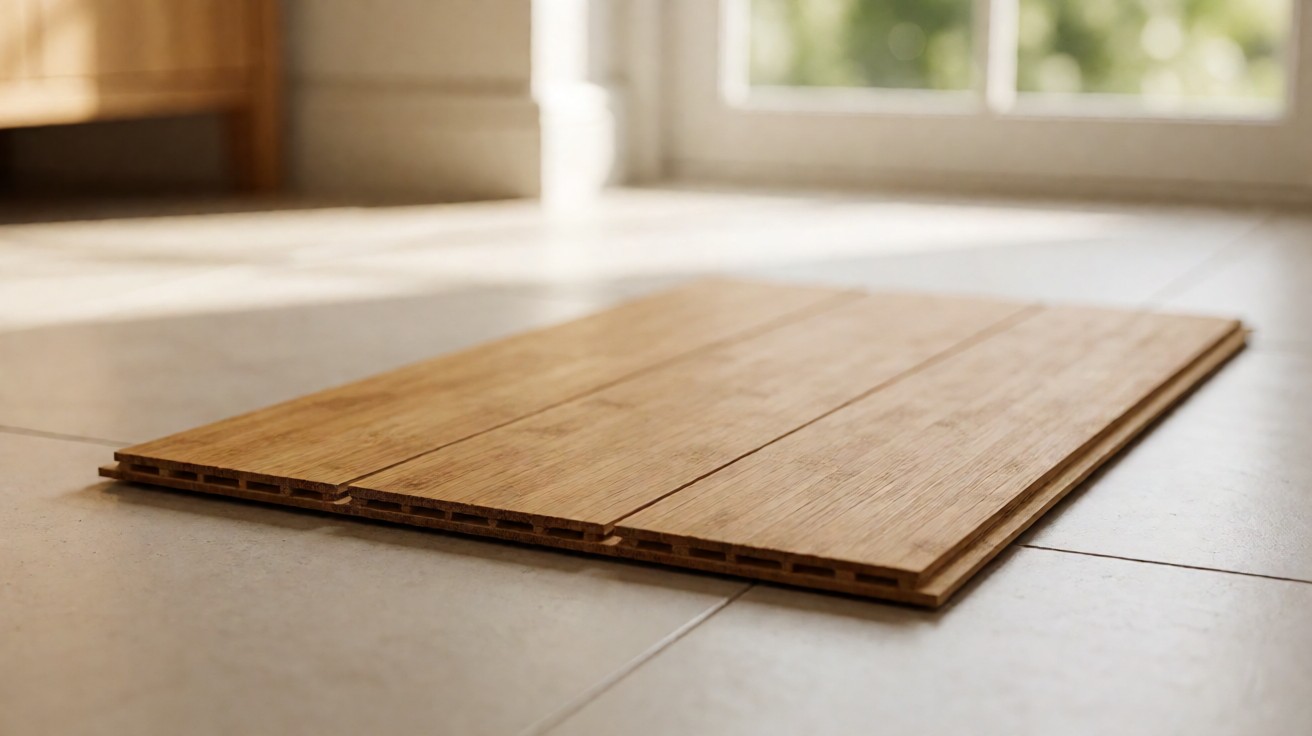

Bamboo flooring is engineered grass, and the choice between solid and strand-woven construction decides how the floor wears and how it must be installed. Bamboo is not a wood and it does not behave like one, even though it is sold in plank form next to hardwood and looks similar underfoot. A solid bamboo plank is milled from dense vertical-grain culm sections that are laminated side by side, and it behaves like a hard dense hardwood. A strand-woven plank is made from bamboo fibers that are shredded, boiled, dried, pressed under extreme pressure and resin, and it behaves more like an engineered composite. Those two products are priced, installed, and worn differently enough that choosing the wrong one is the most expensive mistake in this category.
Solid Bamboo Versus Strand-Woven
Solid bamboo is made by slicing the culm wall of the bamboo plant into thin strips, laminating those strips side by side with the grain running along the length of the plank, and pressing them under heat and adhesive. Because the strips are dense and run the full length, a solid bamboo plank is roughly twice as hard as most hardwoods of comparable appearance and it holds a finish very well. The trade-off is dimensional stability: solid bamboo responds to humidity changes more than hardwood does, because bamboo is a grass with a different cell structure, and it will cup or gap if the room’s moisture swings widely.
Strand-woven bamboo starts at the same plant but takes a completely different path. The culm is crushed into fiber strands, boiled to break down the lignin, dried, sorted by grade, and then compressed into a block under several hundred tons of pressure with a phenol-formaldehyde resin binder. The finished plank is denser and harder than solid bamboo, holds its shape across humidity swings far better, and has an appearance that is more mottled and less wood-like. Strand-woven is the harder-wearing product and the better choice for a busy room; solid bamboo is the better-looking product and the right choice for a low-traffic room where appearance is the priority.
| Property | Solid Bamboo | Strand-Woven Bamboo |
|---|---|---|
| Construction | Vertical culm strips laminated | Crushed fiber strands compressed with resin |
| Hardness | About 1,180 lbf (Janka) | About 1,400 lbf (Janka) |
| Moisture stability | Moderate; can cup in humid swings | High; stable across humidity swings |
| Appearance | Close wood-like grain | Mottled, more uniform, less wood-like |
| Resin content | Low, glue-laminated strips | High, resin-bound fiber |
| Best for | Bedrooms, low-traffic rooms | Entryways, kitchens, family rooms |
What Bamboo Is and Is Not
Bamboo is a grass, and the single most common buyer error is treating it as a form of hardwood. It is not, and the practical consequences run through everything. It has no knots, so it is uniformly hard across the whole plank, and it cannot be refinished the way hardwood can because there is no hardwood layer under the finish. It does not dent from furniture the way hardwood does, but it can chip at the edges if a heavy object is dropped on it. It is more dimensionally unstable than hardwood, so it needs a tighter moisture environment. And because it is grass, it is classified under its own flooring standards rather than under wood flooring standards, which affects the warranty language you should expect.
The environmental story is also more complicated than the marketing suggests. Bamboo grows fast, and a mature culm regenerates from the rhizome without replanting, which makes it a genuinely fast-renewing crop. But the products are adhesives and finishes, and a high-resin strand-woven plank carries a meaningful amount of phenol-formaldehyde binder. Low-resin and no-additive lines exist and are worth asking about specifically, but “bamboo is green” as a blanket statement does not hold up once the binder is factored in.
Moisture, Humidity, and Where Bamboo Works
Bamboo is rated for indoor use with a recommended relative humidity range of 30 to 50 percent, and solid bamboo in particular will cup or gap outside that band. Strand-woven tolerates a wider band because the compressed fiber structure moves less, but neither product belongs in a room that regularly gets wet. Bathrooms, laundry rooms, and damp basements are out. Kitchens and entryways are fine provided the product is properly sealed and the room does not have persistent standing water.
The failure mode to understand is the one that happens in winter. A bamboo floor installed in a humid summer can expand enough to press against the walls, and then contract significantly when the heat comes on and the indoor humidity drops. That cycle is what produces the gaps that show up along the plank ends in February. The mitigation is acclimation: the planks need to sit in the room for the manufacturer’s recommended period, usually 48 to 72 hours, before installation, and the room’s humidity needs to stay inside the stated range afterward. A floor installed without proper acclimation will not stay flat.
Finishes and Wear Layer
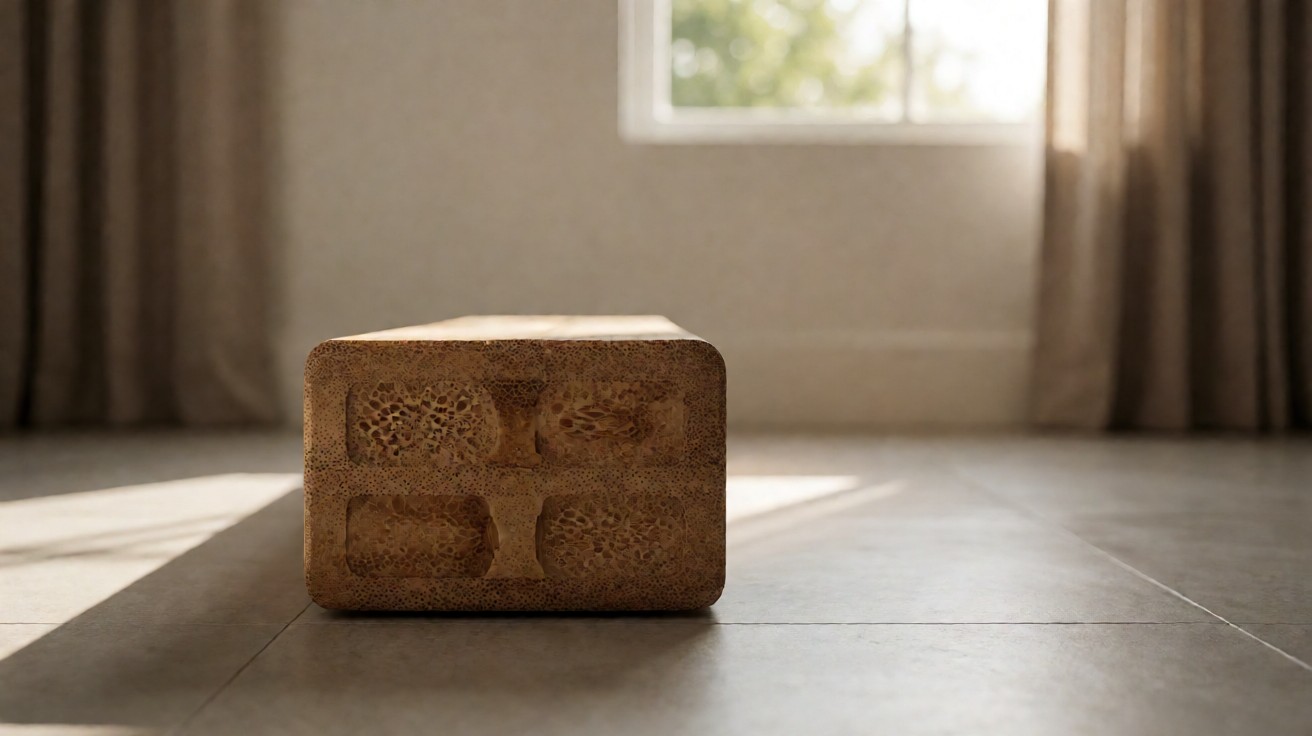
Bamboo flooring takes either a factory-applied finish or a site-applied one, and the difference matters more here than it does for hardwood. An aluminum-oxide finish is the most durable option for bamboo because aluminum oxide particles are deposited into the surface under vacuum and then bonded, producing a finish that resists scratching and staining well. A standard urethane or lacquer finish is softer and wears faster, particularly on solid bamboo where the harder substrate means the finish itself becomes the weak layer. Strand-woven bamboo is frequently supplied with a factory finish already rated for commercial traffic.
The wear layer question matters if you are comparing bamboo to laminate. Some bamboo products use a melamine or aluminum-oxide wear layer over the bamboo core, which effectively makes them a high-end laminate with a natural core. That construction is more scratch-resistant than pure bamboo and less repairable, because there is no solid material underneath to sand. The laminate AC rating page explains how wear layer thickness translates to a durability class, and that same logic applies to a wear-layered bamboo product.
Installation Method
Most residential bamboo is installed as a floating floor: the planks click together over an underlayment and are not fastened to the subfloor. This is faster and it allows slight movement, which actually helps bamboo because it accommodates the seasonal expansion that causes the cupping problem. A glue-down installation is occasionally specified for a strand-woven product in a room with heavy traffic, and it gives a more stable floor but removes the movement allowance that floating installation provides.
The subfloor requirements are modest: level to within 3/16 inch over 10 feet, clean, dry, and structurally sound. The over existing floor question is worth thinking about carefully, because bamboo’s thickness means stacking two floors in a room raises the finish level by about three-quarters of an inch, which can be a door clearance problem. If the old floor is carpet, it has to come up, both because of the added thickness and because carpet compresses under a rigid floor and creates a hollow that eventually damages the planks.
| Room | Suitability | Condition | Why |
|---|---|---|---|
| Bedroom | Excellent | Acclimate 72 hours | Low traffic, controlled humidity, appearance leads |
| Living room | Excellent | Humidity 30-50 percent | Hardness handles normal family traffic |
| Home office | Excellent | Casters, not hard feet | Rolling loads need a wider bearing surface |
| Kitchen | Good | Sealed finish, prompt cleanup | Water is the concern, not the traffic |
| Entryway | Good with strand-woven | Strand-woven preferred | Hardness matters more than appearance here |
| Bathroom or laundry | Not suitable | Not recommended | Standing water causes swelling and delamination |
Acoustic and Thermal Properties
Bamboo has an impact sound rating comparable to engineered hardwood and noticeably better than ceramic or porcelain tile, because the plank and its underlayment both have some give and the core is denser than a typical laminate core. It is not as quiet as carpet or cork, which are the two materials that genuinely excel at absorbing footfall, but it is a marked improvement over tile in an upstairs room or a room over a bedroom. The thermal picture is the reverse of cork: bamboo has moderate thermal resistance and feels cooler underfoot than carpet or cork, though not as cold as tile over a concrete slab, because the plank itself has enough mass to slow heat transfer through a bare slab.
The one practical acoustic warning is that bamboo installed over a thin or recycled underlayment performs noticeably worse than the same plank over a quality underlayment. If the room is above another occupied space, the underlayment specification matters more than the plank specification. Spending the money on a proper acoustical underlayment rather than on a marginal upgrade in plank is the better allocation for that specific problem.
Bamboo Versus Hardwood and Laminate
Against hardwood, bamboo wins on hardness and uniformity and loses on refinishing and on the ability to repair a damaged plank. Hardwood can be sanded and refinished any number of times; bamboo cannot, because there is no solid wood layer under the finish. Against laminate, bamboo wins on feel, on the fact that it is a real natural material, and on the ability to refinish a site-finished product; laminate wins on scratch resistance, on price, and on the fact that it does not care about humidity. The comparison is genuinely close and depends on which trade you refuse to make.
Solid hardwood is the option when the floor is expected to be refinished in twenty years, which happens more often in homes that are kept a long time. Engineered hardwood gives most of that benefit at a lower cost. The engineered hardwood construction page covers how that layer structure works. If the decision is between bamboo and hardwood, the deciding question is usually whether the buyer plans to stay in the home long enough for a refinish to matter.
Cost and Resale Considerations
Bamboo runs $3 to $7 per square foot for material, with strand-woven at the higher end and solid bamboo at the lower end. Installation is typically $2 to $4 per square foot for floating installation, similar to laminate. For a 12-by-15-foot bedroom, a fully installed bamboo floor usually lands between $1,300 and $3,000 all-in, which puts it above laminate and below most solid hardwood.
Resale is the one place bamboo is consistently disadvantaged. Real estate agents report that buyers and their agents treat bamboo as a lesser hardwood rather than as a premium alternative, and homes with bamboo floors routinely appraise slightly below comparable homes with real hardwood, even when the bamboo is higher quality. That is a market perception rather than a material fact, but it is a real cost that does not appear on the invoice and is worth factoring in for anyone who expects to sell within a decade.
Common Failure Modes and How to Avoid Them
Four problems account for nearly all bamboo flooring complaints, and each has a specific cause. Cupping, where plank edges lift away from the subfloor, is a moisture problem: either the room was too humid at installation, the planks were not acclimated, or an underlayment trapped moisture against a concrete slab. Gapping between plank ends in winter is the same moisture problem in reverse, and it is more common in solid bamboo than strand-woven because of the difference in dimensional stability. Edge chipping happens when a hard object is dropped on a plank corner, and it is more likely on a site-finished floor where the finish layer is softer and chipping exposes the bamboo underneath. And the fourth, squeaking, is almost always an underlayment or fastening problem rather than a bamboo problem.
Three practices prevent nearly all of them. Acclimate the planks in the actual room for the full stated period with the packaging opened, not stacked sealed. Test the subfloor for moisture if it is concrete, and add a moisture barrier membrane if it reads above the manufacturer limit. And keep the indoor relative humidity between 30 and 50 percent year-round, which in practice means a humidifier in dry winter months rather than only a dehumidifier in summer. A bamboo floor installed with those three things done correctly is a floor that stays flat, and one installed without them is a floor that develops gaps within two winters.
Choosing a Bamboo Floor
Start by deciding solid or strand-woven, which the room’s traffic usually answers. Then check the specification rather than the label. The four numbers that matter are the Janka hardness, the finish type, the formaldehyde or phenol emission rating, and the stated moisture range with its warranty conditions. A product that lists all four is a product whose manufacturer expects it to be checked. A product that lists none of them is one to pass on, because without those numbers there is no way to know whether you are getting a plank or a thin decorative veneer over fiberboard.
Finally, buy a sample and live with it. Bamboo varies enormously between manufacturers, and the difference between a well-made strand-woven plank and a cheap solid-bamboo veneer over a low-density backing is visible in the room within a day of installation. Ask the supplier for the Janka value and the emission certification in writing before you buy, not verbally. If they cannot produce either, the price you were quoted is not a price you should pay.