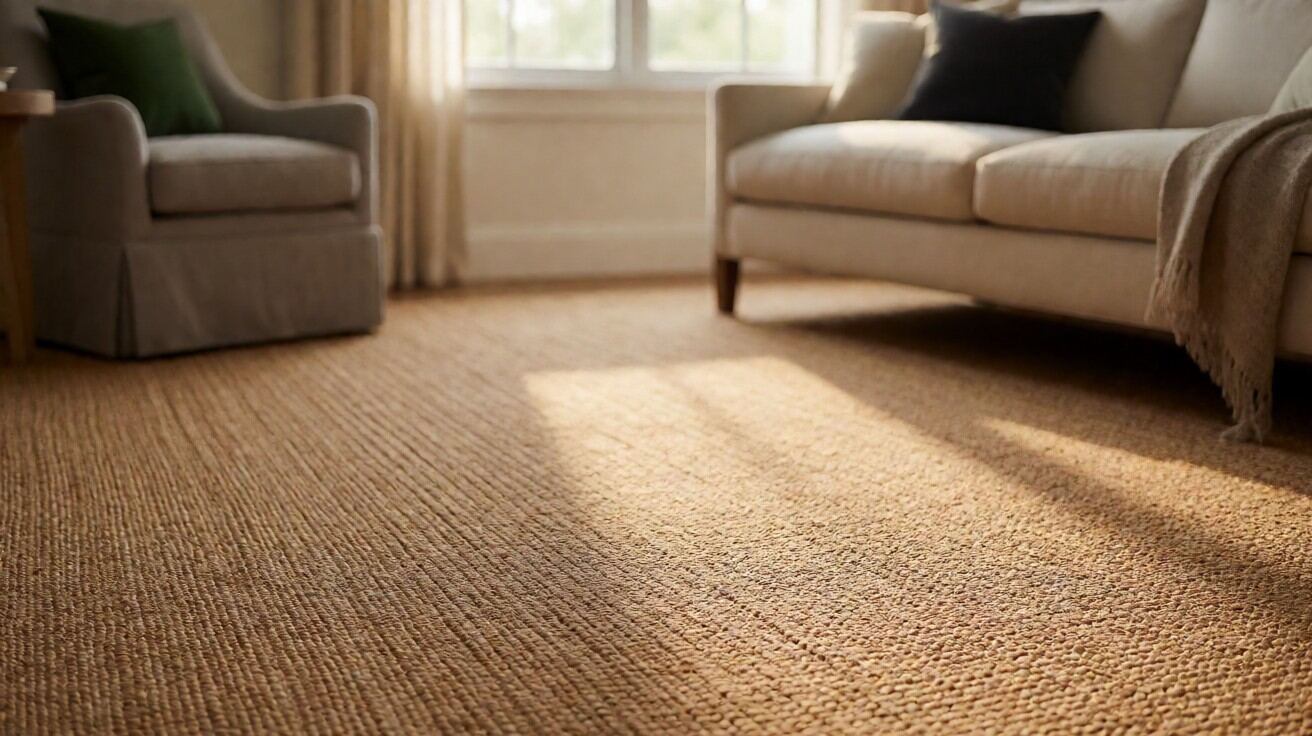

Natural-fiber carpet and wall-to-wall carpet are two different flooring decisions that homeowners usually confuse, and the distinction changes what you can buy, where you can install it, and how you maintain it for years. The confusion comes partly from the name: “wall-to-wall” is a description of how a carpet covers the room, not what it is made of, and “natural fiber” is a description of the material, not the format. You can have wall-to-wall carpet made from nylon, polyester, or wool, and you can have natural-fiber products that are sold as wall-to-wall carpet or as loose area rugs. The two categories overlap in some products, but the material properties that drive the decision are entirely different.
Natural-Fiber Materials: What They Are and Where They Come From
The four dominant natural-fiber materials in wall-to-wall carpet are jute, sisal, seagrass, and coir. Each comes from a different part of a different plant, and each has distinct feel, durability, and moisture sensitivity. Jute comes from the bast fiber of the jute plant, is soft and golden-brown, and is the most widely used natural-fiber material in residential carpet. Sisal comes from the leaves of the agave sisalana plant, is stiffer and more durable than jute, and reads as a tighter, more formal texture. Seagrass is a marine plant fiber that dyes easily and has a smooth, almost woven-linens look, making it popular for coastal-style interiors. Coir is the outer fiber of the coconut husk, is the coarsest of the four, and is mostly used for commercial or high-traffic entry areas.
None of the four are synthetic, and none of them have the same moisture tolerance as nylon or polyester. This is the core constraint of the natural-fiber category: they are beautiful, they are sustainable, and they are very particular about where you put them. The four materials are also not interchangeable in a given room. Jute in a hallway will wear visibly within a few years of normal family traffic, while sisal in the same hallway will last a decade. Seagrass in a sunroom will fade in color much faster than jute in the same light. The material choice has to be matched to the specific room and the specific traffic pattern, not just to the aesthetic preference.
Wall-to-Wall Carpet: The Format Decision
Wall-to-wall carpet means the carpet is installed edge-to-edge across the entire room, under all furniture, with the perimeter cut to fit the room dimensions. This is different from an area rug, which is a freestanding piece that sits on top of a hard floor. The wall-to-wall format has specific installation requirements: the carpet is stretched onto a pad with a power-stretcher or a knee-kicker, the edges are tacked down with carpet tack strips, and the perimeter is finished with a transition strip at doorways and thresholds.
The decision to go wall-to-wall with a natural-fiber material has real consequences that are easy to underestimate. Natural-fiber wall-to-wall carpet in a room with humidity variation, a bathroom nearby, or a family with young children is a maintenance problem waiting to happen. In a dry, low-moisture, high-traffic entryway or hallway, it is a durable and beautiful choice. For a deeper look at carpet installation options, the carpet flooring guide covers the full range of carpet types and formats and how each one installs.
Where Natural-Fiber Works and Where It Does Not
The rule of thumb is simple: keep natural-fiber wall-to-wall carpet out of any room where moisture is a regular or occasional event. Kitchens, bathrooms, basements, and any room below grade are all out. Entryways that get wet from snow, rain, or outdoor shoes are also problematic, because water on sisal or jute creates permanent staining that is not reversible. Natural-fiber carpet is at its best in dry, climate-controlled rooms: living rooms, dining rooms, bedrooms, and home offices in homes where humidity is managed.
The material is naturally resistant to mites and insects when it is properly treated, and it has a lower VOC off-gassing profile than synthetic carpet, which matters in smaller enclosed spaces. For a bedroom or study in a dry climate, natural-fiber wall-to-wall carpet is a genuinely better choice than a synthetic option on both comfort and air-quality grounds. The comfort difference is real: natural fiber has a naturally lower heat retention than synthetic nylon or polyester, which means it does not trap body heat the way a synthetic carpet does in a warm climate.
| Natural-Fiber Material | Feel and Texture | Durability Rating | Best Residential Use |
|---|---|---|---|
| Jute | Soft, golden, warm | Moderate; wears in high-traffic | Bedrooms, living rooms |
| Sisal | Stiff, tight, formal | High; good for heavy traffic | Hallways, living rooms, studies |
| Seagrass | Smooth, woven, dyed | Moderate; stain-prone | Coastal rooms, design accents |
| Coir | Coarse, rough, industrial | Very high | Entryways, commercial, mudrooms |
Pile Height, Twist, and Construction
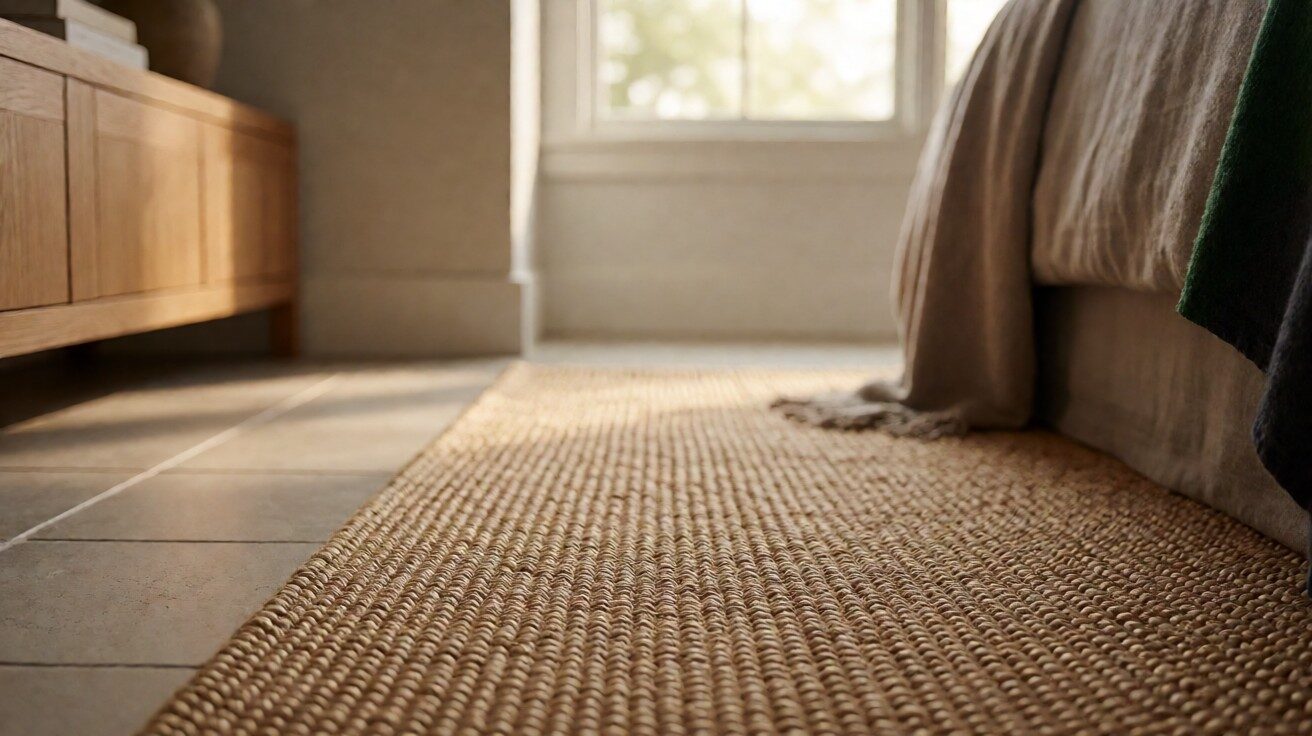
Natural-fiber carpet is almost always a flat-weave construction, which means there is no looped pile the way there is in nylon or wool synthetic carpet. The “pile height” of a natural-fiber carpet is the thickness of the woven fiber bundle, and it is typically 1/8 to 3/16 inch. A 3/16-inch flat weave is thicker and more comfortable underfoot than a 1/8-inch version, but the difference is modest compared to the pile height range of a synthetic carpet.
The twist refers to how tightly the individual fibers are twisted before weaving: a tight twist is more durable and holds the color better, while a loose twist is softer and more casual. For a natural-fiber wall-to-wall install, a medium-to-tight twist in a 3/16-inch flat weave is the most practical combination: it is comfortable, it wears well, and it is available from most suppliers in a range of natural colorways. The twist direction also matters for the wear pattern: a right-hand twist (Z-twist) is standard in most natural-fiber carpet and wears more evenly under foot traffic than a left-hand twist. For a room with a dominant traffic path, a Z-twist in a tight weave will keep the carpet looking even for longer.
Padding and Underlay Options
Natural-fiber carpet needs a proper pad underneath, and the pad choice is more important than it is for synthetic carpet because the natural fiber does not have the built-in cushioning of a looped pile. A 3/8-inch rubber pad is the standard recommendation for natural-fiber wall-to-wall installs: it provides the right amount of cushioning, it is moisture-resistant, and it does not compress over time the way a cheap foam pad does.
The pad also has a secondary function that is easy to overlook: it provides a moisture barrier between the subfloor and the natural fiber, which matters in any room where humidity can rise. In a basement-adjacent room or a room above a concrete slab, a moisture barrier under the pad is not optional; it is the difference between a carpet that lasts and one that develops mold within a couple of years.
| Pad Type | Thickness | Moisture Resistance | Best For |
|---|---|---|---|
| Rubber | 3/8 inch | High | Hallways, living rooms, high-traffic natural-fiber carpet |
| High-resilience foam | 1/2 inch | Moderate | Bedrooms, low-traffic rooms |
| Recycled rubber/foam blend | 3/8 inch | High | Environmental-priority installs, hallways |
| Wool pad | 1/2 inch | Low (absorbs moisture) | Bedrooms only, dry climates, luxury feel |
Natural-Fiber Versus Wool: What the Distinction Actually Means
Wool is sometimes included in the “natural fiber” category, but it behaves very differently from plant fiber. Wool is an animal fiber that is cut and spun into yarn, while jute, sisal, seagrass, and coir are plant fibers that are woven into a flat carpet. The distinction matters because wool carpet has a looped or cut pile that is fundamentally different from the flat-weave construction of plant fiber, and the installation, maintenance, and longevity profiles are completely different. Wool is more expensive than any natural plant fiber, it has a different feel, and it requires a different pad and a different cleaning protocol. If you are choosing between wool and natural plant fiber, the carpet fiber comparison covers wool alongside the synthetic options and explains how each one reads in a residential space.
The practical difference for most homeowners is that natural plant fiber is a budget-friendly, sustainable option for dry rooms, while wool is a premium, luxury option that works in any room and lasts longer. The two are not substitutes for each other: they solve different problems at different price points.
Maintenance and Longevity
The maintenance difference between natural-fiber and synthetic carpet is the reason most people avoid it, and it is not trivial. Spills must be blotted immediately, not wiped, and any liquid that penetrates the natural fiber must be dried within an hour to avoid permanent staining and mold growth. Regular vacuuming with a beater bar is appropriate, but the vacuum should be set to the carpet height and not pressed too hard, because the natural fiber will crush under sustained pressure.
Repairs are harder than for synthetic carpet: a section of worn natural fiber cannot be spot-repaired the way a synthetic patch can, and the replacement piece must match the original batch color, which means keeping a small offcut from the original install. A well-maintained natural-fiber wall-to-wall carpet in a dry, low-moisture room will last 10 to 15 years, which is in line with a good synthetic carpet, but the maintenance discipline required is higher. The realistic maintenance schedule for a natural-fiber living room or hallway is vacuuming twice a week, immediate blotting of any spill within the first hour, and a professional steam-clean no more than once a year, because the high-heat steam can break down the natural fiber over time.
Environmental and Health Considerations
Natural-fiber carpet is the lowest-VOC flooring option available. Jute, sisal, seagrass, and coir are all plant-based materials that do not off-gas the volatile organic compounds that synthetic carpet backing and synthetic fibers can release, particularly in new installs. For households with young children, pets with sensitive respiratory systems, or anyone with chemical sensitivities, natural-fiber carpet is a meaningful health advantage that synthetic alternatives do not offer.
The environmental profile is also better: natural fibers are biodegradable, the production process has a lower carbon footprint than synthetic fiber manufacturing, and at the end of its life, a natural-fiber carpet can be composted rather than landfilled. The one caveat is the backing: many natural-fiber carpets use a synthetic backing that is not biodegradable, so the environmental benefit is reduced unless you specifically look for a natural-fiber carpet with a natural backing. For households that are making the natural-fiber choice for sustainability reasons, the full picture is that the material itself is the environmental win, and the backing and pad are where you can lose some of that gain.
Cost and Value Comparison With Synthetic Carpet
Natural-fiber wall-to-wall carpet is priced per square yard, and the per-square-yard price is typically 20 to 40 percent higher than a comparable synthetic option at the same quality tier. The installation cost is similar to synthetic wall-to-wall carpet, but the ongoing maintenance cost is higher because the cleaning schedule is more restrictive. For a 12-by-15-foot room, the material cost difference between a good synthetic wall-to-wall carpet and a natural-fiber option is typically $400 to $800.
The value comparison is not just about upfront cost: the natural-fiber carpet lasts 10 to 15 years with proper maintenance, which is in line with a good synthetic carpet, and the lower VOC profile and biodegradability are genuine long-term values that synthetic options do not offer. For a homeowner who is making the natural-fiber choice for environmental reasons, the upfront cost premium is the one tradeoff, and it is a real one. The 30-year lifecycle cost of a natural-fiber carpet is lower than synthetic when you factor in the end-of-life compostability, but the upfront cost is higher, and that is the number that matters at the point of purchase.
Choosing the Right Natural Fiber for Your Room
The choice between jute, sisal, seagrass, and coir comes down to three questions: What is the room’s moisture exposure? What is the traffic pattern? And what is the design direction? For a dry bedroom with light traffic, jute in a 3/16-inch flat weave is the most comfortable and the most cost-effective. For a hallway with heavy family traffic, sisal in a tight twist is the most durable and will last the longest. For a coastal-style living room with a lot of natural light, seagrass in a natural or lightly dyed finish is the best aesthetic match. For an entryway that gets wet from outdoor shoes, coir is the only natural-fiber option that will hold up.
Before you buy, get a sample of the exact material and place it on the actual floor for two to three days. The color and texture of natural fiber is very different from what it looks like in a showroom, and the way it reads in your light is the number one factor in the final decision. A jute that looks golden in a warm showroom light will look very different in a north-facing room with cool, indirect light.
Repair, Replacement, and End-of-Life Options
Repair options for natural-fiber carpet are limited compared to synthetic carpet. A worn section in a high-traffic area cannot be spot-repaired with a synthetic patch, and the only options are to replace the entire affected row of carpet or to accept the worn look as part of the room’s character. For a bedroom or living room that has the budget for a full replacement, keeping a small offcut from the original install is the only way to get a color match if a section needs to be patched.
At end of life, a natural-fiber carpet can be composted if the backing is also natural, which makes it the most environmentally complete flooring option available. Several manufacturers offer a take-back program for old natural-fiber carpet, and the material is also accepted at some municipal compost facilities. For a homeowner who is making the sustainability choice, this end-of-life option is a genuine advantage that no synthetic flooring material can match.