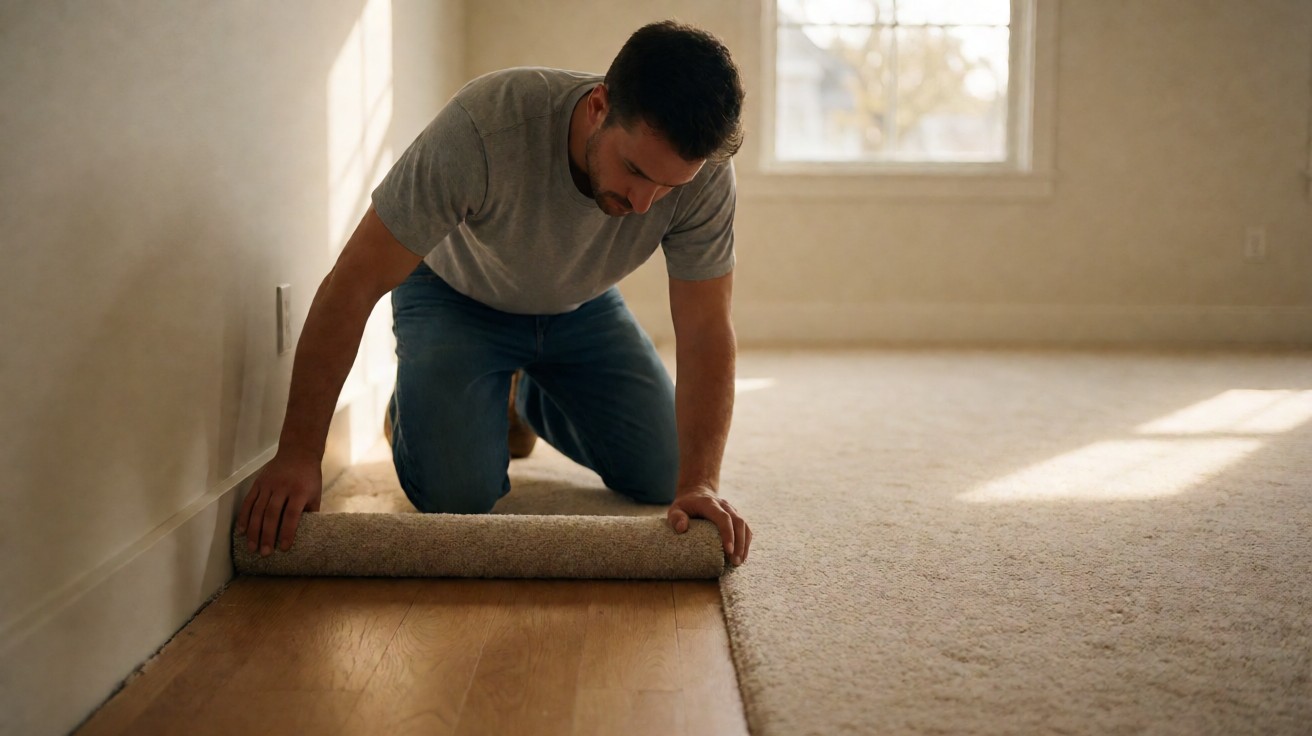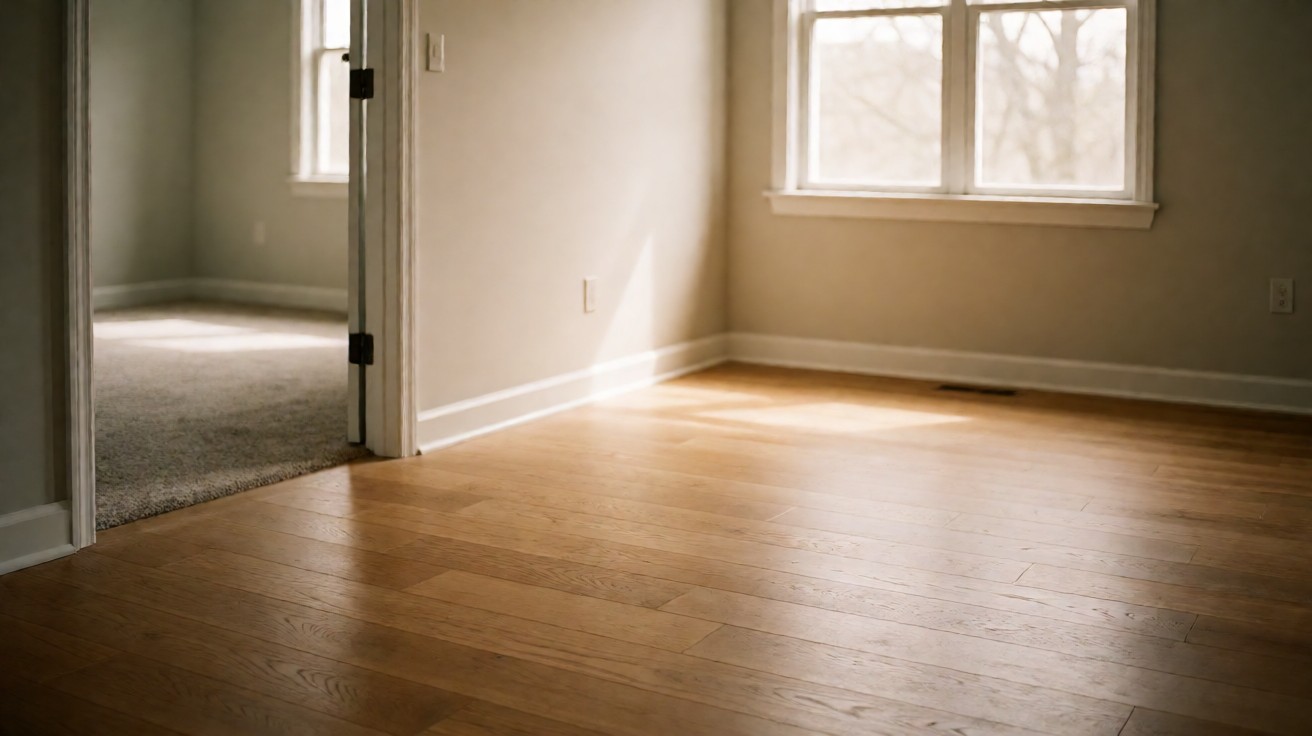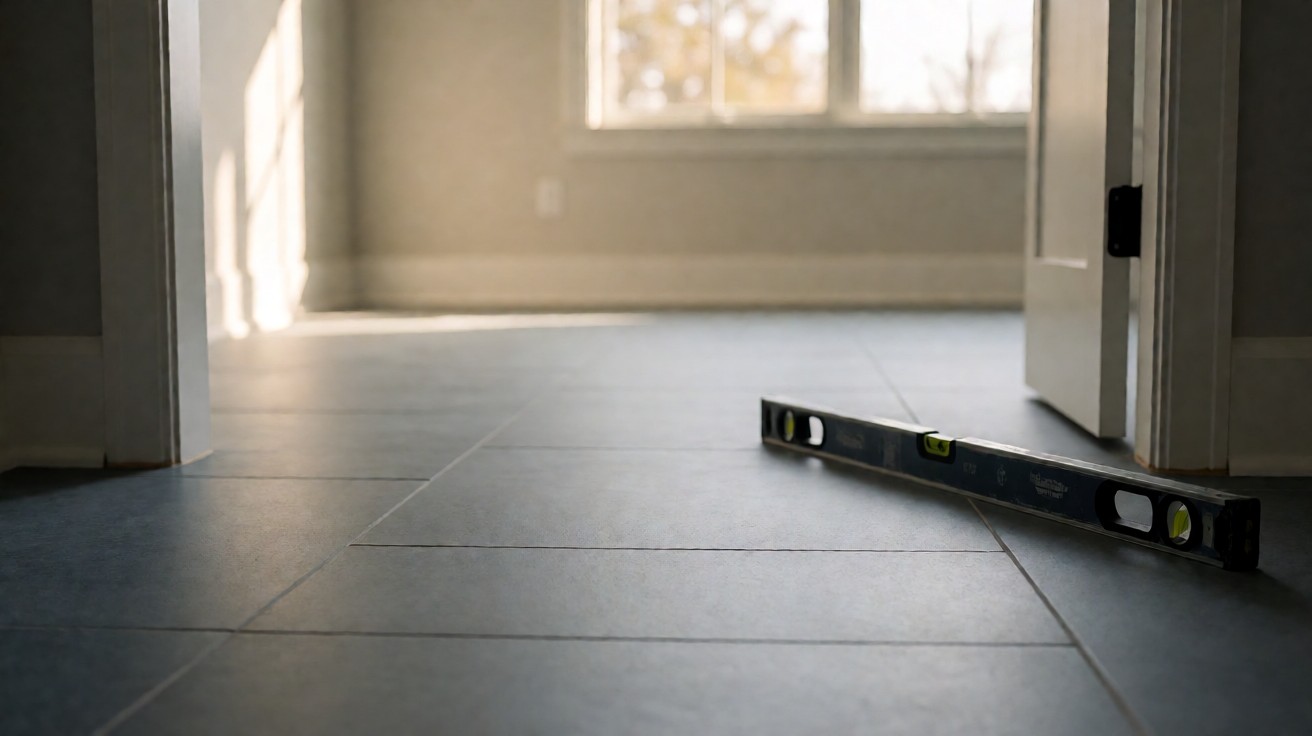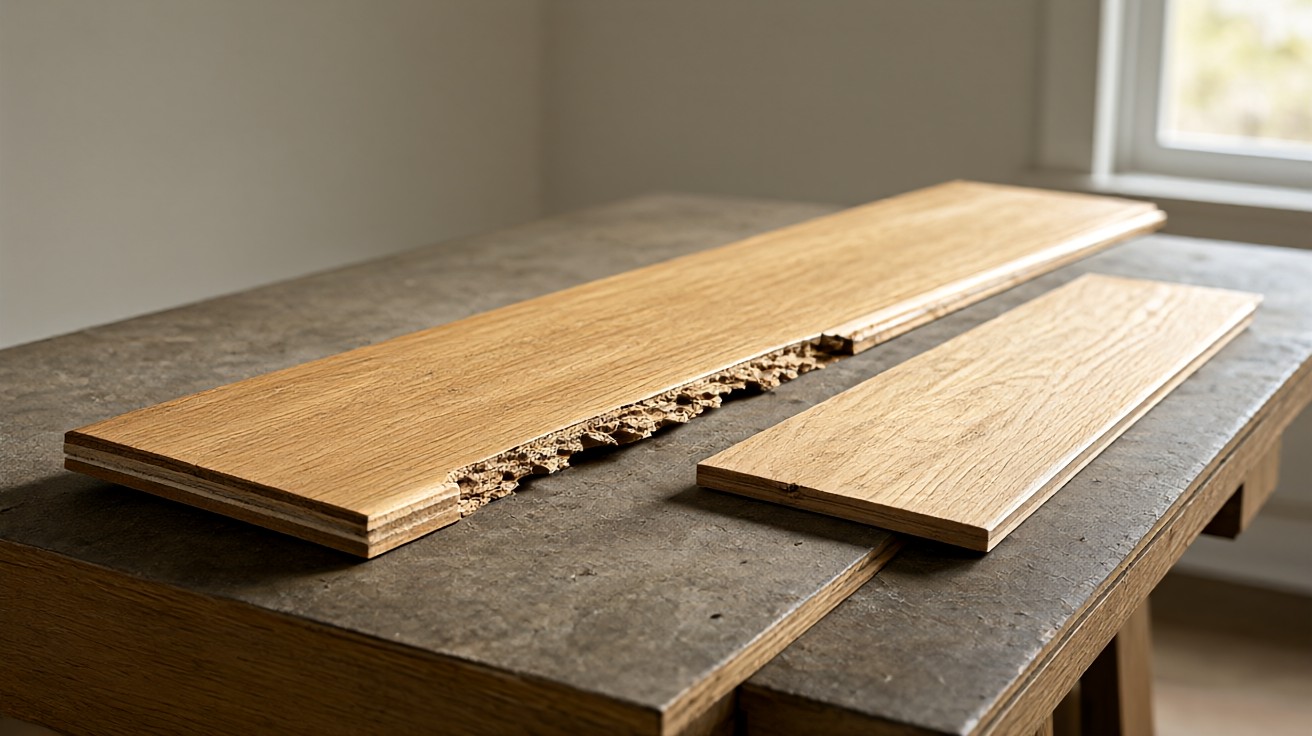

A leak has cupped two boards by the door, the dogs have scratched the finish in the hallway, and you are weighing a patch against a full tear-out.
The right call is not a feeling. It is three measurements taken on the day you look at the floor: how much area is damaged, what the subfloor beneath it is doing, and whether the cause has stopped.
Repair while the damaged area stays under about a tenth of the floor and the subfloor beneath it is dry, flat, and firm. Replace the whole floor once damage passes about a quarter of the area, or the moment the subfloor is soft. Those two lines are the whole decision in one sentence, and everything below is how to measure them on your own floor.
Repair Or Replace: The Three Tests That Decide
A floor does not need an opinion. It needs three numbers measured on the day you look at it: how much area is damaged, what state the subfloor is in, and whether whatever caused the damage has stopped.
The fraction is the first test. Count the damaged area in square feet and divide by the total. If the damage sits in one or two places the fraction is small and repair wins. If it runs in a line or repeats in every room, it does not.
Subfloor second. Press hard along the damaged run with your weight on one heel. Solid resistance means the deck carries load as designed. A dull thud that leaves a footprint means the deck is soft, and every board fitted over it will move eventually.
Cause third, and this is the one people skip. If the leak has been shut off and the cavity dried out, you are repairing. If the dishwasher is still weeping into the subfloor, you are paying twice for the same floor.
Measurements, not impressions. Where all three agree, the decision is easy to defend to a tenant, an agent, or an insurer.
What Counts As Repairable Damage
Repairable damage is damage that stops at the surface and leaves the structure underneath intact. A scratch in the finish, a single cracked tile, one cupped plank near a doorway, a lifted seam on carpet, a chipped laminate plank at the edge of a room. These are events, not conditions.
The test is depth. If the damage has not reached the subfloor and has not spread beyond the spot where it started, repair is usually the cheaper and faster answer. Most repairs are priced per event rather than per square foot, because a contractor charges for turning up.
Can A Single Damaged Plank Really Be Replaced?
Yes, on most floating floors and on many nailed or glued hardwood floors, provided the replacement plank matches in thickness, width, and profile. The work is to cut out the damaged plank, clean the pocket, and fit a new one without disturbing the rows around it. On click-lock vinyl and laminate this is a 30 to 60 minute job. On glued hardwood it is slower and may need a router and a spline.
When Is Refinishing The Better Repair?
When the damage is in the finish rather than the wood. Surface scratches, dull traffic lanes, and minor water rings that have not blackened the grain can be sanded and refinished. Hardwood can be refinished several times over its life, and each refinish resets the clock on wear. That is a repair, not a replacement, and it costs a fraction of new flooring.
When Replacement Is The Only Honest Answer
Replacement is the honest answer when the damage is a condition rather than an event. Soft or spongy spots underfoot, cupping or crowning across a whole run, widespread discoloration, recurring separation at transitions, or any sign that the subfloor has failed. These do not patch well because the problem is underneath.
A second trigger is scale. Once damage covers roughly a quarter of the floor, the cost of many small repairs passes the cost of one clean replacement, and the result still looks patched. A third trigger is matching. If the product is discontinued and you cannot get a close match, a single new plank looks like a repair forever.
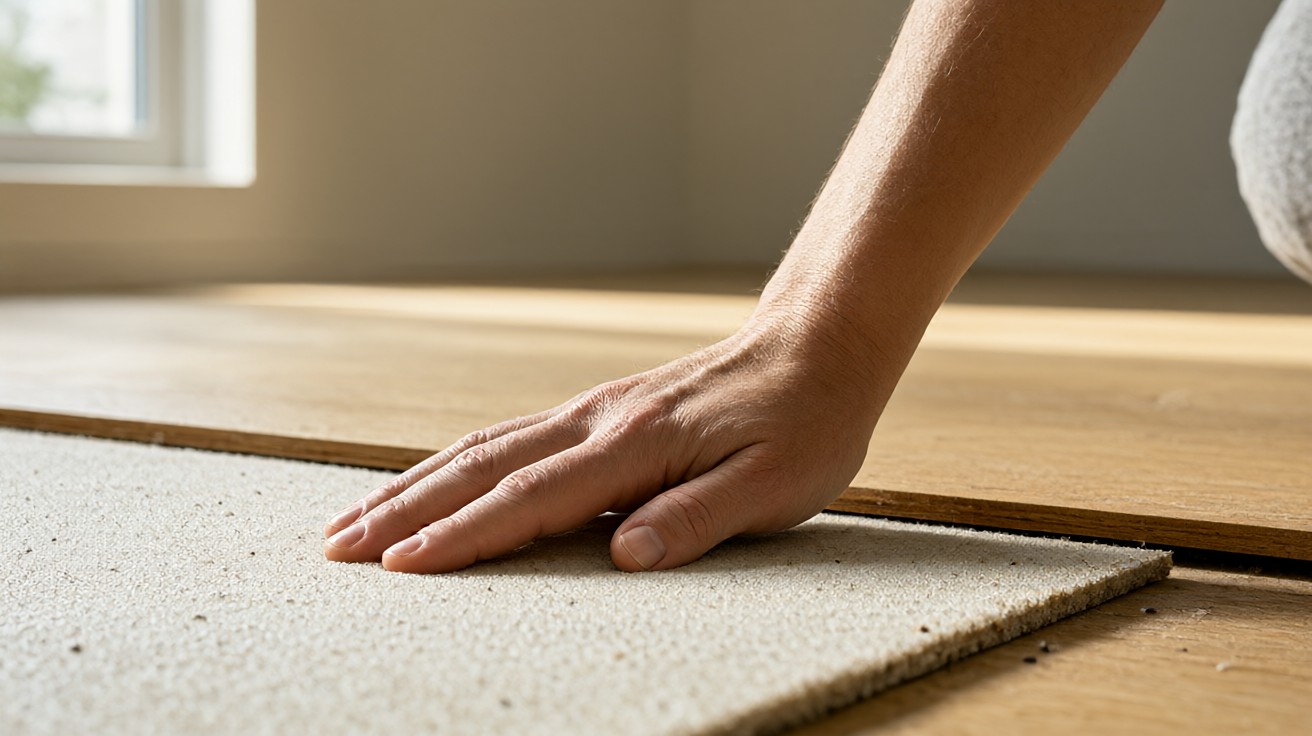
Soft spots deserve special attention. Press test the area, then cut a small inspection hole if the floor is already damaged. If the fibers have broken down, drying will not help and the panel must be replaced. A moisture meter tells you which case you have, and the reading is the only honest evidence.
Cost: Repair Versus Replacement By Material
Repairs are priced per event. A one-board splice on hardwood runs 8 to 25 dollars a board including labor, and most trades carry a minimum service call of 150 to 400 dollars. On carpet a seam repair or a re-stretch runs 60 to 200 dollars. On luxury vinyl plank, lifting two planks and resetting them runs 100 to 250 dollars. Tile repairs run 50 to 150 dollars per tile once grout and setting material are included.
| Material | Typical repair cost | Typical replacement cost per sq ft | Repair makes sense when |
|---|---|---|---|
| Hardwood | 8 to 25 dollars per board plus 150 to 400 dollar minimum | 6 to 14 dollars installed | Damage under 10 percent and subfloor firm |
| Laminate | 100 to 250 dollars for a plank swap | 3 to 8 dollars installed | One or two planks, matching stock on hand |
| Luxury vinyl plank | 100 to 250 dollars for two planks | 4 to 10 dollars installed | Isolated damage, dry subfloor |
| Tile | 50 to 150 dollars per tile | 7 to 18 dollars installed | One to three tiles, intact substrate |
| Carpet | 60 to 200 dollars seam or stretch | 3 to 7 dollars installed | Single seam or wrinkle, rest of carpet sound |
Replacement pricing is per square foot installed and includes removal, disposal, and new material. On a 300 square foot room, a full replacement at 6 dollars per square foot is 1,800 dollars before any subfloor work. Compare that to a 250 dollar repair and the math is clear, until you add the cost of doing the repair twice.
How Material Changes The Decision
The same damage means different things on different materials. Hardwood tolerates sanding and refinishing, so a worn surface is a repair even when it looks bad. Laminate cannot be refinished, so a worn surface is a replacement. Vinyl and tile are spot-repairable in small areas but rarely match after a few years of fading.
| Material | Can be refinished | Spot repair possible | Typical lifespan |
|---|---|---|---|
| Hardwood | Yes, 3 to 5 times | Yes, plank by plank | 25 to 100 years |
| Engineered wood | Once or twice, if wear layer allows | Yes, with matching stock | 20 to 40 years |
| Laminate | No | Yes, plank by plank | 15 to 25 years |
| Luxury vinyl plank | No | Yes, plank by plank | 10 to 25 years |
| Tile | No, but re-grout and seal | Yes, tile by tile | 50 plus years |
| Carpet | No | Seam and patch repairs | 5 to 15 years |
The Tile Council of North America (TCNA) handbook and ANSI A108 set substrate flatness and installation tolerances for tile, and most manufacturers echo those limits in their own instructions.
The National Wood Flooring Association publishes installation and sand-and-finish guidelines that set the wear-layer minimums for refinishing, and most manufacturers echo those minimums in their own instructions. Check the wear layer on engineered products before assuming a refinish is possible.
Subfloor And Moisture: The Hidden Decider
More replacement decisions are forced by the subfloor than by the flooring itself. A moisture problem that has reached the deck changes everything, because new flooring laid over a wet or soft deck fails in months. The guide to identifying subfloor damage walks through the inspection steps.
Concrete slabs need a moisture test before any resilient or wood flooring goes down. ASTM F710 covers the preparation of concrete floors to receive resilient flooring, including moisture and flatness requirements. If the slab is out of spec, the flooring is not the problem and replacing it will not fix anything.
Wood subfloors need a moisture content check and a flatness check. A deck that reads above the manufacturer limit, or that has soft spots, must be dried, repaired, or replaced before new flooring is installed. Skipping this step is the most common reason a brand new floor fails inside a year.
How Do You Know The Subfloor Is Failing?
Press test, moisture meter, and a small inspection hole. A soft thud, elevated moisture, or broken fibers mean the panel must be replaced, not dried.
Matching, Discontinued Lines, And Aesthetic Limits
Even a perfectly repairable floor can look wrong after the repair. Sun fading changes color over time, so a new plank in an old floor rarely blends. Discontinued product lines make matching impossible. And a patch in the middle of a room draws the eye more than the same patch under a sofa.
Ask three questions before committing to a repair. Can you still buy the exact product. Has the floor faded enough that a new piece will stand out. And is the damaged spot in a high-visibility area. If two of the three answers are bad, replacement becomes the better aesthetic choice even when repair is technically possible.
For discontinued lines, check the manufacturer, the distributor, and salvage suppliers. Sometimes a close match in a different dye lot is acceptable in a low-visibility area. Sometimes it is not, and the honest answer is to replace the whole room.
Warranty, Insurance, And Documentation
Manufacturer warranties usually require that the floor was installed per the manufacturer instructions and that the damage is not from improper maintenance. A repair done outside those instructions can void coverage on the affected area. Read the warranty before you cut into anything, and keep photos and receipts for every repair.
Homeowners insurance may cover sudden water damage but rarely covers wear. Document the cause, the date, and the extent of damage with photos before any work starts. That documentation is what separates a paid claim from a denied one.
If the damage is widespread or the cause is unclear, the article on when damage requires professional inspection explains what an inspector looks for and when to call one before spending money on either repair or replacement.
DIY Repair Or Hire A Pro
Small surface repairs are reasonable DIY work. Color fill on a laminate chip, a single plank swap on a floating floor, a carpet seam re-glue, a tile swap when the substrate is sound. These need patience more than skill.
Hire a pro when the subfloor is involved, when the repair requires cutting into a glued or nailed floor, when moisture is the cause, or when the floor is under warranty and a DIY repair would void it. A pro also brings a moisture meter and a flatness gauge, which most homeowners do not own.
Get at least two quotes for any repair over a few hundred dollars, and ask each contractor whether they recommend repair or replacement. A contractor who only sells replacement is not giving you a repair opinion. A contractor who only patches is not giving you a replacement opinion. You want both numbers.
A Decision Checklist You Can Use Today
Run through these in order and stop at the first no.
- Has the cause stopped and the area dried. If no, fix the cause first.
- Is the subfloor firm and dry. If no, replace or repair the subfloor first.
- Is the damaged area under 10 percent of the floor. If no, lean toward replacement.
- Can you match the material. If no, lean toward replacement.
- Is the damage in a low-visibility area. If no, weigh appearance heavily.
- Is the floor still under warranty. If yes, follow the warranty process.
If you pass all six, repair is the right call. If you fail two or more, replacement is. One failure is a judgment call, and the flooring replacement planning guide helps you scope that project before you commit.