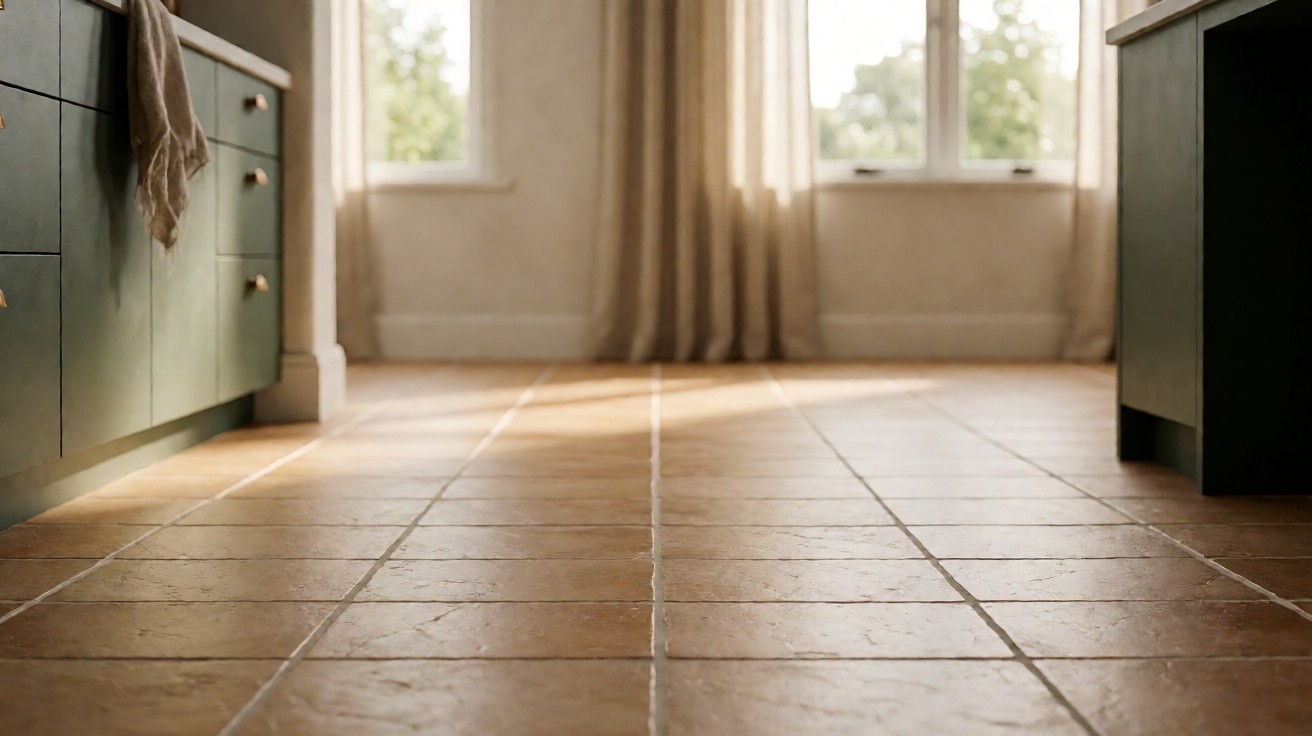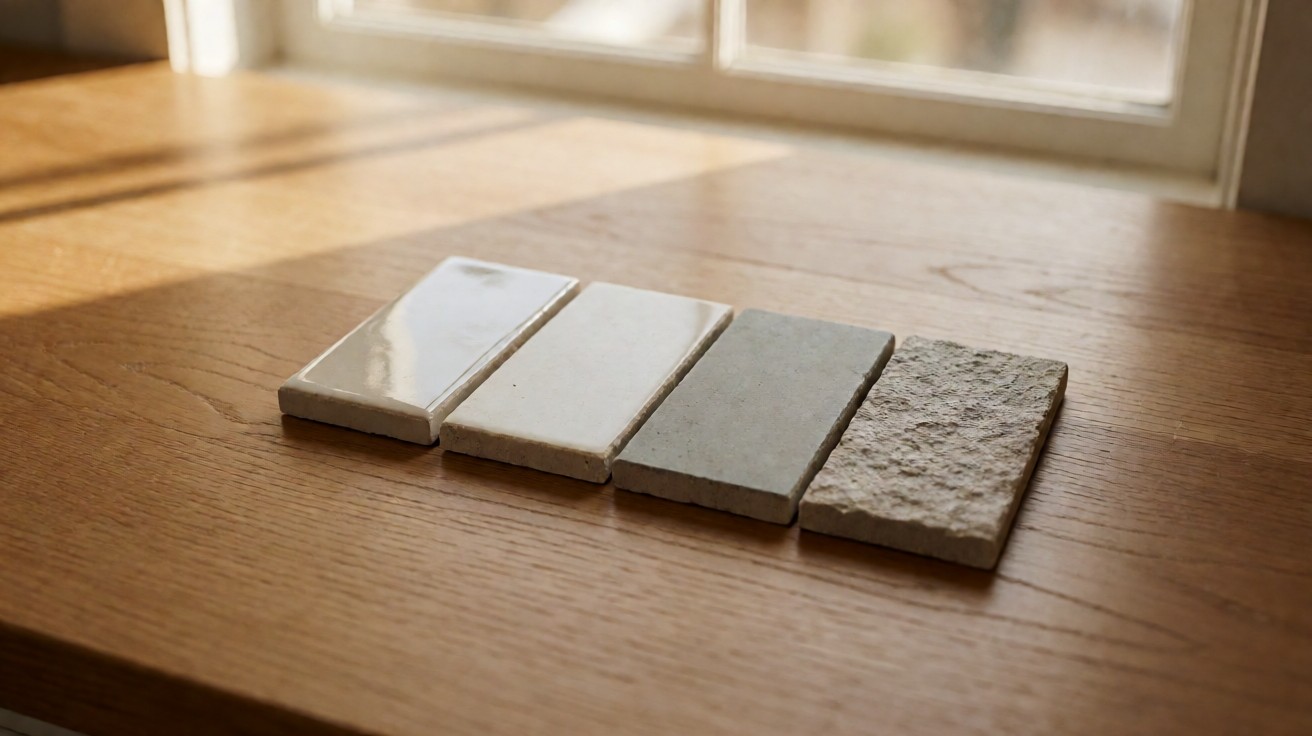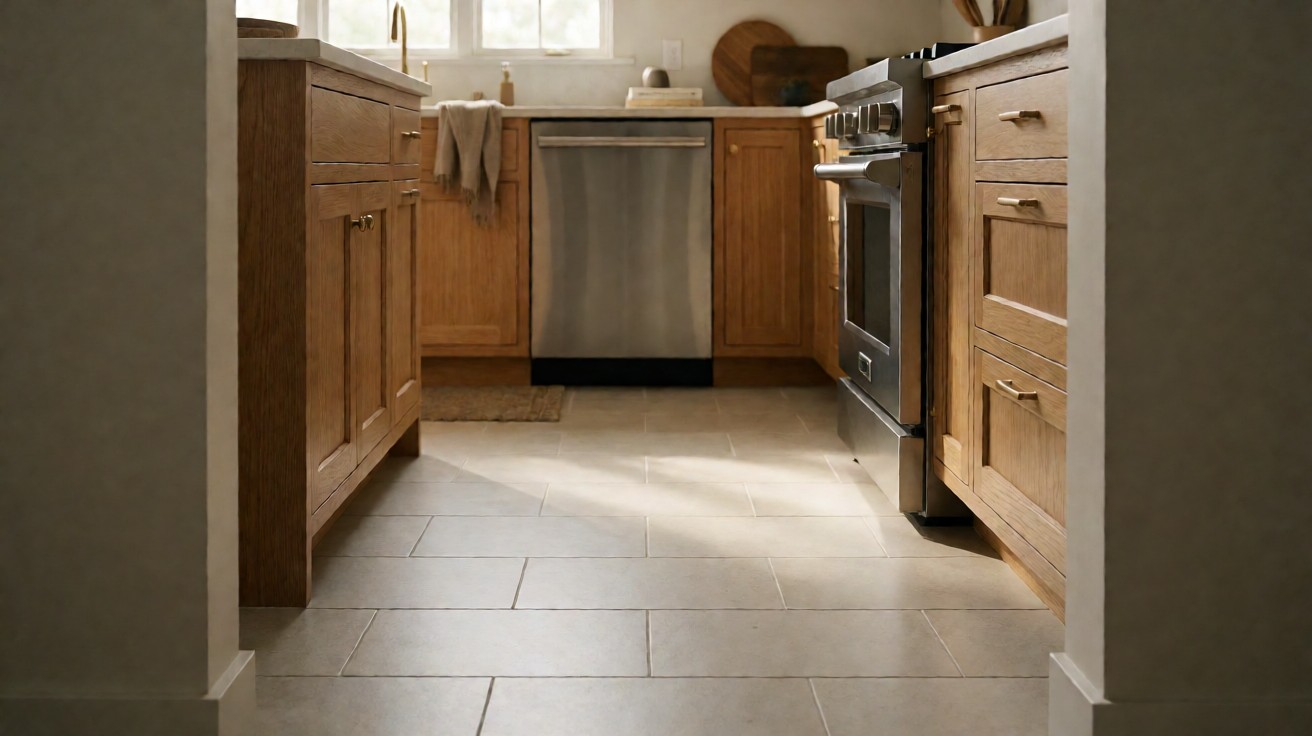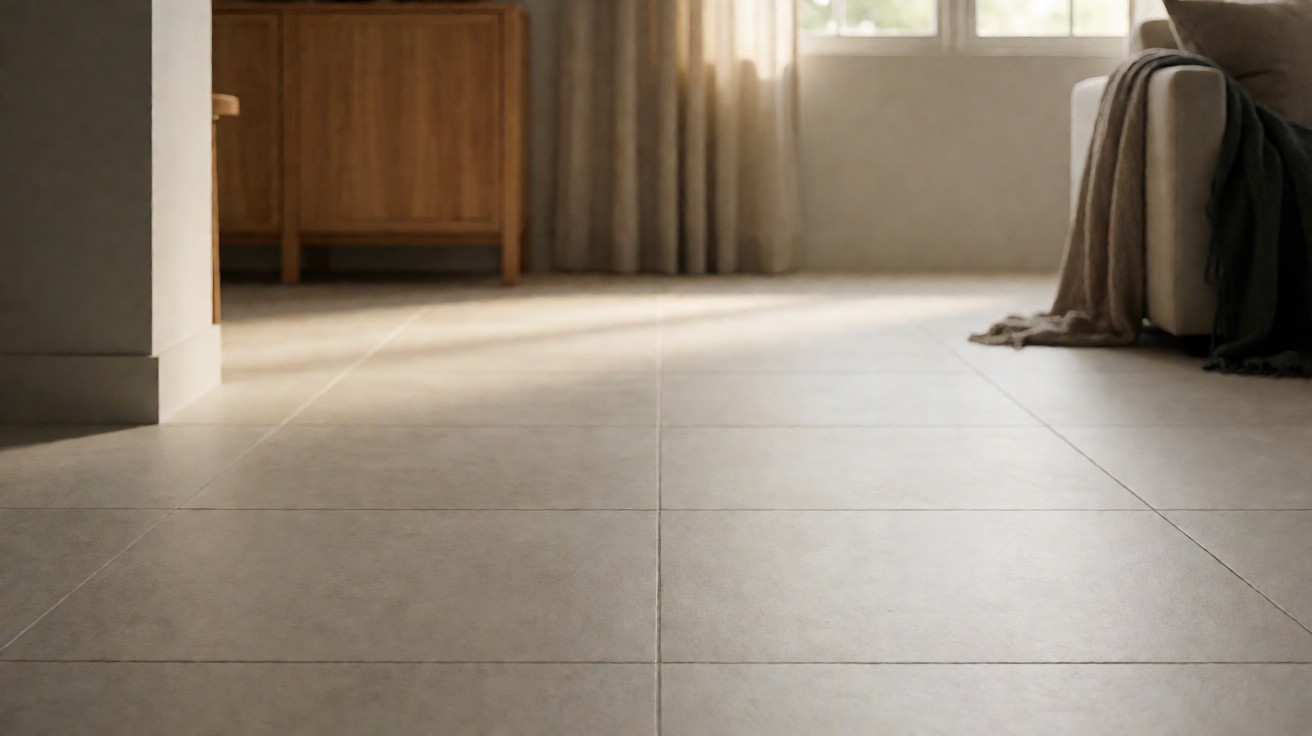

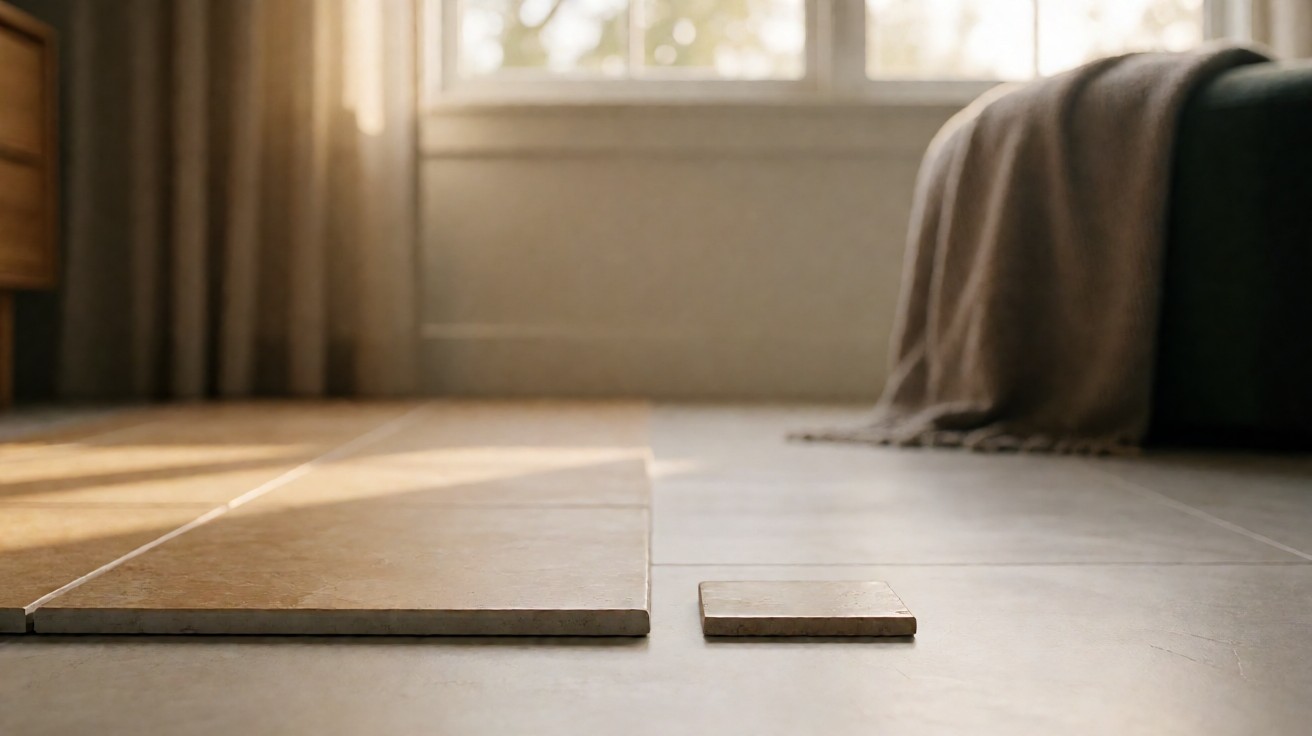
Large-format tile covers porcelain slabs at 48 inches or wider, and the size changes how a floor looks, how it feels underfoot, and how it gets installed. The visual effect is almost immediately obvious: fewer grout lines means a more continuous surface, and a continuous surface reads as a more open, more architectural space. But the physical consequences of installing something that wide go well beyond appearance. The slab flexes differently, it moves differently under load, and it demands a different subfloor preparation, a different thinset, and a different approach to leveling than a standard 12-by-24 tile. Most of the problems that make large-format tile fail come from people who treat it like a bigger version of a regular tile and skip the preparation the size requires.
What Counts as Large-Format
The industry threshold is not rigid, but the widely accepted definition is any porcelain tile with at least one dimension measuring 48 inches or more. That includes the long 12-by-48 plank-format tiles that mimic wide-plank hardwood, the 48-by-48 square slabs that imitate a large-format stone, and the 96-inch-plus slabs that some European manufacturers ship for high-end commercial and residential work. The shape matters less than the longest dimension: a 16-by-48 slab behaves very differently from a 12-by-24 tile, and the installation requirements scale with that longest dimension.
When a manufacturer says “large-format,” they are telling you the slab is big enough to change the install requirements, not just the look. The 96-inch and larger slabs are a separate category almost entirely: they require special handling, often arrive in two pieces, and are usually reserved for commercial or ultra-high-end residential work where the budget and subfloor can support them. For a typical residential room, the 48-by-48 square slab or the 12-by-48 plank format are the practical choices, and both are widely available from every major tile distributor.
What the Size Does to the Visual Read
Grout line density is the single biggest visual difference. A 12-by-24 tile laid in a grid produces a grout line every 12 inches in one direction and every 24 inches in the other. A 12-by-48 slab produces one line every 12 inches and one every 48 inches. The result is a floor that reads as a much more continuous surface, which is why designers favor it for open-plan spaces, lofts, and minimal interiors where a busy grout grid would compete with the architectural lines.
The visual payoff is real and consistent, but it comes with a tradeoff: large-format tiles are more expensive per square foot, the slab is harder to handle on site, and the layout decisions you make in the room have a bigger consequence because each tile covers more area. A pattern misread at the layout stage is much harder to correct on a 48-inch slab than on a 12-inch tile. Before buying, lay out the first four or five slabs on the actual floor and check how the pattern reads from the room’s main sightlines. The visual effect is very different when you stand in the middle of the room than when you look at the tiles flat on the floor.
If you are new to the tile category more broadly, the tile flooring guide covers the full range of tile formats and how each one reads in a residential space.
Subfloor Preparation Requirements
This is where large-format tile installs most often go wrong. The slab has a lower stiffness-to-weight ratio than a smaller tile, which means it spans over micro-depressions in the subfloor that a standard tile would bridge without issue. If the subfloor has a dip of more than 1/8 inch over a 10-foot radius, a 48-inch slab can develop a high point at its center that leads to lippage at the grout lines, or in the worst case, cracking along the slab.
The preparation standard for large-format tile is tighter than for standard tile: the subfloor must be structurally sound, level within 1/8 inch over 10 feet, and free of dust, paint, and wax residues. For concrete subfloors, that means a laser-verified level check and, if the slab is not flat enough, a self-leveling underlayment. For wood subfloors, the standard is even stricter, because wood moves with moisture, and a 48-inch rigid slab sitting over a moving wood surface will crack. Most installers recommend a cement backer board or a concrete underlayment over wood when going with slabs this wide.
| Subfloor Condition | Standard Tile | Large-Format Requirement | Common Fix |
|---|---|---|---|
| Concrete, level within 1/4 inch over 10 ft | Adequate | Not adequate | Self-leveling underlayment |
| Concrete, level within 1/8 inch over 10 ft | Adequate | Adequate | None needed |
| Wood, 3/4-inch OSB or plywood | Adequate for standard tile | Not adequate alone | Cement backer board or concrete underlayment |
| Existing tile or vinyl, level | Possible with epoxy thinset | Not recommended | Tear out and install new subfloor |
Thinset and Adhesive Selection
Standard unmodified thinset is not the right product for large-format slabs. The slab weight and the longer open time needed to properly set a 48-inch piece require a modified thinset with added polymer, and many installers use a large-format-specific product that has an extended open time of at least 30 minutes so the slab can be repositioned after it is set.
The critical specification is open time: if the thinset is already setting before the slab is fully positioned and leveled, you lose the ability to adjust lippage, and the result is a visibly uneven floor. For slabs 48 inches or longer, the installer should verify the thinset open time on the product label and match it to the slab size and the ambient temperature. Hot conditions accelerate open time loss, which is why a summer install in a warm room needs even more attention than the product data sheet assumes.
The thinset trowel notch size also matters: for large-format slabs, a 1/2-inch by 1/2-inch square notch or a 3/8-inch by 3/8-inch square notch is the standard, and the trowel must be kept clean and the ridges must run in one direction only, not cross-hatched, or you create an uneven bed under the slab. A cross-hatched ridged bed under a large slab traps air pockets that create a hollow sound and a high point at the center of the slab.
Handling, Layout, and Lippage
A 48-inch slab weighs between 8 and 15 pounds depending on thickness and material, and it is a long, rigid object that flexes in ways a smaller tile does not. The installer must lift it from both long edges simultaneously, not the center, or the slab will bow and crack. Two-person handling is the minimum for anything 48 inches or wider, and for 96-inch slabs, the slab must be supported at three points during placement.
Lippage, the visible height difference between adjacent tile edges, is the most common visible defect in large-format installs, and it comes from two sources: uneven subfloor preparation and inconsistent thinset bed thickness. The industry tolerance is 1/32 inch of lippage at the grout line, which is nearly invisible. Beyond 1/16 inch, it is visible and usually means the subfloor was not prepared correctly. For slabs 48 inches or wider, the installer should use a straight-edge check across the finished floor and flag any area that exceeds that tolerance before it gets sealed. A straight-edge lippage check is the single most useful inspection tool on a large-format install, and it should be done at the end of each day, not just at the end of the job.
Grout Line Width and Joint Selection
The ANSI A108.03 and TCNA guidelines specify a minimum grout line of 1/16 inch for large-format tile, and most manufacturers recommend 1/16 to 1/8 inch. Wider joints are more forgiving of minor lippage and easier to keep clean, but they change the visual character of the floor. A 1/16-inch joint reads as a crisp, architectural line; a 1/8-inch joint reads as softer and more traditional.
The joint width should be chosen deliberately, not as a default. One thing to avoid: do not use the same joint width you would use for a small tile. A 1/16-inch joint on a 48-inch slab is proportionally very narrow and can make the floor look tightly grouted even though the tiles are large. The grout color also has a bigger visual effect on large-format tiles because the joint covers less total area. A dark joint on light slabs creates a strong contrast; the same joint on a standard tile grid looks very different.
| Grout Width | Visual Character | Best For | Avoid When |
|---|---|---|---|
| 1/16 inch | Crisp, architectural, modern | Open-plan spaces, minimal interiors | Subfloor has any lippage above 1/32 inch |
| 1/8 inch | Softer, more traditional, forgiving | Standard residential rooms, older homes | Design calls for a sharp modern look |
| 3/16 inch and wider | High-contrast, decorative | Commercial lobbies, design statement spaces | Residential living areas, small rooms |
Edge Trims and Wasted Material
Large-format slabs have a higher waste rate than standard tiles because the room layout is more likely to produce partial pieces at walls and obstacles. The standard waste allowance for large-format tile is 10 to 15 percent, compared with 5 to 10 percent for standard tile. The waste is not just the cut pieces: it is also the slabs that cannot be reused because a partial cut piece at one wall means a different partial piece at the opposite wall.
Plan the layout so that the cuts fall at the least visible walls, and buy the extra material. A layout that does not account for this will leave you short, and ordering a second batch of the same large-format slab from a different production run risks a color variation that is visible across a wide-format floor. For a high-contrast or light-colored slab, a two-batch variation will be more visible than on a dark floor, so buying the full quantity in one batch is even more important.
Large-Format Versus Standard Tile: When Each Wins
The decision between large-format and standard tile is not just a design preference; it is a functional one. Large-format tile wins in open-plan spaces, large living rooms, and commercial lobbies where the continuous-surface look is the point and the room is big enough to show off the wide slabs. Standard tile wins in smaller rooms, busier spaces, and rooms with a lot of obstacles, because the layout is more flexible and the waste rate is lower. The porcelain tile guide covers the full range of porcelain formats and when each one makes sense for a specific room.
For a kitchen or dining room with a lot of traffic, a standard 12-by-24 porcelain tile is the more practical choice: it is cheaper per square foot, the layout is more forgiving, and the grout lines are easier to keep clean in a busy room. For a living room in an open-plan home, the large-format option is the better design choice, and the premium is worth it for the visual payoff.
Cost Per Square Foot and Budget Planning
Large-format tile costs more per square foot than standard tile, and the cost difference is not just the material. A 48-by-48 slab typically runs $3 to $8 per square foot depending on the finish and brand, compared with $1.50 to $4 per square foot for a standard porcelain tile. The installation cost is also higher for large-format tile because of the two-person handling requirement, the specialized thinset, and the longer install time per square foot. For a 20-by-15-foot living room, the material cost difference between a large-format floor and a standard tile floor is typically $800 to $1,500, and the installation cost difference is another $400 to $800.
Budget planning for a large-format floor needs to account for the three cost drivers: the slab material, the specialized thinset and grout, and the higher installation labor cost. The self-leveling underlayment is a fourth cost driver that is often forgotten: if the subfloor is not already level within 1/8 inch over 10 feet, the underlayment alone can add $1 to $2 per square foot to the project total. For a full large-format floor in a 20-by-15-foot room, the all-in cost is typically $8 to $15 per square foot, compared with $4 to $8 for a standard tile install.
Sealing and Maintenance
Porcelain large-format tiles are vitrified and require no sealing, which is the main maintenance advantage over natural stone. Grout, however, does need attention. A quality sanded grout for joints 1/8 inch or wider, or unsanded grout for joints narrower than that, will need periodic re-sealing every two to three years in high-traffic or wet areas.
The slab surface itself can be cleaned with a pH-neutral cleaner; avoid acidic products on any natural-stone-look large-format tile, because the finish may be more sensitive than a standard ceramic glaze. For commercial or high-traffic residential spaces, a matte-finish large-format tile is more forgiving of scratches and dirt than a polished finish, and the matte surface also hides lippage better because light does not catch the edge contrast the way it does on a polished surface. Polished large-format slabs look more dramatic and open up the space, but they show every scratch, every lippage, and every water spot. For a family home with pets and children, matte is the safer choice.
Where Large-Format Tile Works Best
The visual payoff of large-format tile is strongest in open-plan spaces, large living rooms, lofts, and commercial lobbies where the grout-line reduction creates a visible sense of space and continuity. In smaller rooms, the wide-format slabs can make the space feel larger, but the layout waste and the need to cut around more obstacles makes the install more complex and the material cost per square foot less efficient.
The format works well as a wall material for feature walls, showers, and wet rooms, where the continuous-surface look is the point. It is less suited to busy-patterned or small-rooms-adjacent-to-traffic applications where the slab size makes the layout inflexible. Before committing to a large-format floor, walk the room with a 48-inch piece of the actual tile and test the layout at the two most visible walls. If the pattern works there, it will work everywhere.