
You are in the flooring aisle holding two sample boards, one labeled scratch-resistant and one labeled scratch-proof, and neither label tells you what it means.
The first label signals a surface that holds up to everyday scuffs under a stated test. The second promises nothing, because no flooring is immune to a sharp point dragged with enough force. Porcelain tile and 20 mil vinyl are the honest answers; choose them for busy rooms. The proof claim is not a specification.
What Scratch-Resistant and Scratch-Proof Actually Mean
Scratch-resistant is a performance claim with a test behind it. A product earns it by surviving a defined abrasion or scratch procedure at a stated load, angle, and cycle count. The label alone does not say which test, so two products with the same claim can perform very differently.
Scratch-proof is a marketing word, not a standard. No flooring standard awards a scratch-proof rating, because every surface can be cut by a hard enough point moved with enough pressure. The honest version of the claim is scratch-resistant to a defined level.
If you are deciding between two products, ask which test and which score. A claim with no test behind it is advertising, not specification. A claim with a test and a score is something you can compare against another product or against the traffic in your home.
The practical rule is simple. Treat scratch-resistant as a starting point that needs a number, and treat scratch-proof as a promise the manufacturer cannot keep. That single habit filters out most of the misleading packaging in the aisle.
How Flooring Scratch Resistance Is Measured
Different materials use different tests, and the numbers are not interchangeable. A Janka figure on hardwood, a PEI rating on tile, and an AC rating on laminate each measure a different kind of abuse. Comparing them directly is like comparing miles per gallon to miles per charge.
| Material | Test or standard | What it measures | Scale |
|---|---|---|---|
| Hardwood | ASTM D143 Janka | Dent resistance from a steel ball pressed to half its diameter | lbf (higher is harder) |
| Tile and stone | ANSI A137.1 PEI rating | Abrasion resistance of the glazed surface | 0 to 5 (higher is tougher) |
| Laminate | EN 13329 AC rating | Surface wear from Taber abrasion and impact | AC1 to AC5 (higher is tougher) |
| Vinyl | ASTM F3261 / Taber cycles | Wear-layer abrasion under a weighted wheel | Cycles before failure |
| Stone and ceramic | Mohs hardness scale | Resistance to scratching by a harder mineral | 1 to 10 (higher is harder) |
Each test has a defined procedure, load, and failure criterion, which is what makes the result repeatable. A PEI 4 tile and an AC4 laminate are both tough surfaces, but the tests that produced those numbers are different, so the numbers describe different kinds of abuse.
If you are reading a spec sheet, look for the test name, not just the adjective. A spec that says only scratch-resistant, with no standard and no score, gives you nothing to verify.
How Many Taber Abrasion Cycles Are Enough?
Taber abrasion cycles measure how many rotations a weighted wheel takes to wear through the surface. For residential vinyl, look for 10,000 cycles or more. Below 5,000 cycles, the wear layer thins quickly in a kitchen.
Which Flooring Materials Resist Scratches Best
Porcelain tile and natural stone top the list because their surfaces are minerals harder than anything a household drags across them. Vinyl and laminate follow, because their wear layers are engineered plastics. Hardwood sits lower, because the finish is a thin film over a soft substrate.
| Material | Scratch resistance | Weak point | Best for |
|---|---|---|---|
| Porcelain tile | Very high (PEI 4-5) | Grout lines, chipped edges | Kitchens, entries, pet homes |
| Natural stone | High (Mohs 5-7) | Acid etching, soft stones like marble | Foyers, baths |
| Laminate | High (AC3-AC5) | Water, chipped edges, no refinishing | Living rooms, bedrooms |
| Luxury vinyl | Good to high (12-20 mil wear layer) | Deep gouges, heat | Whole-home, pets, kids |
| Hardwood | Moderate (finish dependent) | Finish wear, dents | Low-traffic formal rooms |
| Carpet | Not applicable | Snags, matting | Bedrooms, stairs |
The ranking changes with the finish and the wear layer, not just the species or the core. A 20 mil vinyl plank resists a dog’s nails better than a 6 mil plank of the same brand. A site-finished hardwood with a hard polyurethane coat resists better than the same wood with a soft oil finish.
If your household includes a 70 pound dog and a kitchen with a grit-trapping mat, the table points to porcelain tile or a 20 mil vinyl plank. If the room is a formal dining room with no pets, hardwood with a hard finish is a reasonable choice.
Hardwood: Janka and Finish Matter More Than Species
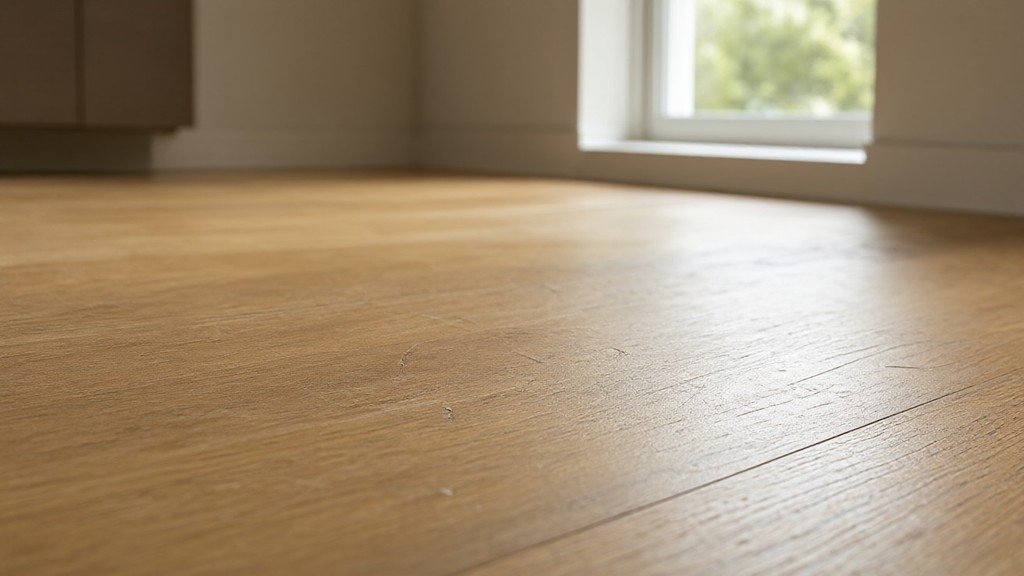
Janka measures dent resistance, not scratch resistance. White oak reads about 1,360 lbf and hickory about 2,140 lbf, so hickory resists dents better. But the finish on top of the wood, not the wood itself, is what resists a scratch from a chair leg or a dog nail.
A hard finish such as aluminum oxide polyurethane on a prefinished plank resists everyday scuffs well. A soft oil finish shows marks faster but is easier to spot-repair. The choice between them is a maintenance decision as much as a durability decision.
If you want hardwood in a busy room, pick a hard finish and accept that the floor will still show wear over time. If you want the look of oil and are willing to refinish, choose the oil and plan on a maintenance coat every few years. For the rating behind the numbers, see Janka hardness ratings explained.
Engineered hardwood carries the same finish options on a thinner wear layer. If the wear layer is under 2 millimeters, refinishing is not practical, so the finish choice becomes permanent. Check the wear-layer thickness before you assume the floor can be sanded.
For more on how a floor performs under load, see flooring performance.
How Deep a Scratch Is Too Deep to Repair?
A scratch that only dulls the finish can be buffed or touched up. A scratch depth that reaches the wood itself needs a repair kit or a board replacement. The test is a fingernail: if your nail catches, the scratch has cut through the finish.
Vinyl and Laminate: Wear Layers and AC Ratings
Vinyl scratch resistance comes from the wear layer, measured in mils. A 6 mil layer suits light residential traffic. A 12 mil layer suits most homes with kids and pets. A 20 mil layer is the commercial grade that handles heavy traffic and frequent dragging of furniture.
Laminate scratch resistance comes from the AC rating, which runs AC1 to AC5. AC3 is the residential standard. AC4 and AC5 are commercial grades that handle heavier traffic and more abrasive grit. The melamine wear layer on laminate is harder than vinyl’s urethane layer, so laminate often wins a scratch test against vinyl at the same price point.
If you are choosing between vinyl and laminate for a room with a large dog, laminate usually resists surface scratches better, but vinyl handles water and dents better. The trade is scratch resistance against moisture tolerance. For the construction details, see vinyl wear layers, cores, and backing explained.
A wear layer or AC rating is only meaningful if the product actually carries it at the stated thickness. Check the spec sheet for the tested value, not the marketing headline. Two planks with the same AC4 rating from different brands can differ in real use because of core density and edge treatment.
If a household includes a 70 pound dog and a cat, the best flooring for homes with dogs and cats guide is worth reading alongside this one.
What Wear Layer Thickness (mil) Should You Specify?
Specify wear layer thickness (mil) by traffic, not by brand. Light traffic rooms need 6 mil. Family rooms with pets need 12 mil. Commercial or heavy-use spaces need 20 mil. Anything below 6 mil in a kitchen is a short-lived floor.
If you are comparing two vinyl planks, the one with the thicker wear layer and the better core usually wins, even at a higher price, because the wear layer is the part that takes the abuse.
Tile and Stone: PEI and Mohs
Porcelain tile earns its scratch resistance from firing at high temperature, which produces a surface harder than steel. The PEI rating on the box, from 0 to 5, tells you how much abrasion the glazed surface survives. PEI 3 is light residential. PEI 4 is heavy residential and light commercial. PEI 5 is heavy commercial.
For tile abrasion and breaking strength ratings, see the tile ratings guide.
Natural stone varies by mineral. Granite sits around 6 to 7 on the Mohs scale and resists scratches well. Marble sits around 3 to 4 and scratches under a knife or a gritty shoe. Slate and travertine fall in between, with softer varieties showing wear in high-traffic paths.
If you install marble in a kitchen, expect visible wear within a year. If you install porcelain that looks like marble, you get the appearance without the scratching. The decision is appearance against durability, and the test is whether the room sees grit and sharp objects.
Stone also needs sealing, which adds a maintenance layer that tile does not. A sealed granite floor resists scratches better than an unsealed one, because the sealer fills the pores that would otherwise catch grit.
What Scratch-Proof Marketing Actually Promises
Scratch-proof claims usually rest on one of three things: a hard wear layer, a textured surface that hides marks, or a warranty that excludes the scratches you are worried about. The first is real. The second is cosmetic. The third is the part that matters most.
Manufacturer warranties, from brands such as Shaw and Mohawk, typically exclude scratches from pets, furniture, and improper maintenance. Read the exclusions before you rely on the warranty. A warranty that excludes the most common scratch sources is not a durability guarantee; it is a marketing document.
If a salesperson says the floor is scratch-proof, ask for the test and the warranty exclusion page. If they cannot produce both, the claim is advertising. That is not a reason to walk away from the product, but it is a reason to stop paying a premium for the word.
Textured and embossed surfaces hide light scratches by breaking up reflections. That is a real benefit for appearance, but it does not change the surface hardness. A textured vinyl plank still scratches; you just see it less.
The honest framing is scratch-resistant to a stated standard, with a warranty that names what it covers. Anything beyond that is a promise the manufacturer has not committed to in writing.
Real-World Scratch Sources
The scratches that actually appear on floors come from four sources. Pets, especially dogs with untrimmed nails on hard surfaces. Furniture dragged without pads. Grit tracked in on shoes. And high heels with worn tips that concentrate force on a small point.
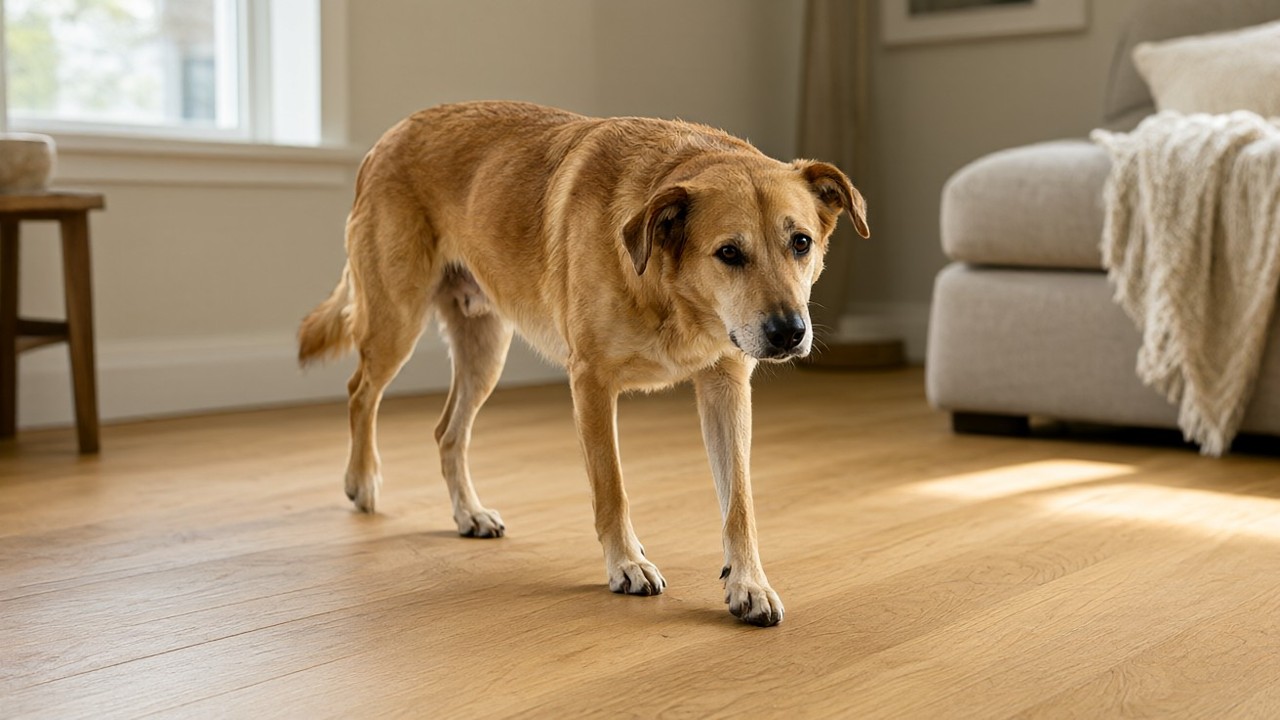
A 70 pound dog with long nails on a hardwood floor produces visible marks within weeks. The same dog on a 20 mil vinyl plank or a PEI 4 tile leaves little trace. The material choice, not the marketing claim, decides the outcome.
Imagine a homeowner with a 70 pound dog and oak floors in the kitchen. Within a month, the area in front of the water bowl shows a web of fine marks. Switching to a 20 mil vinyl plank in that zone removes the problem, while keeping hardwood in the dining room preserves the look where traffic is light.
If you have a dog, trim the nails every two to three weeks and use a runner in the main traffic path. If you move furniture, lift it or use felt pads rated for the weight. If you live in a gritty climate, a mat at every exterior door catches the sand that does most of the scratching.
High heels are the least expected source. A worn heel tip concentrates over 1,000 pounds per square inch on a point smaller than a pencil eraser. That force dents hardwood and chips tile edges. The fix is a door mat and a no-shoes rule, not a harder floor.
When you compare products, picture the actual scratch source in your home, not the test in the lab. A floor that passes a Taber cycle test can still fail against a dog nail or a gravel particle, because the test uses a different abrasive.
Maintenance That Preserves Scratch Resistance
Scratch resistance is a property of the surface, but how long it lasts depends on maintenance. Dirt is an abrasive. A floor that is swept daily keeps its finish longer than the same floor swept weekly, because the grit that sits on the surface acts like sandpaper underfoot.
Use the cleaner the manufacturer specifies. A pH-neutral cleaner on vinyl and laminate preserves the wear layer. An alkaline cleaner strips it. On hardwood, use the cleaner matched to the finish, because an oil-finish floor and a polyurethane floor need different products.
If you see a scratch, address it early. A surface scratch on hardwood can be buffed or touched up. A deep scratch that reaches the wood needs a repair kit or a board replacement. On vinyl, a deep gouge cannot be repaired and the plank must be replaced.
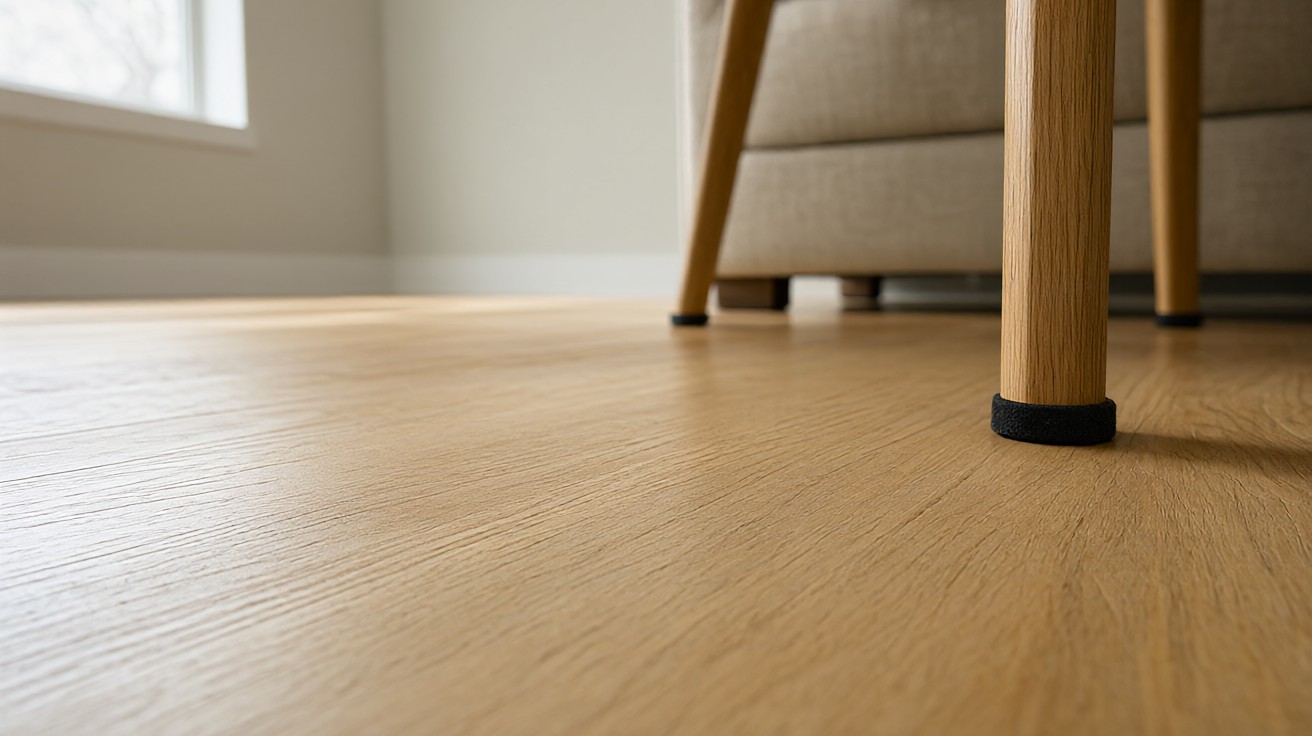
Felt pads under furniture legs reduce point loads. Replace them when they compress or collect grit. A pad that has turned into a sandpaper pad does more harm than no pad at all.
If you have a no-shoes household, the floor needs less cleaning and lasts longer. That single habit does more for scratch resistance than any product label.
Does Scratch Depth Change How You Clean the Floor?
Scratch depth decides the cleaning approach. A surface scratch needs a gentle cleaner and a soft cloth. A deeper scratch needs a repair kit before any wet cleaning, or water enters the cut and swells the substrate. If the scratch depth reaches the core, replace the plank.
Decision Rules: Which Material for Which Home
Match the material to the scratch source and the room. If pets and kids dominate, choose porcelain tile or 20 mil vinyl. If water is a factor, choose vinyl or tile. If the room is formal and dry, hardwood with a hard finish works. If budget is tight and the room is dry, laminate gives the best scratch resistance per dollar.
If you need the look of wood with the toughness of tile, choose a wood-look porcelain. It resists scratches better than any wood product and needs no refinishing. The trade is a harder, colder surface underfoot.
If you already have hardwood and want to keep it, add runners in traffic paths, trim pet nails, and use felt pads. Refinishing every seven to ten years restores the surface. That is a maintenance plan, not a product failure.
If a salesperson pushes a scratch-proof claim, slow down and ask for the test and the warranty exclusions. A product that is genuinely tough does not need the word proof to sell.
The decision is rarely about the hardest material. It is about matching the material to the room, the traffic, and the maintenance you are willing to do.
Quick Answer: The Honest Verdict on Scratch Claims
Scratch-resistant is a real, testable claim that needs a number. Scratch-proof is marketing language with no standard behind it. No flooring is immune to a sharp point dragged with enough force, so the honest product is the one that states its test and its score.
For a home with pets, kids, or heavy traffic, choose porcelain tile or a 20 mil vinyl plank and keep the grit out. For a formal room, hardwood with a hard finish is fine. For budget and dry rooms, laminate gives the best scratch resistance per dollar.
If you remember one thing, remember this: the label is the least reliable part of the decision. The test, the wear layer, and the warranty exclusions tell you what the floor will actually do.