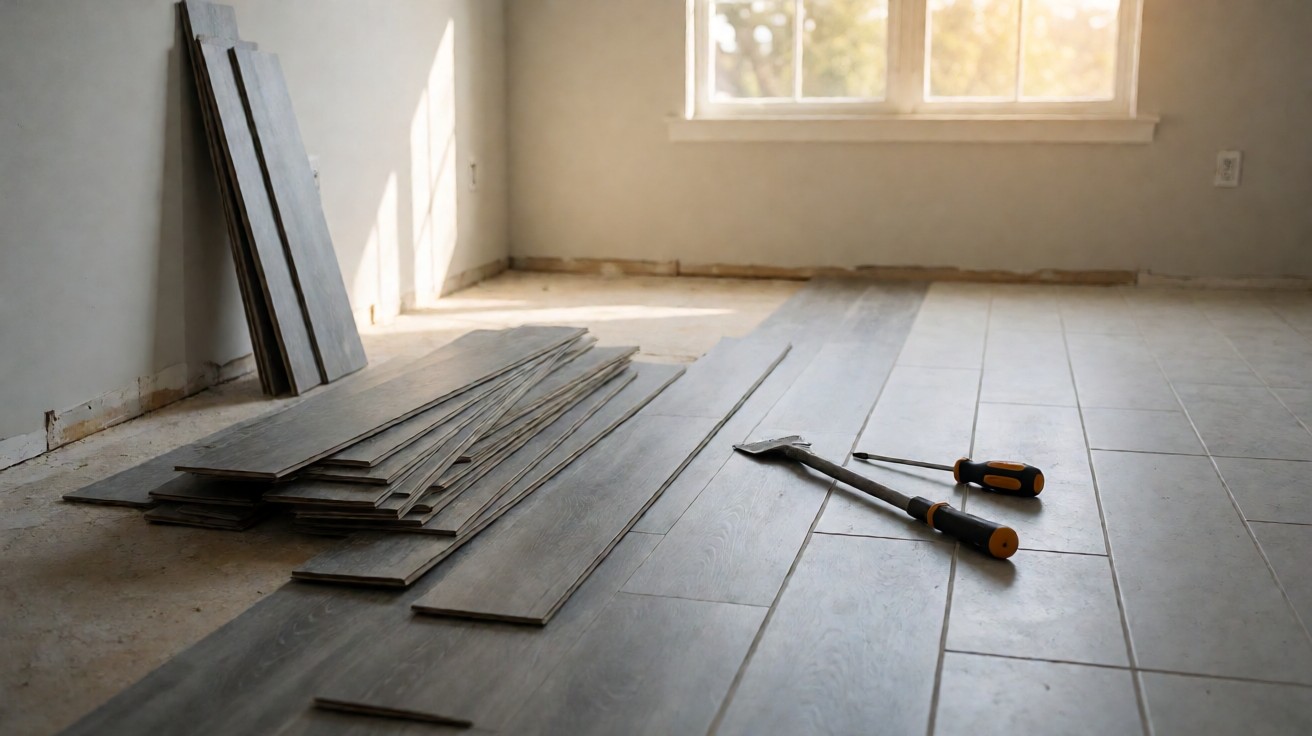
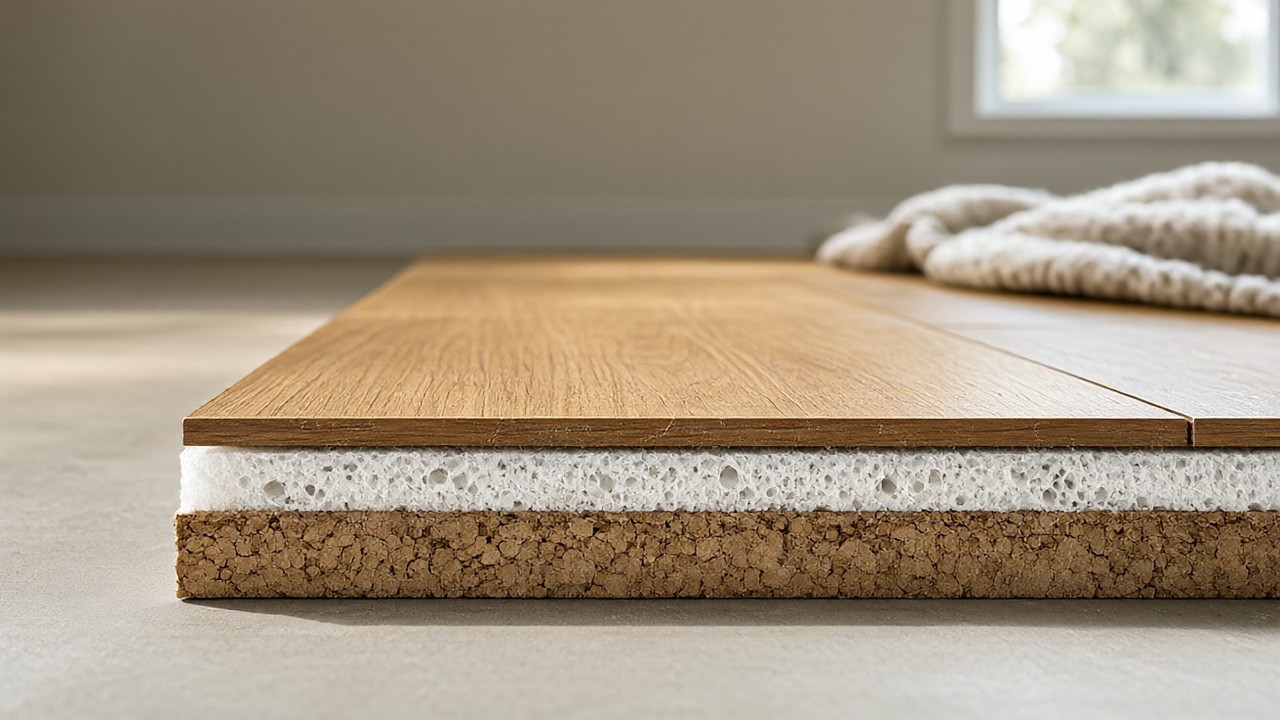

Underlayment sits between your subfloor and finished floor, and the wrong type for your material is the fastest way to void a flooring warranty outright.
Quick Answer: match the underlayment to the flooring material first, then check the subfloor and the warranty. Laminate takes a floating-rated foam or cork pad, vinyl often needs nothing at all, engineered hardwood calls for a breathable or moisture-barrier pad depending on the install method, and tile requires a cement board or uncoupling membrane, never soft foam.
What Underlayment Actually Does
Underlayment is not structural. It does not fix a bad subfloor, and it does not replace flatness prep. What it does is cushion impact noise, smooth out minor subfloor imperfections up to about 1/8 inch, and manage moisture transfer between the slab and the finished floor.
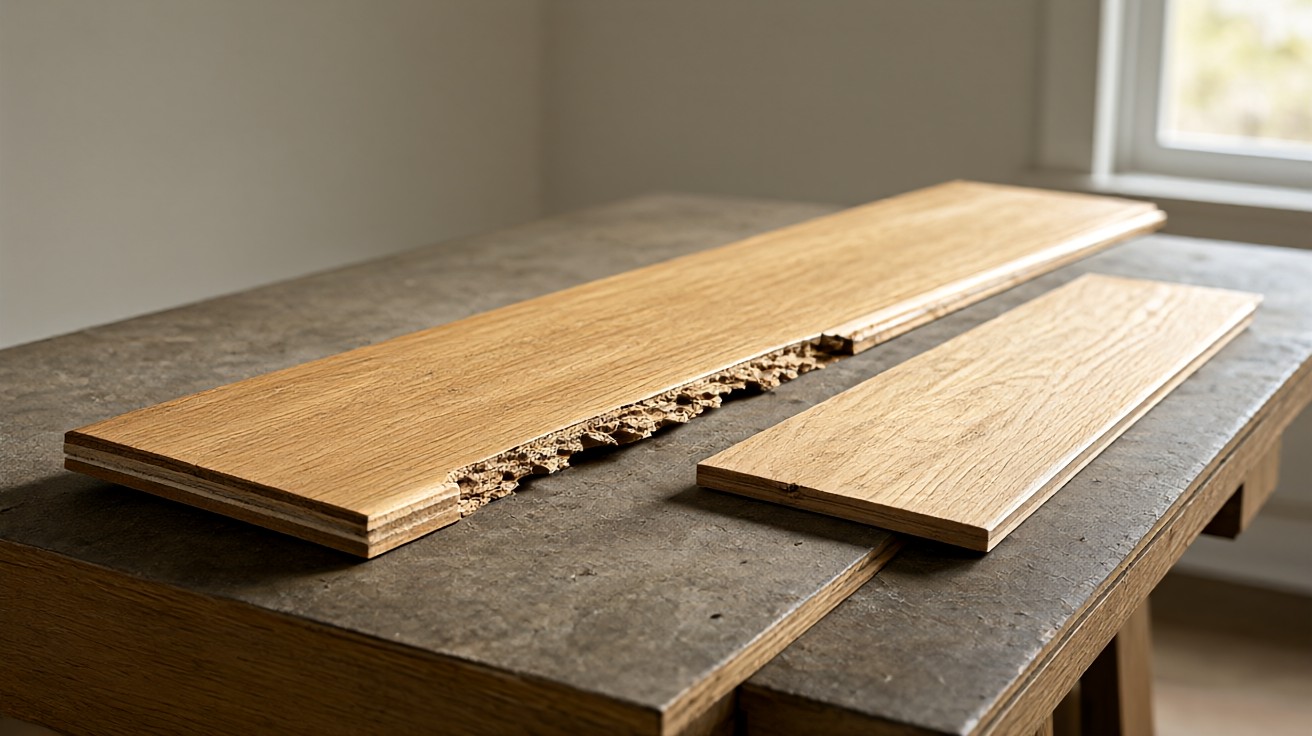
A common mistake is treating underlayment as a fix for an uneven subfloor. If your subfloor has a 3/16 inch dip over a 10 foot span, no pad will hide it. The finished floor will flex, the joints will click, and the warranty will be void. Fix the subfloor first, then choose the pad.
Underlayment also affects sound ratings. A pad with a higher Impact Insulation Class (IIC) rating reduces footfall noise in the room below. Multi-family buildings often require IIC 50 or higher, measured per ASTM E492. Check your building code or HOA requirements before choosing a pad.
The Compatibility Matrix
Not every pad works with every floor. Some materials require a specific underlayment, some prohibit underlayment entirely, and some come with it pre-attached. The table below summarizes the common pairings.
| Flooring Material | Underlayment Required? | Typical Type | Key Constraint |
|---|---|---|---|
| Laminate | Yes (unless pre-attached) | Foam, cork, or rubber pad, 2-3 mm | Must be floating-rated; no glue-down pads |
| LVP / SPC vinyl | Maybe (check product) | Pre-attached IXPE or none | Adding a pad can void the warranty |
| Engineered hardwood (floating) | Yes | Felt, cork, or foam with moisture barrier | Breathable pad for glue-down; barrier for floating |
| Engineered hardwood (glue-down) | Sometimes | Thin moisture barrier only | Thick pads cause adhesive failure |
| Solid hardwood | No (nail-down) | Rosin paper or 15 lb felt | Never use foam under nail-down hardwood |
| Tile and stone | Yes (different product) | Cement board or uncoupling membrane | Never use soft foam under tile |
| Carpet | Yes (padding) | Rebond foam or rubber, 6-8 lb density | Pad density affects carpet warranty |
| Sheet vinyl | Usually no | None, or 1/8 inch plywood | Soft underlayment telegraphs through |
The single most important rule: read the flooring manufacturer’s installation instructions before buying underlayment. A pad that is fine for one laminate brand may be prohibited by another. The warranty follows the manufacturer’s spec, not the pad’s marketing.
Underlayment for Laminate Flooring
Laminate is a floating floor. It needs an underlayment that cushions impact, reduces sound, and provides a moisture barrier when installed over concrete. The standard is a 2-3 mm foam or cork pad rated for floating installation.
NALFA (North American Laminate Flooring Association) recommends a pad with a minimum density of 1.5 lb per cubic foot for foam underlayments. Below that density, the pad compresses too quickly and the laminate joints open up. A 2 mm pad at 2 lb density is the sweet spot for most residential installs.
If your laminate has a pre-attached pad, do not add a second layer. Stacking pads creates a spongy surface that overstresses the click-lock joints. The pre-attached pad is engineered for that specific product’s thickness and joint design.
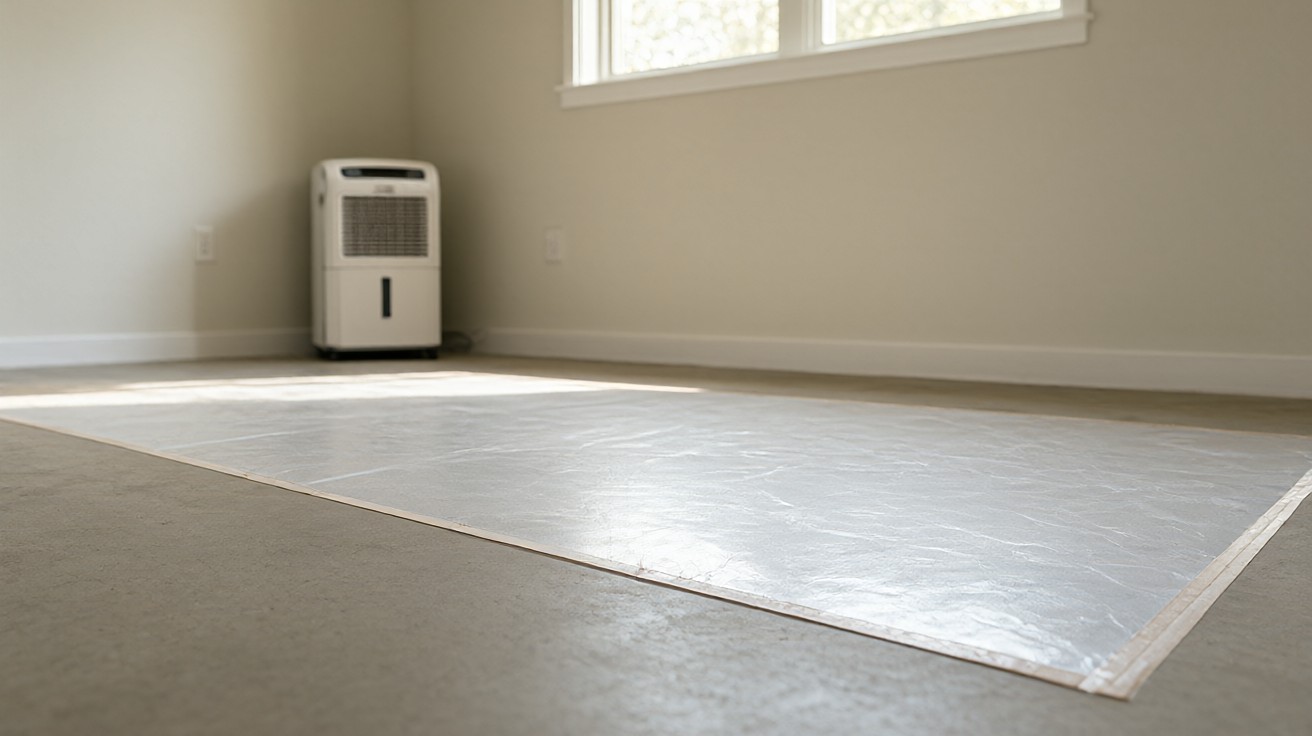
For concrete subfloors, choose a pad with an integrated vapor barrier (polyethylene film, 6 mil minimum). This prevents moisture from the slab from reaching the laminate core. For wood subfloors, a vapor barrier is usually unnecessary and can trap moisture between the wood and the pad.
For more detail on laminate-specific underlayment, see the guide on underlayment for laminate flooring.
Underlayment for Vinyl Flooring (LVP and SPC)
Vinyl is the trickiest material for underlayment because the rules vary by product. Some LVP comes with a pre-attached IXPE (cross-linked polyethylene) pad. Some SPC products have no pad and need one. And some products prohibit any added underlayment at all.
RFCI (Resilient Floor Covering Institute) notes that rigid core vinyl with a pre-attached pad should not receive an additional underlayment layer. The reason is thermal: a second pad insulates the floor and traps heat, which can cause the vinyl to expand and buckle. If your product has a pre-attached pad, install it directly over the subfloor.
For vinyl without a pre-attached pad, a thin (1-1.5 mm) IXPE or polyethylene pad is usually acceptable. Thicker pads (3 mm or more) create too much flex and can crack the vinyl or break the click joints. The pad should be firm, not cushioned.
If you are installing vinyl over concrete, a moisture barrier is still important, but it should be a separate 6 mil polyethylene sheet, not a combined pad-and-barrier. Combined products can be too thick for vinyl’s tight tolerances.
Can You Add Underlayment to Vinyl With a Pre-Attached Pad?
No. If your vinyl product has a pre-attached IXPE pad, do not add a second layer. The extra pad traps heat, causes expansion, and voids the warranty. Install the product directly over the subfloor.
For vinyl-specific guidance, see the guide on underlayment for vinyl flooring.
Underlayment for Engineered Hardwood
Engineered hardwood can be installed three ways: floating, glue-down, or nail-down. Each method requires a different underlayment.
For floating installation, use a pad with a moisture barrier (polyethylene film) on concrete, or a breathable pad on wood. Cork and felt are popular because they provide sound reduction and cushion without excessive compression. A 2-3 mm pad is standard. NWFA (National Wood Flooring Association) recommends that the pad not exceed the manufacturer’s maximum thickness, typically 3 mm, to avoid stressing the tongue-and-groove joints.
For glue-down installation, underlayment is usually not used. The adhesive bonds directly to the subfloor. If moisture is a concern, apply a moisture mitigation system (epoxy or polyurethane) to the concrete before gluing. Adding a pad between the wood and the adhesive prevents bonding and causes the floor to shift.
For nail-down installation, use rosin paper or 15 lb felt. These provide a slip layer that reduces squeaks without adding cushion. Never use foam or cork under nail-down hardwood because the nails will not hold properly in a soft substrate.
For more detail, see the guide on underlayment for engineered hardwood.
Underlayment for Solid Hardwood
Solid hardwood is almost always nail-down, and nail-down floors do not use cushioned underlayment. The standard is rosin paper or 15 lb asphalt-saturated felt laid over the subfloor. This creates a slip layer that prevents the wood from binding against the subfloor and reduces squeaks.
If you are installing solid hardwood over concrete, you cannot nail into concrete. You need a plywood subfloor (minimum 3/4 inch) fastened to the slab, then the hardwood is nailed to the plywood. No foam underlayment is used in this assembly.
Some installers use a 6 mil polyethylene vapor barrier under the rosin paper on concrete slabs. This is acceptable but not required if the slab has been properly moisture-tested. NWFA recommends moisture testing per ASTM F2170 (in-situ relative humidity) or ASTM F1869 (calcium chloride) before any hardwood installation.
Underlayment for Tile and Stone
Tile does not use the same underlayment as wood or vinyl. A soft foam pad under tile will crack the grout and break the tile within months. Tile requires a rigid substrate: cement backer board (1/4 or 1/2 inch) or an uncoupling membrane.
TCNA (Tile Council of North America) specifies that tile installations over wood subfloors require a cement board or an ANSI A118.10-compliant waterproofing membrane. Over concrete, tile can be bonded directly with thinset mortar, but a crack isolation membrane is recommended to prevent slab cracks from telegraphing through the tile.
Uncoupling membranes (like Schluter-DITRA) provide both crack isolation and a moisture management layer. They are thinner than cement board (about 1/8 inch vs. 1/4 inch) and reduce the overall floor height. This matters when transitioning to adjacent rooms.
For tile over a heated slab, use a membrane rated for radiant heat. Standard cement board can crack under thermal cycling. Check the membrane’s temperature rating against your heating system’s maximum output.
Underlayment for Carpet
Carpet padding is a different product category from hard-surface underlayment, but the same principle applies: match the pad to the carpet and the subfloor. Carpet padding is rated by density (pounds per cubic foot) and thickness.
CRI (Carpet and Rug Institute) recommends a pad density of at least 6 lb per cubic foot for residential carpet, with a thickness of 7/16 inch maximum for cut-pile carpet and 3/8 inch for loop-pile. A denser pad (8 lb) extends carpet life by reducing fiber crushing, but too thick a pad causes the carpet to stretch and wrinkle.
For concrete subfloors, use a pad with a moisture barrier on the bottom. For wood subfloors, a standard foam or rubber pad is fine. Never use a carpet pad under hard-surface flooring; the density and compression characteristics are wrong for rigid materials.
Moisture and Subfloor Rules
Moisture is the leading cause of flooring failure, and underlayment plays a role in managing it. The rules depend on the subfloor type and the flooring material.
Over concrete, always test moisture before installing. ASTM F2170 (in-situ RH) is the preferred method for concrete slabs. The RH reading must be below the flooring manufacturer’s maximum, typically 75-85 percent. If the reading is too high, apply a moisture mitigation system before installing any flooring or underlayment.
Over wood subfloors, moisture usually comes from below (crawl space, basement). Check the crawl space for standing water or high humidity. A vapor barrier on the ground in the crawl space is often more effective than a barrier in the underlayment.
If you are installing over a concrete slab, see the guide on underlayment over concrete slabs for moisture testing details. For vapor barrier specifics, see vapor barriers and flooring underlayment.
How Do You Test Concrete Moisture Before Installing?
Use ASTM F2170 (in-situ relative humidity) for concrete slabs. Drill a hole, insert a probe, and read the RH percentage. The reading must be below the flooring manufacturer’s maximum, typically 75-85 percent. If it is too high, apply a moisture mitigation system before installing any flooring.
A moisture barrier in the underlayment is not a substitute for moisture testing. A barrier slows moisture transfer but does not stop it indefinitely. If the slab is wet, the barrier will eventually fail and the floor will buckle.
Sound Ratings: IIC and STC Explained
Sound ratings matter most in multi-family buildings and upper-floor installations. Two ratings are commonly cited: IIC (Impact Insulation Class) and STC (Sound Transmission Class).
IIC measures impact noise (footsteps, dropped objects) transmitted through the floor to the room below. STC measures airborne noise (voices, music) transmitted through the floor assembly. A higher number means better sound insulation.
Most building codes require a minimum IIC of 50 for multi-family residential. A good underlayment can add 10-20 points to the IIC rating of a floor assembly. Cork and rubber underlayments generally provide the best IIC improvement per millimeter of thickness.
STC is less affected by underlayment because it depends more on the mass of the floor assembly. A concrete slab has a higher STC than a wood subfloor, regardless of the underlayment. If STC is a priority, focus on the subfloor construction, not just the pad.
For sound-specific underlayment guidance, see the guide on underlayment for sound reduction.
Sound Rating Comparison by Underlayment Type
Different underlayment materials provide different levels of sound reduction. The table below compares typical IIC improvement for common pad types.
| Underlayment Type | Typical Thickness | IIC Improvement | Best For |
|---|---|---|---|
| Cork | 3 mm | +15 to +20 | Multi-family, hardwood |
| Rubber | 2-3 mm | +18 to +22 | Commercial, high-traffic |
| Premium foam | 2-3 mm | +10 to +15 | Residential laminate |
| Basic foam | 2 mm | +5 to +8 | Budget residential |
| Felt | 3 mm | +8 to +12 | Engineered hardwood |
Rubber and cork provide the best sound reduction per millimeter. Basic foam is the cheapest but provides the least IIC improvement. If your building code requires IIC 50 or higher, budget for cork or rubber.
Common Mistakes That Void Warranties
The most common warranty-voiding mistakes with underlayment are:
- Adding a second pad under a product with a pre-attached pad. This traps heat and causes expansion.
- Using a thick cushioned pad under vinyl. Vinyl needs a firm, thin pad (1-1.5 mm). Thick pads cause click-joint failure.
- Using foam underlayment under nail-down hardwood. The nails will not hold and the floor will squeak.
- Using soft foam under tile. The grout cracks and the tile breaks.
- Skipping the moisture barrier on concrete. Even moisture-resistant laminate needs a barrier over a slab.
- Not checking the manufacturer’s approved pad list. Most flooring warranties specify which underlayments are approved.
What Happens If You Use the Wrong Underlayment?
The floor may fail within months. Common outcomes include cracked grout (tile over foam), buckled vinyl (thick pad over rigid core), squeaky hardwood (foam under nail-down), and delaminated laminate (no moisture barrier over concrete). The warranty is void in all of these cases.
Before you install, download the flooring manufacturer’s installation guide and check the underlayment section. If your pad is not on the approved list, the warranty is void regardless of how well the installation was done.
Quick Reference: Choosing by Material
If you are standing in the aisle trying to decide, use this decision path:
- Laminate over concrete: 2-3 mm foam or cork with integrated vapor barrier.
- Laminate over wood: 2-3 mm foam or cork, no vapor barrier needed.
- LVP or SPC with pre-attached pad: install directly, no added pad.
- LVP or SPC without pad: 1-1.5 mm IXPE, firm, not cushioned.
- Engineered hardwood floating: 2-3 mm cork or felt with moisture barrier on concrete.
- Engineered hardwood glue-down: no pad, moisture mitigation on concrete.
- Solid hardwood: rosin paper or 15 lb felt, nail-down only.
- Tile: cement board or uncoupling membrane, never foam.
- Carpet: 6-8 lb density rebond foam, 7/16 inch max thickness.
For a broader comparison of subfloor, underlayment, and finished floor layers, see subfloor vs. underlayment vs. finished flooring. For the general process of choosing underlayment, see how to choose flooring underlayment.